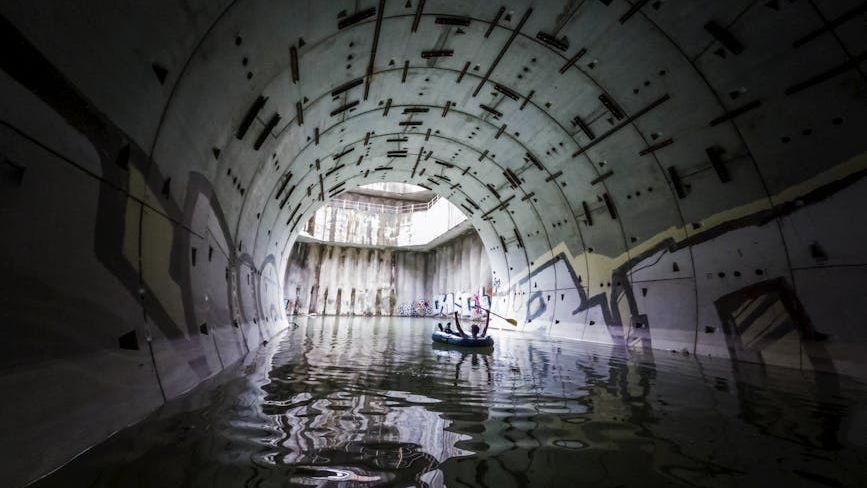

Somewhere beneath the busy streets of Cincinnati, right under the cars humming along Central Parkway, there are tunnels that have never once carried a single passenger. Sealed entrances. Bricked-up corridors. Platforms waiting for trains that never arrived. Most Cincinnatians walking overhead have no idea they are treading above one of America’s most extraordinary forgotten megaprojects.
This is not folklore. This is a real, concrete, measurable failure – one that cost millions, absorbed decades of political drama, and still sparks heated debate more than a century later. The story of how it happened, and what the city might finally do about it, is far stranger than you’d expect. Let’s dive in.
America’s Largest Abandoned Subway Sits Right Beneath Cincinnati
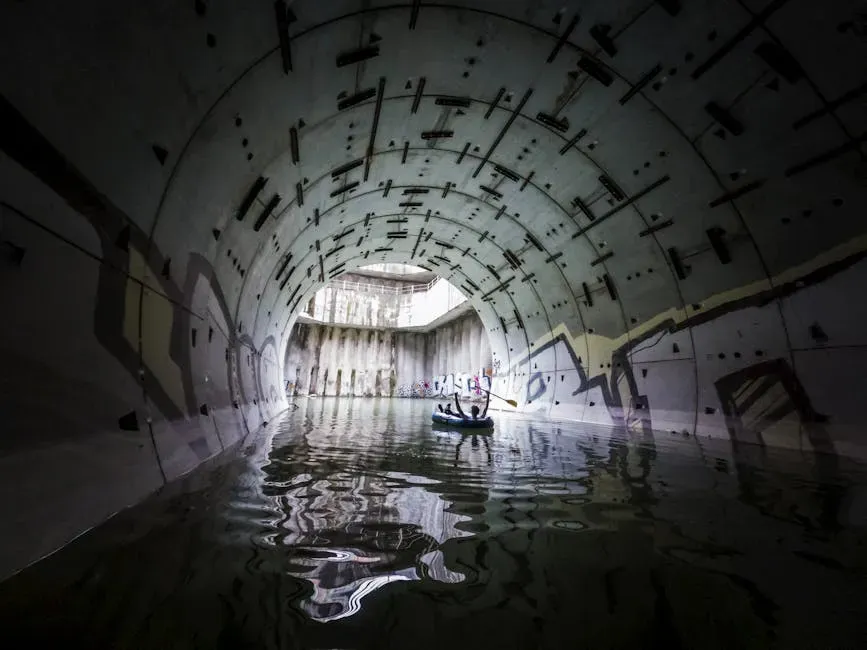
Most people assume the title of “largest abandoned subway” belongs to somewhere like New York or Chicago. Honestly, Cincinnati would be the last city most folks would guess. The Cincinnati Subway is a partially completed rapid transit system beneath the streets of Cincinnati, Ohio, and although the system only grew to a little more than 2 miles in length, its derelict tunnels and stations make up the largest abandoned subway tunnel system in the United States.
The project was conceived in 1916 and would ultimately be stopped short after completing a total of 6 miles of infrastructure and 2.2 miles of underground tunnels. The original plan featured a 16-mile loop connecting Downtown, Over-the-Rhine, West End, Northside, Clifton, Norwood, Oakley, Evanston, and beyond. That is an almost incomprehensible gap between ambition and reality. Think of it like planning a cross-country road trip and barely making it out of the driveway.
Today, many Cincinnatians are unaware of the tunnels beneath them. That invisibility is part of what makes this story so haunting. The city literally paved over its own failure and kept walking.
A Bold Vision Born From a Rotting Canal
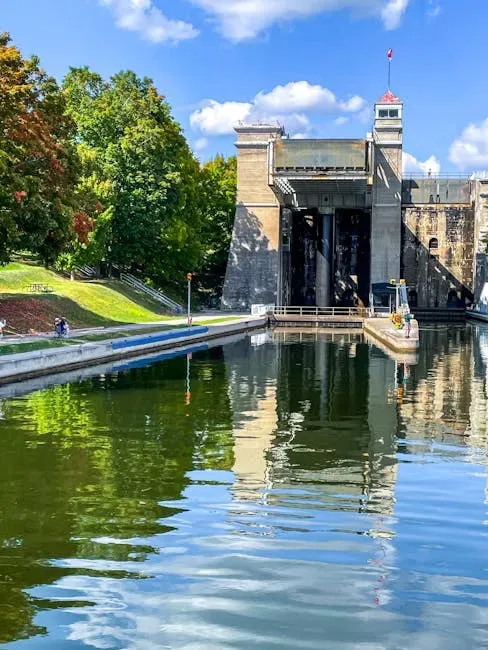
From 1825 to 1920 the Miami and Erie Canal divided Cincinnati’s residential neighborhood of Over-the-Rhine from the business district of downtown. The canal was used to transport goods and people from the Great Lakes to the Ohio River until the popularity of railroads caused it to become disused. The canal then became very polluted due to people dumping trash in it and using it as a sewer. Repurposing it as a transit corridor seemed, at the time, almost elegant in its logic.
The concept of a subway gradually took hold within Cincinnati’s governing bodies, the focus being on utilizing the then largely irrelevant Miami and Erie Canal. By March 1912, a Rapid Transit Commission was formed with the task of advancing public transportation in Cincinnati. Initially, the proposed construction plan was priced at $12 million but later halved to $6 million due to financial constraints. The projected loop, spanning 16 miles, would utilize the old Miami and Erie Canal bed for tunnel construction under Central Parkway.
More than 80% of Cincinnatians said yes to the new railway, but work wasn’t begun until after World War One – January 28, 1920. Public enthusiasm was genuinely enormous. The city was practically buzzing with anticipation. What could possibly go wrong?
World War I and the Inflation That Broke Everything

Here’s the thing: even before a single shovel broke ground officially, the financial math was already falling apart. Six million dollars were allocated for the project, but construction was delayed due to World War I. Unexpected post-war inflation doubled the cost of construction, so the project could not be finished at the original estimated price. It is a cruelly familiar story – a budget locked in during peacetime, then torched by wartime economics.
Construction wouldn’t begin until after World War I, by which point inflation had reduced the buying power of the $6 million allotted for the project. That cash could now only fund 11 of the network’s planned 16 miles of tracks. So from the very first day workers put shovels in the ground, the project was already behind and underfunded.
Important connections were missing, no track had been laid, and worst of all, there wasn’t enough money left to address either problem. The transit board attributed inflation for its budget issues and estimated finishing the network would cost another $9 to $10 million – adjusted for inflation, about double the original cost. That gap was never bridged. Not even close.
The Automobile Age Sealed the Tunnels’ Fate
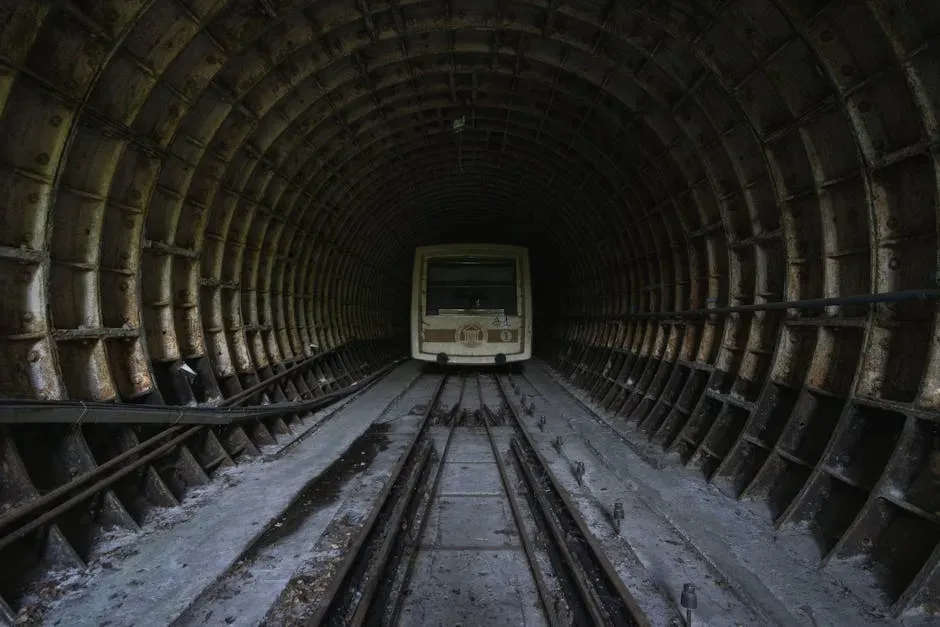
By the time the political fights quieted down, a new force had swept through American life entirely: the automobile. After the war ended the City Planning Commission decided to not include the subway in its plans. Instead, the auto industry aggressively lobbied the commission to use the loop’s right-of-way as pathways for Interstate 75 and the Norwood Lateral. Roads replaced rails. Highways buried the dream – quite literally, in some stretches.
Bridges, stations, and retaining walls along the surface stretches deteriorated to such an extent that a few items actually collapsed. Nearly everything above ground was bulldozed to make way for portions of I-75 and the Norwood Lateral in the 1950s and 1970s, respectively. The infrastructure the city had spent millions building was demolished to make room for the car culture that replaced it.
The two-mile subway tunnels were finished early in 1923. The aboveground sections of the loop were near completion by early 1927, but there was no money to equip any of it. Tracks had not been laid, several crucial links to the system were missing and the dollar balance in the books was near zero. A completed shell. No trains. No passengers. Ever.
The Tunnels Found a Strange Second Life Underground
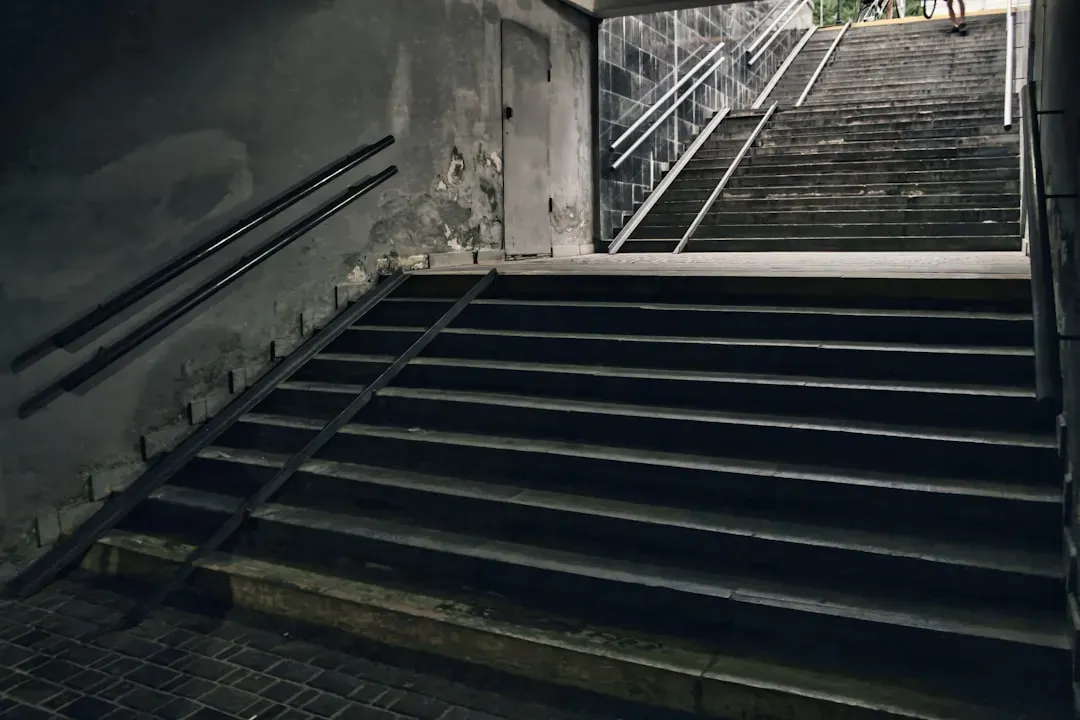
Rather than demolish what was underground, the city found uses for the tunnels that had nothing to do with transportation. In the 1950s, a massive 52-inch water main was laid in the northbound tunnel to save $300,000 by not digging a new tunnel for the water main. Practical? Sure. Quietly ironic? Absolutely. A transit tunnel repurposed to carry water pipes instead of commuters is a metaphor that writes itself.
As of August 2016, the abandoned tunnel is used to carry the relocated water main and some optical fiber cables. Communication lines now thread through the same corridors once meant to carry thousands of daily passengers. The tunnels were suggested as possible air raid shelters, and recent imagery of the now abandoned tunnels show old bunk-beds remain, suggesting they were used for this purpose. That detail alone is genuinely eerie – bunk beds sitting in a dark subway tunnel that was never opened to the public.
In the 1960s, amidst the Cold War, one of the abandoned stations was temporarily repurposed as a nuclear bomb shelter. They were renovated and outfitted with sanitation, water, and heating. So the tunnels served as a Cold War contingency plan while American cities above ground were busy building interstate highways. Strange times.
The Cost of Doing Nothing – and Doing Something
Here is where it gets uncomfortable for Cincinnati taxpayers. The subway tunnel not only sits empty but costs city taxpayers money to maintain. This is partially credited to the original construction quality, and partially because Cincinnati needs to maintain the tunnel, using tax revenues, due to the presence of Central Parkway on top of it. The city cannot simply walk away. Central Parkway above depends on the tunnel structure below.
In 2008 it was estimated that it would cost $2.6 million to simply keep maintaining the tunnels, $19 million to fill the tunnels with dirt, and $100.5 million to revive the tunnels for modern subway use. Relocating the 52-inch water main would cost $14 million. None of those options are cheap. Filling them in feels wasteful. Reviving them feels wildly expensive. It’s a fiscal trap with no comfortable exit.
According to the tunnel’s routine inspection report from 2023, the tunnels aren’t in the best shape after all these years. Prior studies revealed deteriorating conditions with concrete, ventilation, and water leaks. The clock is ticking on Cincinnati making a real decision about what comes next.
A City Finally Asking: What Do We Do With This Thing?
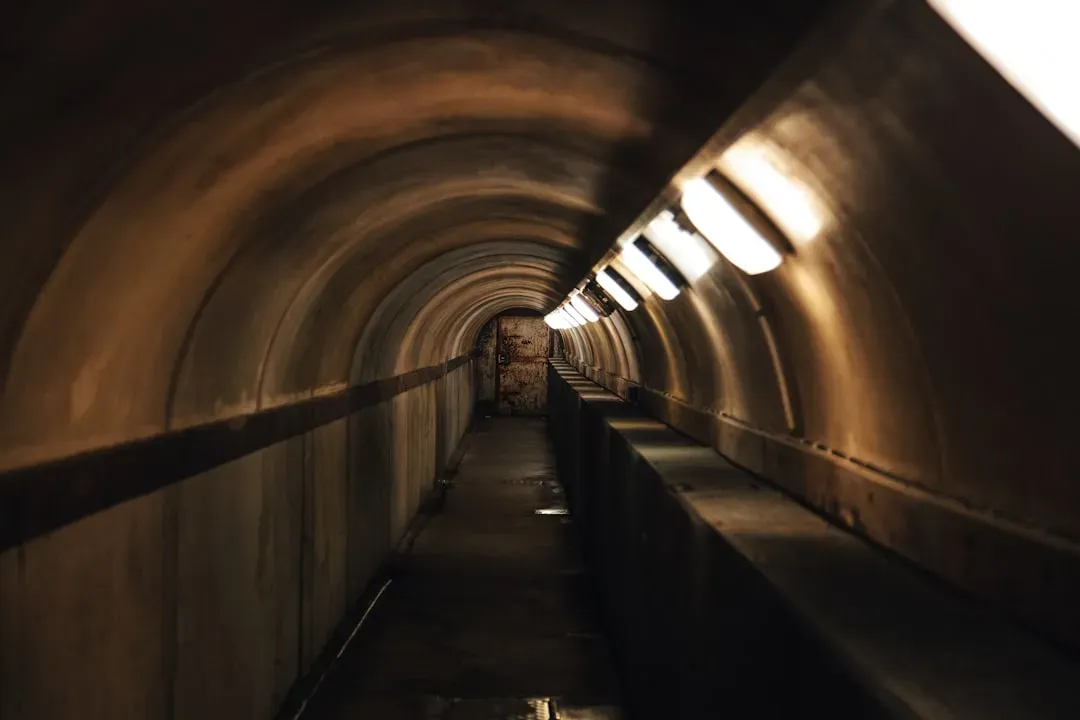
After decades of stalling, Cincinnati is now making genuine moves. The City of Cincinnati’s Department of Transportation and Engineering has officially released a Request for Proposals for a comprehensive feasibility study on the adaptive reuse of its long-abandoned subway tunnels. This marks a critical first step in reimagining one of the city’s most unique and underutilized physical assets.
While a wide range of potential uses are on the table, from cultural venues and retail to recreation and event spaces, the explicit inclusion of transit is a major development for transportation advocates across the state. It is hard to say for sure whether any of these ideas will survive contact with budget realities. The city of Cincinnati has advanced an effort to repurpose its abandoned subway tunnels, an ambitious idea whose viability is unclear and whose timeline could stretch out a decade or more.
The tunnel has been continuously maintained and will likely be usable for the next one hundred years, if not longer. That is actually remarkable for a structure over a century old. The bones are good. What Cincinnati builds around those bones remains to be seen. At the heart of the initiative is what the City calls a “big idea – can we breathe new life into this long-abandoned subterranean space and create something extraordinary beneath our streets?”
Conclusion: A City Still Haunted by What Could Have Been
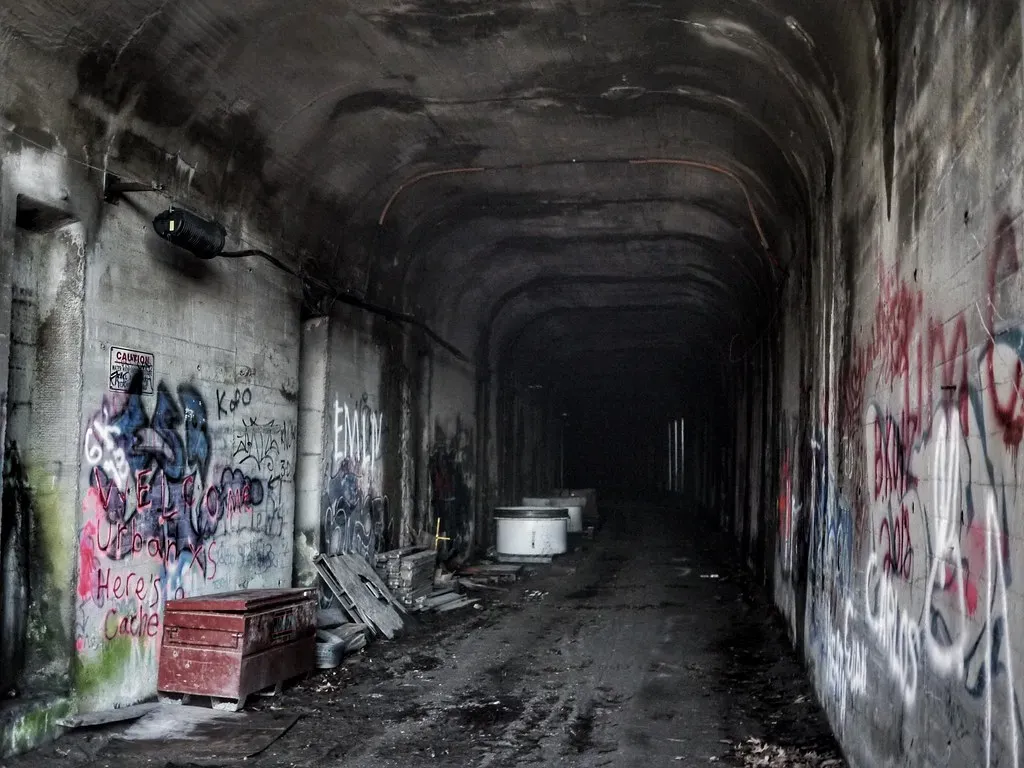
The Cincinnati Subway is not just a curiosity for urban explorers and history buffs. It is a genuine case study in what happens when political dysfunction, economic shock, and technological disruption collide at exactly the wrong moment. A city voted overwhelmingly to build something visionary, and then watched it get strangled slowly over decades by forces it could barely control.
Over a century later, the tunnels are still there. Still solid. Still waiting. The Cincinnati Subway isn’t just an abandoned project. It’s a symbol of what could be. Whether Cincinnati finally delivers on that potential – or lets another generation of proposals fade away – will say a lot about how seriously the city takes its own future.
What would you do with two miles of forgotten tunnel beneath a major American city? Drop your thoughts in the comments below.