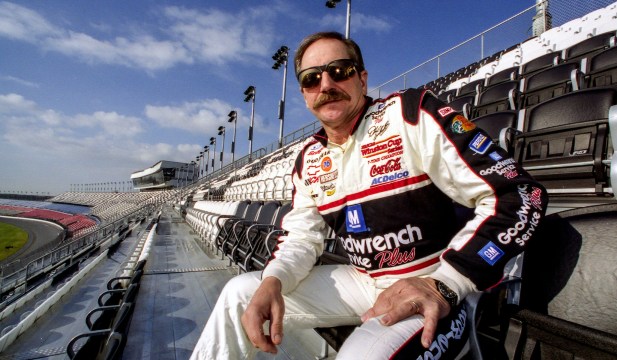
The Making of a Racing Icon (Image Credits: I0.wp.com)
Daytona Beach, Florida – A quarter-century after Dale Earnhardt’s fatal crash reshaped NASCAR, his influence continues to define the sport’s grit and evolution.[1][2]
The Making of a Racing Icon
Born in Kannapolis, North Carolina, in 1951, Dale Earnhardt emerged from a racing family to become one of NASCAR’s most formidable figures. His father, Ralph, had won a championship in the Sportsman division, setting the stage for young Dale’s entry into stock car racing. Earnhardt debuted in the Winston Cup Series in 1975 and quickly made his mark, earning Rookie of the Year honors in 1979.[2]
By the early 1980s, he had claimed his first championship in 1980, launching a career marked by aggressive driving that earned him the nickname “The Intimidator.” Piloting the iconic black No. 3 Chevrolet for Richard Childress Racing from 1984 onward, Earnhardt embodied the raw, unyielding spirit of NASCAR. His style intimidated rivals and thrilled fans, turning races into high-stakes battles of will.[1]
A Record of Dominance on the Track
Earnhardt secured seven Winston Cup Series championships, tying Richard Petty and Jimmie Johnson for the most in history. These titles came in 1980, 1986, 1987, 1990, 1991, 1993, and 1994, showcasing his consistency across decades.[2]
His 76 Cup Series victories placed him eighth all-time, including triumphs in major events like the 1998 Daytona 500 after 20 attempts, the 1995 Brickyard 400, and a record 10 wins at Talladega Superspeedway. Earnhardt also excelled in other series, winning IROC championships four times and leading the Cup Series in wins during 1987 and 1990.[1]
- Three Southern 500 victories at Darlington
- Three Coca-Cola 600 wins at Charlotte
- Four Winston 500 triumphs
- 34 total wins at Daytona across events
- NASCAR’s 50 Greatest Drivers in 1998
The Last Lap at Daytona
On February 18, 2001, during the final lap of the Daytona 500, Earnhardt positioned his car third behind teammate Michael Waltrip and his son Dale Earnhardt Jr., who claimed a 1-2 finish for Dale Earnhardt Inc. Attempting to block challengers in Turn 4, his No. 3 struck the wall head-on after contact with Sterling Marlin and Ken Schrader. The impact caused a basilar skull fracture, and he passed away shortly after at Halifax Medical Center.[1][2]
The news stunned the racing world. NASCAR officials confirmed the tragedy hours later, marking the fourth top-series fatality in less than a year. Earnhardt’s death at age 49 ended a career that had propelled NASCAR into mainstream popularity.[3]
Safety Reforms That Saved Lives
Earnhardt’s crash ignited sweeping changes in NASCAR safety protocols. Within months, the series mandated the Head and Neck Support (HANS) device, which prevents basilar skull fractures by stabilizing the head during impacts. NASCAR also introduced SAFER barriers, upgraded seats, belts, and helmets, and established a dedicated Research and Development Center for crash analysis.[1]
These measures proved effective. No driver has died in NASCAR’s top three national series in the 25 years since. Earnhardt’s tragedy thus became his most profound contribution, ensuring future generations race with greater protection.[3]
Culture and Commerce King
Beyond statistics, Earnhardt transcended racing as a cultural force. His merchandise adorned Wheaties boxes, Sports Illustrated covers, and commercials for major brands. He pioneered athlete branding, selling his merchandising firm for $30 million in 1996. Fans still wear No. 3 gear at tracks, honoring the man who made NASCAR a household name.[1]
Inducted into the NASCAR Hall of Fame in its inaugural class in 2010, Earnhardt remains synonymous with the sport’s rebellious roots. His story reminds enthusiasts that true legends blend triumph with transformation.
Key Takeaways
- Seven championships and 76 wins cemented his on-track supremacy.
- His death spurred safety innovations that have prevented fatalities for 25 years.
- As a merchandising pioneer, he elevated NASCAR’s national profile.
Dale Earnhardt’s legacy proves that one driver’s passion can steer an entire industry toward progress. What do you think about his impact on NASCAR today? Tell us in the comments.