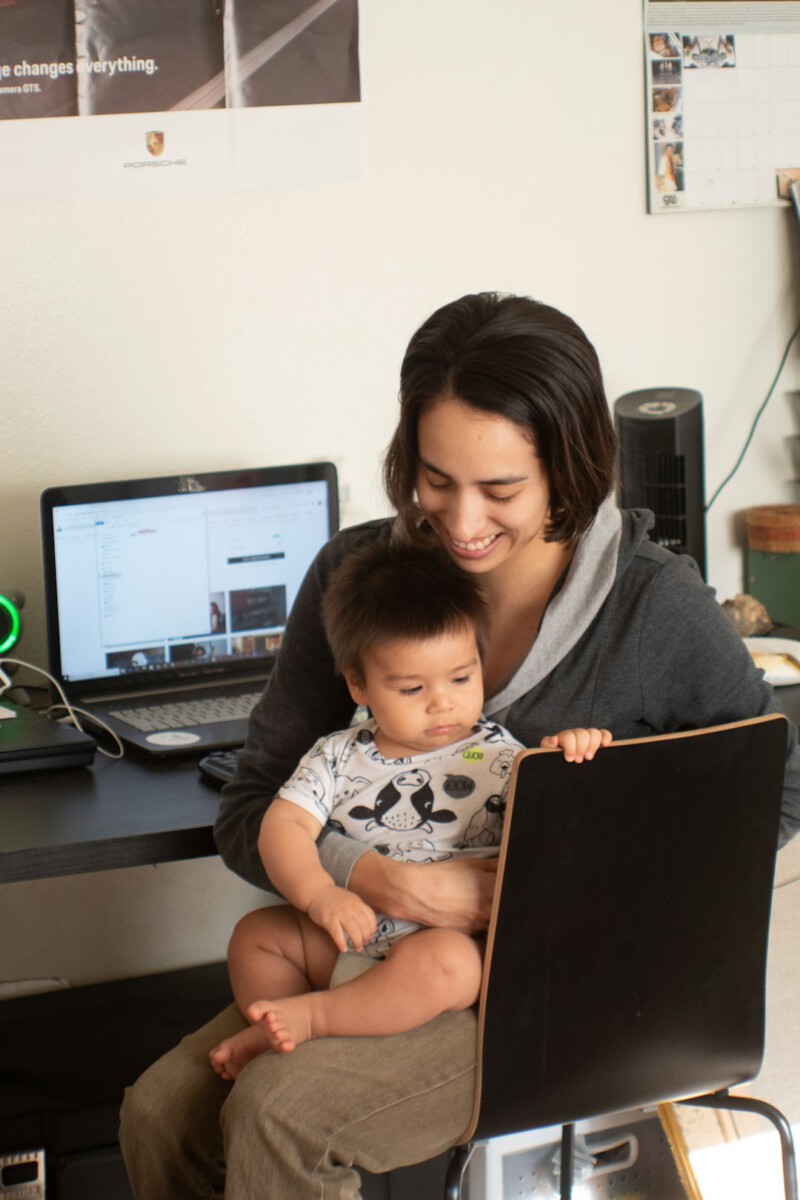
A Sharp Decline in Maternal Workforce Participation (Image Credits: Unsplash)
Clinical psychologist Dr. Anne Welsh once thrived in her role at Harvard University Health Services, supporting students through complex challenges. Pregnant with her second child while managing a toddler, she proposed a job-sharing arrangement with a colleague to balance her demanding caseload. The idea, meticulously outlined, met swift rejection from leadership, who deemed it unworkable amid a pool of eager replacements. Welsh departed, soon followed by several other parents, highlighting how rigid structures drive away skilled professionals.
A Sharp Decline in Maternal Workforce Participation
More than 455,000 women exited the U.S. workforce in the first half of last year, marking the steepest drop in over four decades among mothers of young children.1
This trend defies notions of voluntary withdrawal. Experts describe it as systematic exclusion rather than choice. Return-to-office requirements, scarce scheduling options, and escalating home responsibilities compound the issue. Childcare expenses have surged at double the rate of general inflation recently, straining family budgets disproportionately.2
Matthew Nestler, a senior economist at KPMG, noted the breadth of impact. “It means that more and more workers are being affected,” he said. “And it’s roughly 90% women, mostly women 25 to 44.”
Pressures Mounting on High-Achieving Mothers
Recent analysis reveals women are 6% less inclined to pursue promotions than men, often labeled an ambition shortfall.3 Yet this stems from inadequate backing, such as sparse mentorship and entrenched biases. One in four women at various career stages points to family duties as a barrier to added roles.
Caregivers face a pronounced motherhood penalty, forfeiting an estimated $237,000 in lifetime earnings on average, per Urban Institute research.4 Mothers earned 62 to 74 cents for every dollar fathers did in 2022, according to the Institute for Women’s Policy Research.5
Dr. Welsh, author of the upcoming book Ambitious Mother: From Surviving to Thriving in Your Career and at Home, observes women recalibrating priorities amid conflicting demands.6 Many launch ventures or shift to part-time roles, preserving drive but sacrificing advancement.
Cognitive Edges That Workplaces Overlook
Midlife mothers demonstrate sharper cognitive functions, including quicker responses, superior visual memory, and enhanced verbal recall, according to one study.7 Child-rearing triggers profound neurological changes, rivaling those of adolescence.
These shifts foster strengths in prioritization, emotional acuity, task delegation, and boundary enforcement. Firms shedding such talent at peak capability incur steep repercussions. Turnover disrupts knowledge transfer, hampers output, and erodes profits.
Replacing mid-level staff can exceed twice an employee’s salary, factoring in recruitment and onboarding. Companies emphasizing women’s advancement surpass peers by 18% in performance.8
- Loss of specialized expertise from departing parents.
- Reduced team productivity during transitions.
- Diminished innovation from underrepresented perspectives.
- Higher recruitment expenses amid talent shortages.
Strategies to Retain and Leverage Maternal Talent
Effective retention demands equitable parental leave without career repercussions. Returnees often encounter stalled promotions or diminished assignments despite readiness.
Dr. Welsh stresses transparent advancement paths, structured reintegration, and substantive projects upon return. Flexible arrangements – adjusted hours, compressed weeks, or hybrid models – prove essential where full remote work falters.
Outcome-focused assessments eclipse mere presence tracking. Childcare aid, normalized family duties, and parent-targeted coaching further bolster commitment. Such measures yield sustained mid-career retention and robust leadership development.
| Challenge | Solution |
|---|---|
| Rigid schedules | Customizable hours and outcome metrics |
| Post-leave penalties | Clear re-onboarding protocols |
| Childcare burdens | Subsidies and family normalization |
Career trajectories need not follow linear climbs. Dr. Welsh likens them to playground webs, enabling multidirectional navigation. Restaurateur Lynette-Matthews-Murphy exemplifies this, zigzagging through roles – from publications to event leadership to owning acclaimed Winston-Salem eateries – adapting to family phases with employer flexibility.
- Mothers bring enhanced cognitive and leadership skills post-childbirth.
- Inflexible policies trigger costly turnover exceeding double salary in replacements.
- Targeted supports like flexible evaluations boost retention and performance.
Organizations embracing motherhood as an asset cultivate resilient, innovative teams. Those resisting face self-inflicted losses in talent and gains. What steps can your workplace take to support working parents? Share your thoughts in the comments.