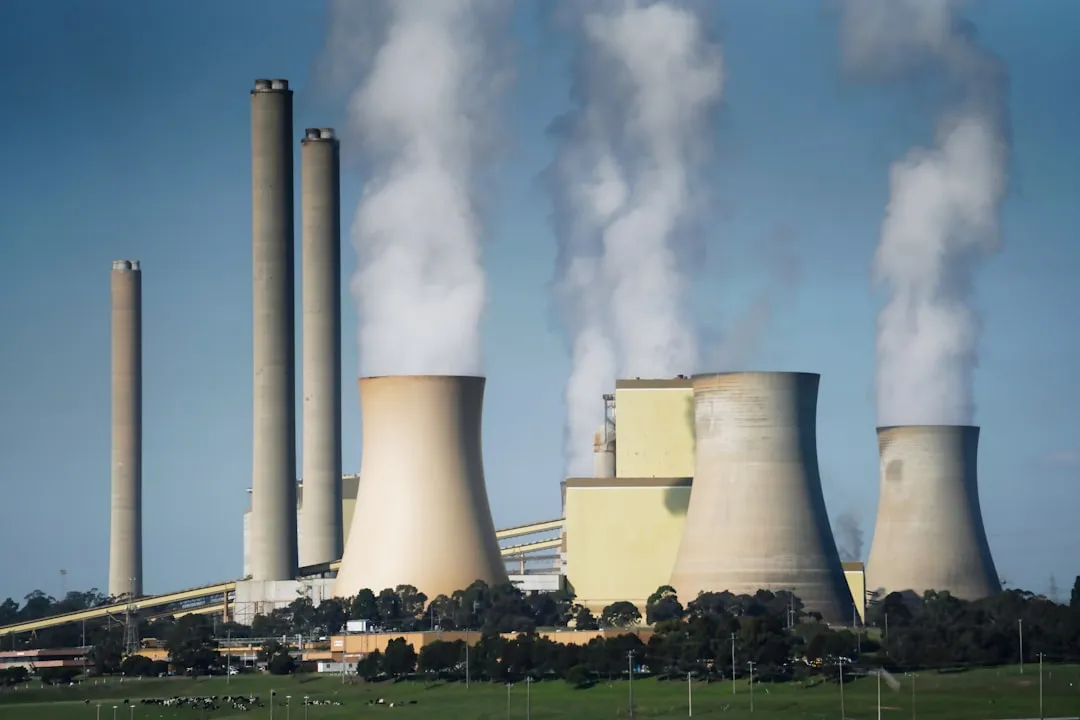
Craig Unit 1 Faces Unexpected Lifeline (Image Credits: Unsplash)
Northwest Colorado – A federal emergency order has compelled the operators of an aging coal-fired power unit to halt retirement plans, thrusting the facility into the center of a heated national debate over energy reliability and transition.
Craig Unit 1 Faces Unexpected Lifeline
The U.S. Department of Energy issued the directive on December 30, 2025, just one day before Craig Generating Station’s Unit 1 was set to retire after 45 years of service.[1][2]
Craig Unit 1, a 446-megawatt facility in Moffat County, powers homes across Colorado and neighboring states like New Mexico and Nebraska.[2]
Officials cited surging electricity demand from data centers and other loads, coupled with accelerating retirements of fossil fuel plants, as grounds for the action under Section 202(c) of the Federal Power Act.[1]
The initial mandate requires availability through March 30, 2026, with options for renewal, marking one of several similar interventions nationwide.[3]
This move echoes President Trump’s emphasis on coal as essential for affordable, dependable power.[2]
Owners Prepared for a Clean Energy Shift
Tri-State Generation and Transmission, which operates the plant, along with co-owners Platte River Power Authority, Xcel Energy, PacifiCorp, and Salt River Project, had mapped out the closure for years.[1]
The Colorado Public Utilities Commission greenlit the plan, confirming replacements via wind, solar, natural gas, and battery storage would maintain grid stability.[1]
Jason Frisbie, CEO of Platte River Power Authority, stated the group had proactively secured capacity from new sources after over a decade of planning.[3]
Fuel arrives daily from the nearby Trapper Mine via 55-car trains, but operators viewed the unit’s inefficiency and high costs as unsustainable.[2]
- Compliance with state clean air rules mandating coal phaseout by 2031.
- Replacement projects, including a 307-MW gas plant and 200 MW of batteries at the site.
- Alignment with Colorado’s greenhouse gas reduction targets.
- Economic advantages from cheaper renewables.
Ballooning Expenses Fuel the Fightback
Maintaining Craig Unit 1 could cost up to $85 million annually, passing tens of millions to ratepayers in Colorado and beyond.[3][1]
A recent valve failure sidelined the plant on December 19, demanding costly repairs just to comply.[1]
In late January 2026, Tri-State and Platte River petitioned the DOE for reconsideration, arguing no true emergency exists and the order infringes on property rights.[3]
Colorado Attorney General Phil Weiser echoed this, noting a lack of evidence for urgency.[3]
Governor Jared Polis decried the burden: “This order will pass tens of millions in costs to Colorado ratepayers… all on the backs of Colorado ratepayers.”[1]
Divided Reactions and Broader Implications
Environmental advocates, including the Sierra Club and Earthjustice, condemned the decision as ideologically driven, warning of prolonged pollution harming communities and national parks.[4][1]
U.S. Rep. Jeff Hurd, a Republican from western Colorado, backed the order, faulting state policies for prioritizing ideology over reliability.[1]
The standoff hints at courtroom battles ahead, testing federal emergency powers against utility autonomy and state climate ambitions.[2]
Similar tensions surround other sites, like Pueblo’s Comanche plant, underscoring coal’s precarious role amid rising renewables.[1]
- DOE cites grid risks from demand spikes and retirements, but utilities insist replacements suffice.
- Annual costs near $85 million could hike bills without federal reimbursement.
- Legal petitions challenge the order’s validity, potentially heading to court.
This clash highlights the friction between federal intervention for energy security and local pushes for cleaner, cheaper power. As the dispute unfolds, ratepayers watch their bills while communities weigh health and economic trade-offs. What do you think about the balance between reliability and clean energy? Tell us in the comments.