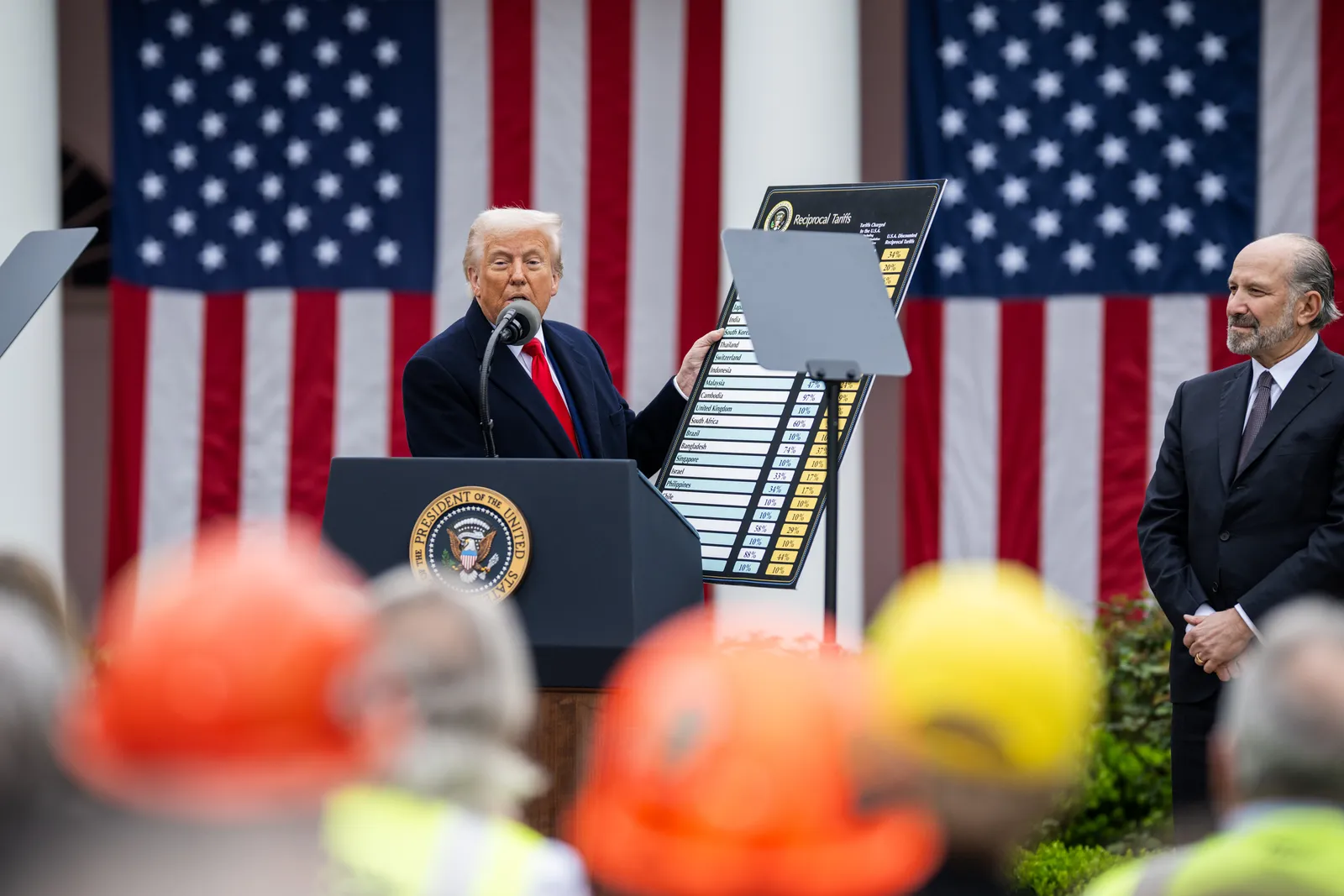
Court Ruling Prompts Tariff Overhaul (Image Credits: Upload.wikimedia.org)
President Donald Trump moved quickly to raise proposed global tariffs to 15 percent after a Supreme Court setback, while a fresh survey captured broad American skepticism about the country’s direction ahead of his State of the Union address.[1][2]
Court Ruling Prompts Tariff Overhaul
The U.S. Supreme Court ruled 6-3 that Trump overstepped his authority under the International Emergency Economic Powers Act by imposing broad global tariffs previously.[3] Justices determined that such taxing powers belong to Congress, striking down measures that had collected over $130 billion.[1] Trump responded by invoking Section 122 of the 1974 Trade Act, a provision never used before by any president.
This law permits tariffs up to 15 percent for up to 150 days without immediate congressional approval. The president first announced a 10 percent rate late Friday, then boosted it to the maximum 15 percent via social media on Saturday, calling the court decision “ridiculous, poorly written, and extraordinarily anti-American.”[1] The hike aims to address a record $1.2 trillion trade deficit and encourage domestic manufacturing.
New Tariffs Target Broad Imports
The 15 percent duty will apply to nearly all imported goods entering the United States, with exemptions for critical minerals, metals, pharmaceuticals, and energy products.[3] Countries with prior negotiated deals, such as the UK at 10 percent on most items or Indonesia at 19 percent, retain those rates. Implementation was set for Tuesday, aligning with the State of the Union timing.
Business groups expressed concern over potential price hikes for consumers and disruptions for small firms seeking refunds on prior duties. Trading partners like the European Union and UK signaled frustration, warning of impacts on global growth. Economists noted the patchwork approach could complicate supply chains further.[1]
Poll Captures Public Pessimism
A NPR/PBS News/Marist poll conducted January 27-30 among 1,462 adults revealed 57 percent of Americans view the state of the union as not strong, up from 53 percent a year earlier.[2] Meanwhile, 60 percent said the nation is worse off than last year. Over half, 55 percent, described changes under Trump as heading for the worse.
The survey highlighted deepening worries, with 68 percent saying checks and balances are not working well and 78 percent seeing a serious threat to democracy. Trump’s policies drew negative personal impact assessments from 53 percent of respondents. Key findings included:
- 43 percent believe the union is strong.
- 37 percent see Trump’s direction as positive.
- 32 percent approve of checks and balances functioning.
Stark Partisan Splits Emerge
Democrats overwhelmingly cited pessimism, with 79 percent calling the state of the union not strong and 90 percent viewing the country as worse off.[2] Independents echoed this at 68 percent not strong and 58 percent negative policy impact.
Republicans remained more optimistic, with 77 percent deeming the union strong and 82 percent saying better off. The table below summarizes key partisan views:
| Metric | Democrats | Independents | Republicans |
|---|---|---|---|
| State of Union Not Strong | 79% | 68% | 23% |
| Country Worse Off | 90% | 68% | 18% |
| Checks & Balances Not Working | 91% | 75% | 43% |
Tariffs and Poll Set Stage for Address
Trump’s tariff escalation unfolds against this backdrop of public doubt as he prepares to speak to Congress on Tuesday. The move underscores his commitment to protectionism despite legal hurdles and mixed economic signals. Observers expect the address to defend recent actions and outline future priorities.
These developments signal a pivotal moment in Trump’s second term, blending aggressive trade policy with calls for national unity. What aspects of the State of the Union address intrigue you most? Share in the comments.