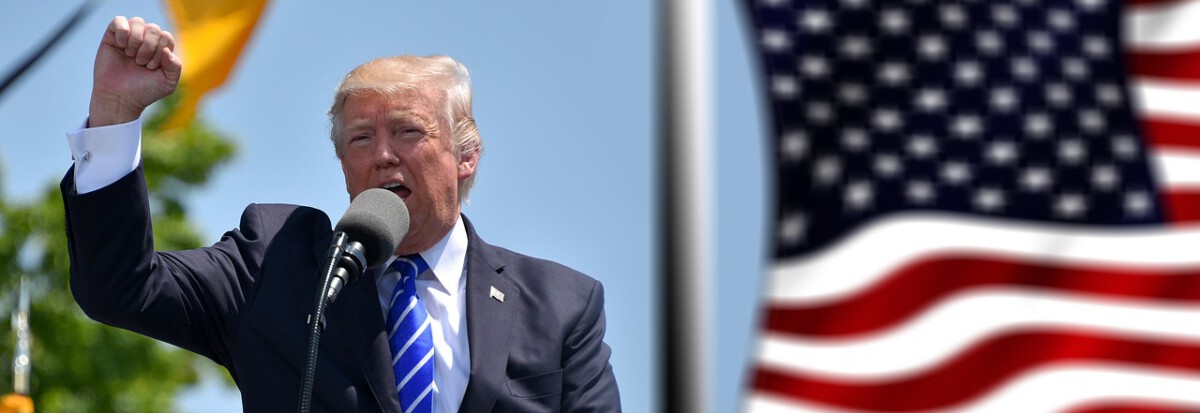


A Shift from Isolation to Assertive Engagement (Image Credits: Pixabay)
President Donald Trump’s return to the White House has injected a renewed vigor into U.S. foreign policy, emphasizing unilateral actions that prioritize American interests above all else.
A Shift from Isolation to Assertive Engagement
Trump’s first year back in office marked a clear departure from expectations of retreat. Instead of withdrawing from international affairs, his administration pursued an aggressive agenda that leveraged America’s military and economic might. Officials described this as a practical evolution of the America First philosophy, one that rejects multilateral constraints in favor of direct interventions. Early moves included targeted operations against perceived threats, signaling to allies and adversaries alike that the U.S. would act decisively when its security was at stake.
The strategy drew immediate reactions worldwide. European partners expressed concerns over the potential erosion of established alliances, while some in Asia viewed it as a stabilizing force against regional aggressors. Trump’s team argued that such boldness restored respect for American leadership, which they claimed had waned under previous administrations. By mid-2025, this approach had already influenced several diplomatic flashpoints, demonstrating its tangible impact.
Key Diplomatic Maneuvers Under the New Banner
One of the administration’s standout achievements involved bolstering ties with select partners to counterbalance rivals. The State Department highlighted successes in trade negotiations and security pacts that aligned with domestic priorities. For instance, efforts to repatriate or reassign envoys from non-essential posts freed resources for high-stakes regions. Critics, however, warned that recalling around 30 diplomats weakened U.S. influence in quieter theaters, potentially creating vacuums for competitors to fill.
Trump’s national security strategy, unveiled in late 2025, encapsulated this ethos. It outlined a framework for selective global engagement, focusing on threats like narcoterrorism and economic coercion. The document emphasized sovereignty and rejected what it called extraterritorial overreach by others, echoing Trump’s long-standing rhetoric. Implementation began swiftly, with operations in Latin America serving as early tests of the policy’s resolve.
Balancing Domestic Priorities with International Reach
At home, the America First push extended to foreign aid and disaster response frameworks, though primarily through a lens of national self-interest. While hurricanes and natural calamities tested federal capabilities, the administration framed international commitments as extensions of protecting American lives and prosperity. This included conditioning aid on reciprocal benefits, a tactic that sparked debate over its humanitarian implications. Supporters praised it for efficiency, noting quicker resolutions in aligned partnerships.
Yet challenges arose. Posts on social media platforms reflected divided opinions, with some users lauding the focus on U.S. citizens amid domestic crises like recent storms, while others decried perceived favoritism toward foreign dictators. The administration countered by pointing to concrete wins, such as enhanced border security measures tied to global cooperation. Overall, these elements wove into a cohesive narrative of strength without overextension.
Implications for Allies and Adversaries
The policy’s ripple effects became evident in alliance dynamics. Traditional partners in NATO faced calls for greater burden-sharing, prompting internal reforms. In the Indo-Pacific, Trump’s unilateral steps, including naval deployments, deterred escalations without full coalitions. Adversaries adapted too, with some opting for de-escalation to avoid direct confrontations.
- Strengthened economic sanctions on key rivals to protect U.S. industries.
- Expanded military aid to select nations combating shared threats.
- Rejection of multilateral agreements seen as unfavorable to American workers.
- Direct negotiations with non-state actors to neutralize risks swiftly.
- Repositioning of diplomatic personnel to frontline hotspots.
Key Takeaways
- Trump’s approach prioritizes U.S. sovereignty, using power aggressively but selectively.
- It has yielded diplomatic victories, though at the cost of strained traditional alliances.
- Domestic issues, including disaster response, inform the policy’s boundaries.
As 2025 draws to a close, Trump’s America First strategy stands as a testament to bold leadership, reshaping how the U.S. navigates a volatile world – though its long-term sustainability remains a point of contention. What aspects of this foreign policy shift intrigue you most? Share your thoughts in the comments below.