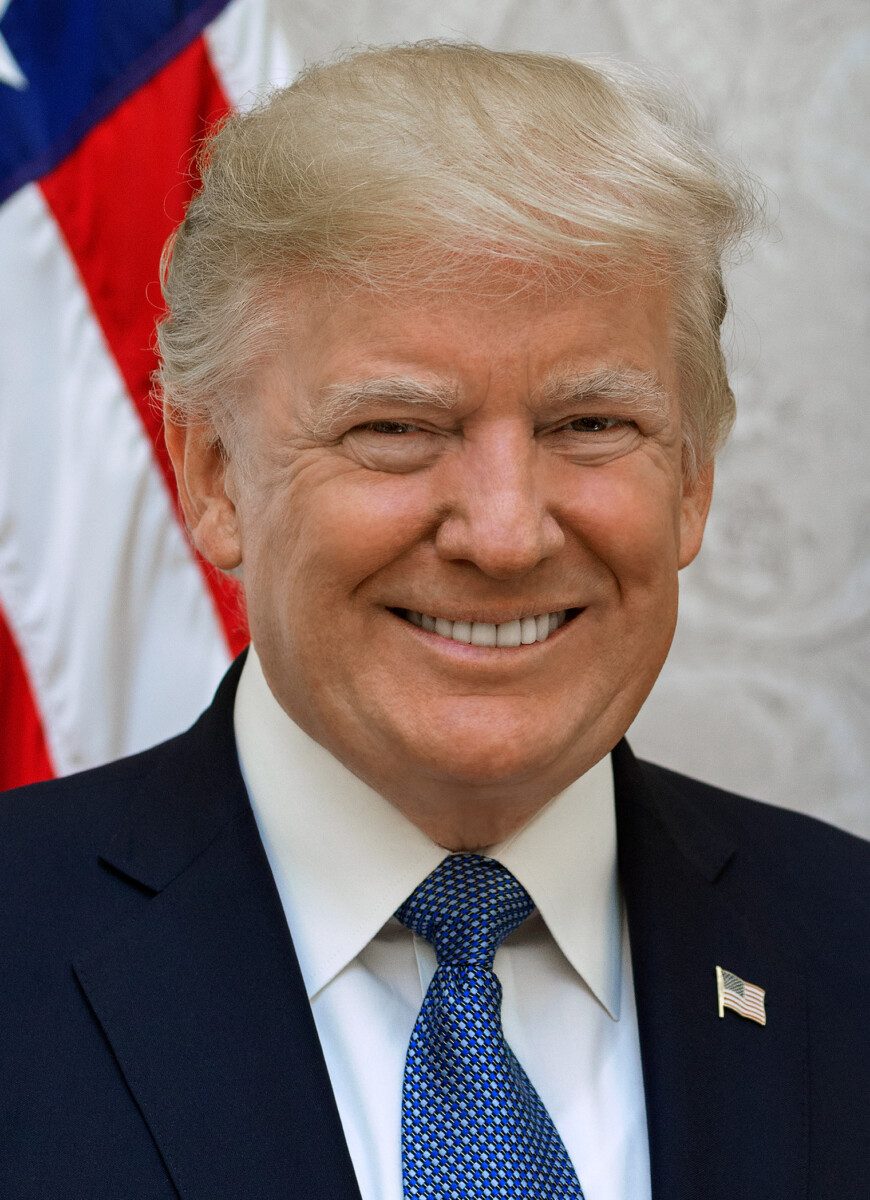
A Flurry of Name Changes Signals Bold Ambition (Image Credits: Upload.wikimedia.org)
President Trump has escalated his lifelong habit of self-promotion into a defining feature of his second term, plastering his name across public landmarks and institutions in ways that echo authoritarian leaders of the past.
A Flurry of Name Changes Signals Bold Ambition
Administration officials recently proposed unfreezing billions in funding for a long-delayed rail tunnel under the Hudson River in exchange for renaming New York’s Penn Station and Dulles International Airport after Trump.[1][2]
Trump already rebranded the John F. Kennedy Center for the Performing Arts as the Trump Kennedy Center and the U.S. Institute of Peace as the Donald J. Trump United States Institute of Peace.[3]
Plans extend further. The Navy announced a new “Trump Class” of battleships, while ideas circulate for Trump Accounts for newborns, Trump Gold Cards for residency applicants, and even a Trump commemorative coin marking America’s 250th anniversary.[3]
These moves mark a departure from tradition. Past presidents typically build libraries after leaving office, not etch their names into active federal assets during their tenure.
Roots in a Lifetime of Branding
Trump honed this approach long before politics, licensing his name to hotels, casinos, steaks, neckties, bottled water, and more.[4]
His 2013 book advised relentless promotion as key to success. Now, as president, that strategy permeates governance, with giant portraits slated for federal buildings and Trump national park passes in discussion.[3]
Critics see this as more than vanity. House Minority Leader Hakeem Jeffries labeled the renaming push “presidential graffiti.”[1]
- Penn Station and Dulles Airport: Tied to infrastructure funding deals.
- Trump Kennedy Center: Repurposed cultural venue.
- Trump Class battleships: Military hardware rebranded.
- 15-foot gilded statue: Planned for a Florida golf complex, dubbed Don Colossus.
- Global developments: Name licensed without direct involvement.
Echoes of History’s Strongmen
Such tactics recall figures like Stalin, who renamed cities after himself, or Mao Zedong, whose image dominated public spaces.[3]
Turkmenistan’s Saparmurat Niyazov went further, naming a month in his honor. Napoleon rechristened the Louvre, and Nazi Germany featured Adolf-Hitler-Platz.
These parallels fuel concerns. Observers note Trump’s efforts create an “inescapable force” at home and abroad, mythologizing him as superhuman.[4]
| Historical Figure | Self-Promotion Example |
|---|---|
| Stalin | Stalingrad |
| Mao Zedong | Portrait everywhere, Little Red Book |
| Napoleon | Musée Napoléon |
| Saparmurat Niyazov | Month named after him |
Unlike those regimes, America’s checks and balances persist, yet the pace alarms many.
Supporters’ Loyalty and Psychological Pull
Recent studies link Trump’s core backers to high conscientiousness levels, distinct from general conservatism.[5][6]
New York Governor Kathy Hochul described the Republican Party under Trump as “nothing more than a personality cult where truth is subjective.”[7]
This devotion sustains the movement, even as critics predict its fragility without the leader.
Key Takeaways
- Trump’s second-term branding exceeds past U.S. presidents.
- Examples span infrastructure, military, and culture.
- Historical echoes raise democratic concerns.
Trump’s push embeds his persona into daily American life, challenging norms and sparking debate over leadership’s role. As these initiatives unfold, their endurance remains uncertain amid shifting politics. What do you think about this trend? Tell us in the comments.