


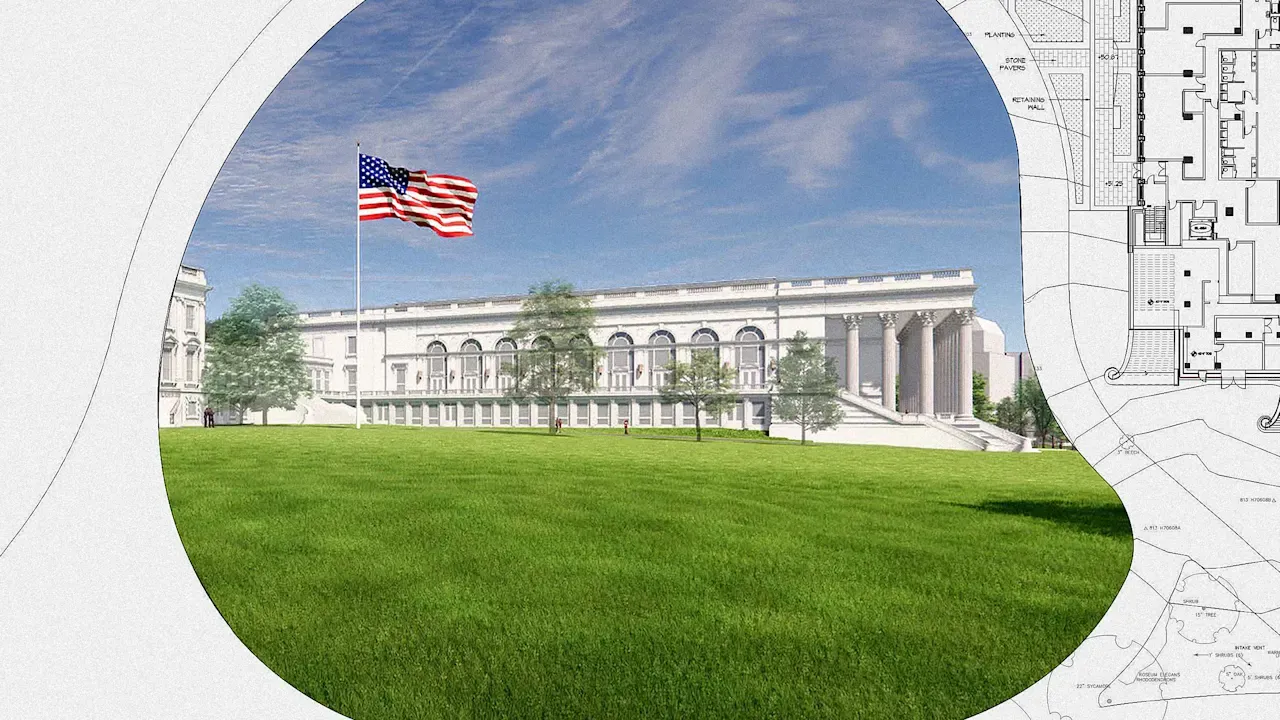
The Driveway’s Unexpected Squeeze (Image Credits: Images.fastcompany.com)
Washington, D.C. – Renderings for a vast new White House ballroom surfaced briefly online last week, revealing a design that indents the historic South Lawn driveway to make room for the structure.
The Driveway’s Unexpected Squeeze
A perfectly oval loop has long encircled the South Lawn, providing balanced access to America’s most recognized residence. The new proposal disrupts that harmony. The roughly 22,000-square-foot ballroom extends slightly into the driveway’s path. Planners adjusted the route inward on one side, creating an irregular bulge reminiscent of a compressed sphere.
This shift prioritizes the building’s footprint over the lawn’s original geometry. The Jacqueline Kennedy Garden site, cleared last year along with the East Wing, now hosts a replacement garden. Yet the driveway alteration underscores a deference to the ballroom’s scale. Critics see it as a symptom of broader design priorities under the current administration.
A Trail of Ambitious White House Overhauls
Trump first dismantled the Rose Garden and installed an oversized flagpole on the North Lawn. Demolition of parts of the White House followed swiftly, before full approvals. The ballroom project replaced its initial architect in December amid size disputes. Shalom Baranes Associates, a local firm, took over with a neoclassical facade featuring Corinthian columns and a grand staircase.
A National Park Service report warned the plans would disrupt historical continuity and compromise the east side’s architectural integrity. The structure matches Trump’s executive order favoring classical styles. Renderings emphasize its limited visibility from landmarks like the Jefferson Memorial and Capitol steps. Still, its footprint dwarfs the West Wing, evoking a lopsided silhouette.
Corporate Dollars Fuel the Build
Private funding covers construction, with corporate donors stepping up despite ethical red flags. Two-thirds of identified contributors secured $279 billion in federal contracts over five years. Companies like Amazon, Apple, Meta, Microsoft, Nvidia, and T-Mobile rank among them, some entangled in regulatory probes.
- Amazon: Major cloud and logistics provider.
- Apple: Hardware giant with app store scrutiny.
- Meta: Social media leader facing antitrust actions.
- Microsoft: Software behemoth in AI push.
- Nvidia: Chipmaker central to computing boom.
- T-Mobile: Telecom player in merger reviews.
Watchdog groups noted disclosure lapses in lobbying reports. Public Citizen highlighted conflicts tied to government business.
Clearing Hurdles for Approval
Trump dismissed the entire U.S. Commission of Fine Arts board last fall, sidelining a key reviewer. His executive assistant, Chamberlain Harris, with no arts experience, faces confirmation soon. The National Capital Planning Commission hosted the renderings on February 13 before removing them. Such moves streamline the path forward.
Proponents argue the ballroom enhances event capacity without skyline intrusion. Detractors point to sacrificed subtlety in pursuit of grandeur.
Key Takeaways
- The ballroom’s scale forces a lopsided South Lawn driveway redesign.
- Corporate backers hold billions in federal contracts, raising influence concerns.
- Oversight bodies faced purges to expedite classical-style expansion.
This proposal tests the balance between presidential vision and historic preservation. The White House grounds evolved through careful stewardship; now they adapt to bold imperatives. What changes would you prioritize for such a landmark? Share your views in the comments.


