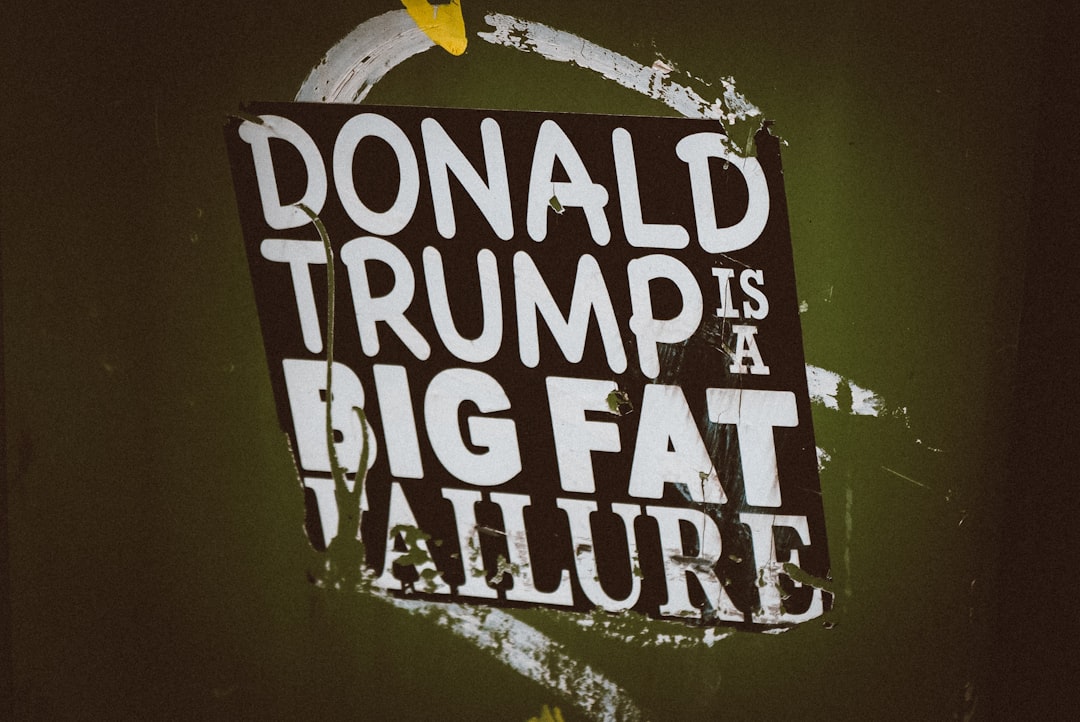
Over 30,000 Lies Defined His First Presidency (Image Credits: Unsplash)
President Donald Trump’s second term has amplified a persistent stream of misstatements that erode trust in core institutions.
Over 30,000 Lies Defined His First Presidency
The Washington Post documented 30,573 false or misleading claims during Trump’s initial four years in office, averaging 21 per day.[1]
This pattern traced back decades earlier. In 1973, Trump denied a federal report detailing discrimination against Black tenants in his family’s properties. Reporters in New York had long noted his exaggerations about wealth and personal conduct. During the 2011-2016 period, he pushed the baseless birther theory questioning Barack Obama’s U.S. birthplace.
His 2016 campaign introduced claims linking undocumented immigrants to surging crime, despite studies showing lower offense rates among them.[1]
- Exaggerated inauguration crowd sizes in 2017, prompting his spokeswoman to defend “alternative facts.”
- Misrepresented a 2019 call with Ukraine’s Volodymyr Zelensky as innocent.
- Falsely declared the 2020 election stolen, fueling the January 6 Capitol attack.
Second-Term Lies Escalate Rapidly
Falsehoods have surged since Trump’s 2024 return, targeting foreign policy, the economy, and domestic incidents. He distanced himself from Jeffrey Epstein, claiming he “hardly knew him,” despite prior associations. Claims of ending “seven or eight wars” and deserving a Nobel Prize lacked evidence.
Domestic narratives drew sharp criticism. Trump described Renee Good’s fatal encounter with an ICE officer as her “violently” running him over, while Vice President J.D. Vance echoed that she “aimed her car” at law enforcement. In Alex Pretti’s Border Patrol shooting, officials labeled her an “agitator” or “would-be assassin,” contradicting reports of her role as an ICU nurse.[1]
- Portrayed the economy as “the best ever,” with grocery prices “way down” and gas at “$1.99,” against rising costs (national average $2.78).
- Suggested Canadians favored U.S. statehood, despite 90% opposition in polls.
- Alleged “genocide” against white South Africans to justify refugee resettlements.
Attacks on Democratic Pillars
These statements form a broader offensive against courts, media, schools, and elections. Trump pardoned over 1,500 January 6 participants on day one, denying rioters carried guns despite evidence. Steve Bannon once advised “flood[ing] the zone with shit” to overwhelm the press.
Such tactics enable defiance of legal rulings and interference in voting. Cities like Portland and Minneapolis faced inflated violence claims to justify federal interventions, even as crime declined. The cumulative effect intimidates citizens and normalizes lawbreaking.
Media Bears a Heavy Responsibility
Outlets must move beyond noting claims as “without evidence.” Coordinated efforts, like daily scorecards from The New York Times, Associated Press, and PolitiFact, could tally lies by theme and total.[1] As Peter Dreier argued in The Nation, stopping exposure lets deception metastasize.
Public tallies would highlight patterns and provoke accountability. Passive coverage fails against this volume.
Key Takeaways
- Trump’s lies span 50 years, peaking in volume during presidencies.
- Second-term falsehoods justify policy shifts and deflect scrutiny.
- Vigorous fact-checking protects institutions from erosion.
Unchecked distortions weaken democracy’s reliance on shared facts. Media innovation offers the best defense – what role should journalists play next? Share your views in the comments.