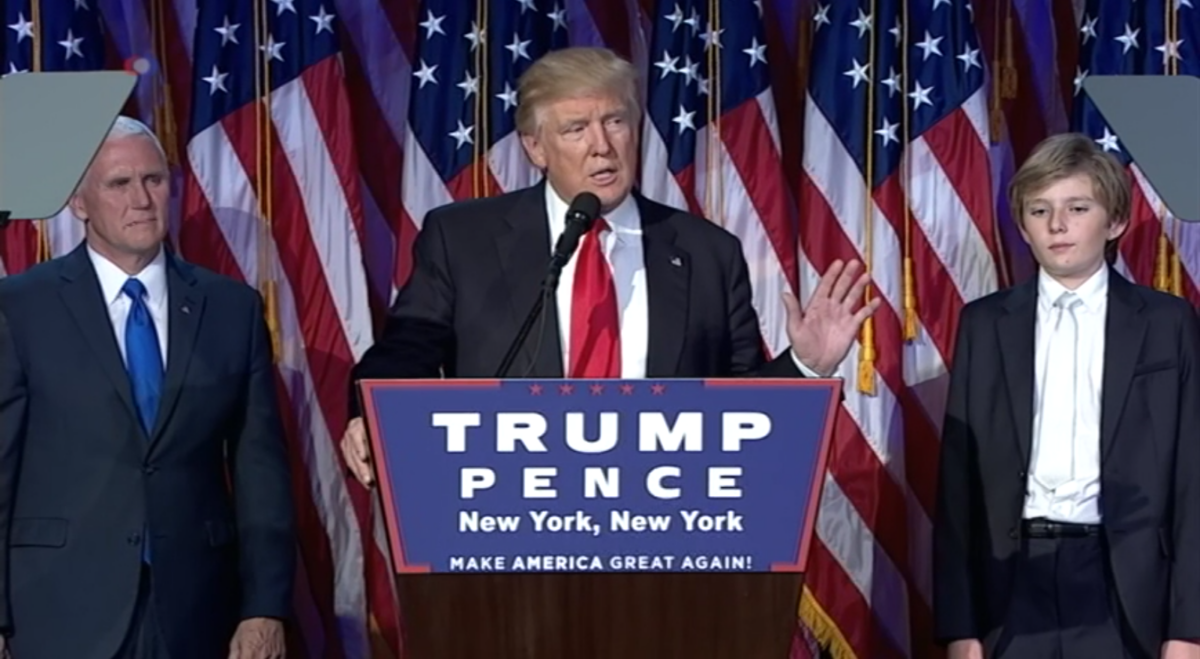
Podcast Remarks Set Off Firestorm (Image Credits: Upload.wikimedia.org)
President Donald Trump sparked widespread controversy by urging Republicans to assume control over election administration in at least 15 states ahead of the 2026 midterms.[1][2]
Podcast Remarks Set Off Firestorm
During an interview on former FBI Deputy Director Dan Bongino’s podcast, Trump declared that Republicans should “take over the voting in at least 15 places” and “nationalize the voting.” He linked the proposal to concerns over noncitizen voting, claiming immigrants had been brought into the country to sway elections illegally. The comments represented a stark escalation in Trump’s long-standing assertions of widespread voter fraud, particularly from his disputed 2020 loss.[2][3]
Trump did not specify which states or locations fell into the targeted 15, but he framed the move as essential for the GOP’s survival. “If Republicans don’t get them out, you will never win another election as a Republican,” he warned, tying the idea to his deportation agenda. Critics quickly labeled the suggestion a direct challenge to the U.S. Constitution, which assigns states primary authority over elections.[4]
White House Response and Presidential Follow-Up
White House officials attempted to walk back the remarks, with spokesperson Abigail Jackson insisting Trump referred solely to the SAVE Act, which mandates proof of citizenship for voter registration. Yet Trump doubled down the next day in the Oval Office, stating that if states could not conduct “honest” elections, “somebody else should take it over.”[5]
Standing alongside Republican lawmakers, he accused Democratic-led areas of corruption in vote counting. House Speaker Mike Johnson, present during the exchange, described it as frustration over “blue states” but firmly rejected a federal takeover. The back-and-forth highlighted internal GOP tensions on the issue.[6]
GOP Leaders Break Ranks Amid Democratic Outrage
Senate Majority Leader John Thune distanced himself explicitly, telling reporters, “I’m not in favor of federalizing elections.” Johnson echoed that sentiment, emphasizing solutions short of overriding state control. Even as Trump rallied support for stricter voter ID measures, these responses underscored reluctance among party elders to embrace full nationalization.[1]
Democrats, meanwhile, sounded alarms. Senate Minority Leader Chuck Schumer deemed the idea “outlandishly illegal,” while Senator Adam Schiff warned of repeated attempts to “rig” outcomes. Figures like Senator Mark Warner viewed it as a forward-looking threat to the 2026 and 2028 cycles.[6][4]
Georgia Raid Adds Context to Escalation
The timing aligned closely with an FBI raid on Fulton County’s election office, where agents seized 2020 voting records amid ongoing probes into Trump’s Georgia defeat. Trump praised the action and hinted at forthcoming revelations, fueling speculation of federal overreach. Tulsi Gabbard, Director of National Intelligence, reportedly participated and conducted a parallel review.[1][7]
Fulton officials challenged the seizure legally, viewing it as an intrusion tied to baseless fraud claims certified otherwise by state Republicans. This episode, combined with pushes for voter data access in states like Minnesota, amplified fears of midterm interference.[8]
Key Implications for Midterm Battles
With Republicans holding slim congressional majorities, historical trends favor opposition gains in midterms. Trump’s aggressive rhetoric signals anxiety over jeopardizing tax cuts and border policies. Proposed legislation like the SAVE Act advanced in spending debates but stalled.[4]
- Election administration remains decentralized under the Constitution, with states dictating rules for registration, ballots, and counting.
- Noncitizen voting occurs rarely and does not sway outcomes, per experts.
- Federal involvement typically limits to enforcement against discrimination, not direct control.
- Midterm losses could stall Trump’s agenda, prompting preemptive maneuvers.
- GOP unity fractures on federal vs. state power balance.
Key Takeaways:
- Trump’s words challenge core democratic norms, even as allies clarify intent.
- Bipartisan resistance highlights constitutional safeguards.
- 2026 midterms now carry heightened stakes for election oversight.
Trump’s overtures expose deep partisan divides on voting security, testing the resilience of state-led processes. As probes continue and rhetoric sharpens, the true test lies in November’s outcomes. What do you think about federal involvement in state elections? Tell us in the comments.