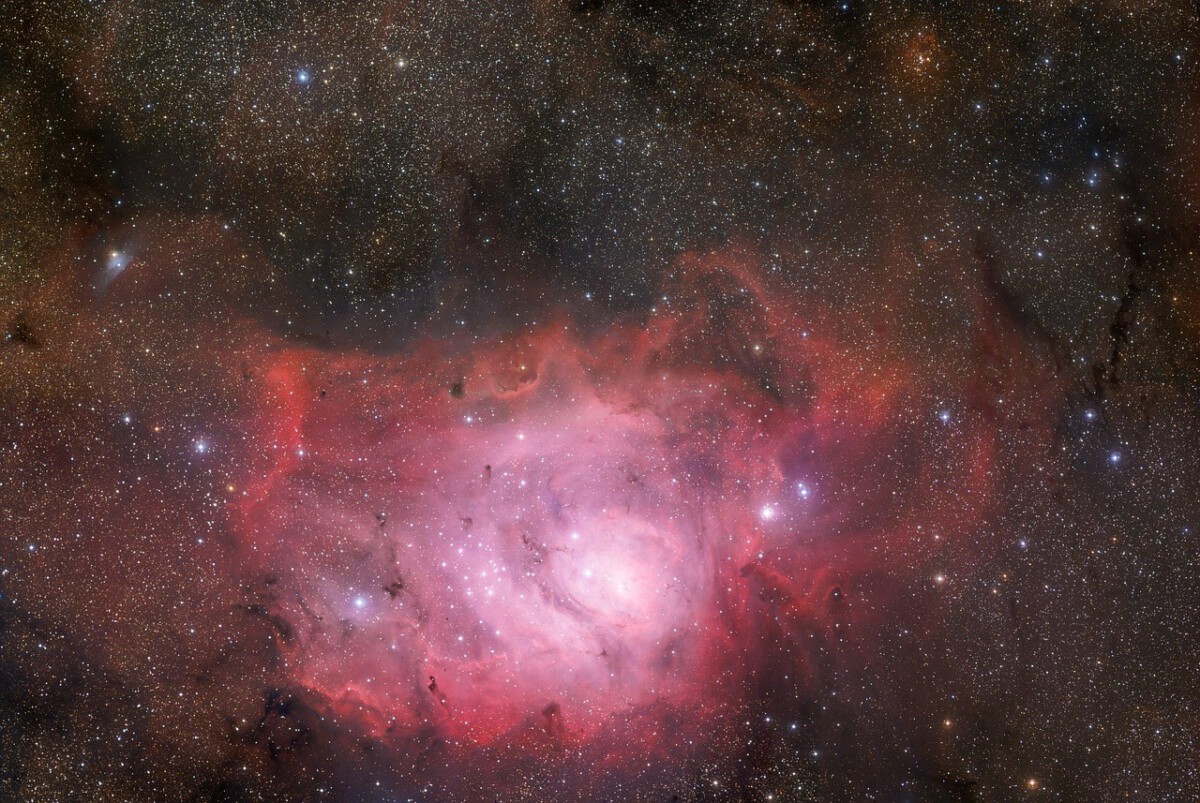
A Blue Beacon Illuminated by Stellar Neighbors (Image Credits: Pixabay)
In the vast expanse of the night sky, few sights rival the ethereal blue glow of reflection nebulae. Dreyer’s Nebula stands out as one such cosmic marvel, located approximately 2,700 light-years from Earth in the constellation Monoceros. Captured recently by an Arizona-based astrophotographer, this nebula reveals the intricate interplay of starlight and interstellar dust. Its discovery highlights both the beauty of the universe and the occasional oversights in astronomical cataloging.
A Blue Beacon Illuminated by Stellar Neighbors
Reflection nebulae like Dreyer’s derive their striking appearance from a simple yet stunning process. Nearby hot stars emit intense light that scatters off surrounding dust particles, producing a vivid blue hue. This scattering favors shorter blue wavelengths, much like the sky appears blue on Earth during the day.
Astrophotographer Greg Meyer immortalized this phenomenon from near Ash Fork, Arizona. Based in Phoenix, he ventured into darker skies to capture the nebula’s delicate structure. The resulting image showcases the nebula’s wispy form against the backdrop of Monoceros, a constellation known for its rich star fields.
The Astrophotographer’s Journey to Capture the Glow
Greg Meyer, hailing from Phoenix, Arizona, traveled to the remote area near Ash Fork for optimal viewing conditions. Dark skies there minimized light pollution, allowing his equipment to record the faint reflections with clarity. Such dedication underscores the challenges faced by astrophotographers chasing elusive deep-sky objects.
Meyer’s shot brings Dreyer’s Nebula into sharp focus, emphasizing its position amid the constellation’s stellar tapestry. Monoceros, often overlooked by casual observers, harbors several such nebulae, making it a prime target for enthusiasts. The image serves as a testament to how accessible these distant wonders can become with the right tools and locations.
A Cataloging Mishap in Astronomical History
Dreyer’s Nebula entered astronomical records through an unintended duplication. It appeared twice in the Index Catalog, first as IC 447 and later as IC 2169. This error stemmed from early observers mistaking separate aspects of the same object for distinct entities.
Such duplications were not uncommon in the era of manual cataloging. The Index Catalog, compiled in the early 20th century, supplemented the New General Catalogue and listed thousands of non-stellar objects. Dreyer’s case illustrates the evolving precision of modern astronomy, where digital surveys now cross-reference observations to avoid repeats.
- Distance: Roughly 2,700 light-years from Earth.
- Constellation: Monoceros, the Unicorn.
- Catalog entries: IC 447 and IC 2169.
- Color origin: Light scattered by dust from hot nearby stars.
- Photographer: Greg Meyer, captured near Ash Fork, Arizona.
Understanding Reflection Nebulae in the Cosmos
Unlike emission nebulae that glow from ionized gases, reflection nebulae passively reflect starlight. Dreyer’s Nebula exemplifies this type, with its dust clouds acting as a canvas for illumination. The blue tint results specifically from dust grains efficiently scattering blue light while absorbing longer wavelengths.
These nebulae often signal regions of active star formation, though Dreyer’s remains a quieter example. Hot stars embedded or nearby energize the dust, creating visible structures observable only with long-exposure photography. Monoceros hosts several similar features, drawing imagers to its fields year-round.
| Feature | Description |
|---|---|
| Appearance | Blue reflection glow |
| Cause | Starlight scattering off dust |
| Location | Monoceros constellation |
Key Takeaways:
- Dreyer’s Nebula shines blue due to dust reflecting light from hot stars.
- It was logged twice in the Index Catalog as IC 447 and IC 2169.
- Greg Meyer’s Arizona image highlights its subtle beauty for skywatchers.
Dreyer’s Nebula reminds us of the universe’s layered surprises, from catalog errors to cosmic colors. As technology refines our maps of the stars, such objects continue to inspire awe. What hidden gems have you spotted in the night sky? Share your experiences in the comments.