

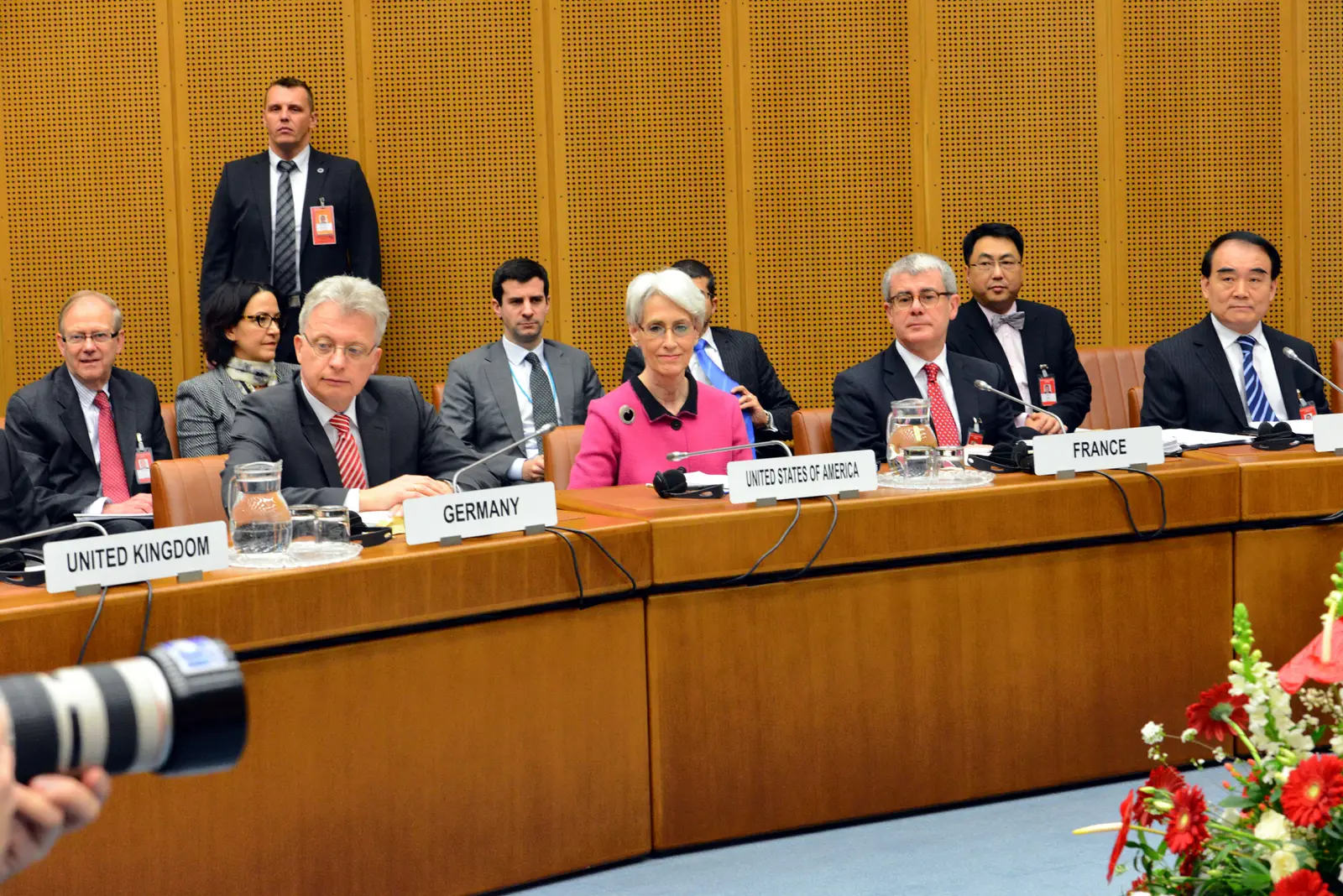
Trump’s Bold Letter Sets Stage for Talks (Image Credits: Upload.wikimedia.org)
Indirect negotiations between the United States and Iran resumed Thursday in Geneva, complicated by ongoing military deployments and unresolved regional conflicts.
Trump’s Bold Letter Sets Stage for Talks
President Donald Trump jump-started the current diplomatic push with a direct message to Iran’s Supreme Leader Ayatollah Ali Khamenei. He dispatched the letter on March 5, 2025, and publicly confirmed it the following day during a television interview. Trump warned: “I’ve written them a letter saying, ‘I hope you’re going to negotiate because if we have to go in militarily, it’s going to be a terrible thing.’”
This approach combined outreach with pressure, as Trump simultaneously intensified sanctions and hinted at potential strikes on Iranian nuclear facilities. The tactic echoed his past correspondence with North Korea’s leader, which yielded meetings but no lasting agreements. Iran’s leadership responded cautiously, with Khamenei vowing retaliation against any aggression amid domestic unrest. Such personal diplomacy marked a shift from decades of severed ties.
Oman Plays Key Mediator Role
Oman facilitated earlier rounds of talks between Iranian negotiator Abbas Araghchi and U.S. envoy Steve Witkoff. The two met face-to-face after initial indirect exchanges, a rarity given the long-standing animosity. Discussions occurred in Muscat and Rome before disruptions halted progress.
Tensions arose when Witkoff floated uranium enrichment at 3.67%, mirroring the 2015 deal from which Trump withdrew in 2018. U.S. officials later clarified that zero enrichment remained their stance, clashing with Tehran’s demands. Two recent rounds in Oman and Geneva followed Israel’s June offensive, yet no breakthroughs emerged. Regional allies watched closely, fearing failed talks could ignite broader conflict.
Aftermath of War and Protests Heightens Stakes
Israel’s 12-day war against Iran in June 2025, supported by U.S. strikes on nuclear sites, derailed prior negotiations. Iran later admitted halting uranium enrichment nationwide, though IAEA inspectors gained no access to damaged facilities. Half a year on, nationwide protests erupted in late December over the collapsing rial currency.
Authorities cracked down harshly, killing thousands and detaining tens of thousands. Trump cited this violence, along with threats of mass executions, to justify deploying an aircraft carrier to the Persian Gulf and another to the Mediterranean. Mideast nations worried a diplomatic breakdown might spark renewed hostilities. Iran’s President Masoud Pezeshkian maintained focus on nuclear issues alone, insisting his country sought no weapons and welcomed verification.
Iran’s Nuclear Advances Alarm Global Watchers
Iran has long claimed its nuclear efforts served peaceful ends, yet it now enriches uranium to 60% – near weapons-grade and unprecedented for non-nuclear states. The IAEA’s last report noted a stockpile exceeding 9,870 kilograms, far above 2015 limits of 300 kilograms at 3.67% purity. Inspectors have faced months-long barriers to verification, fueling suspicions.
U.S. intelligence judged Iran stopped short of a weapons program but retained capabilities to pivot quickly. Israel demanded total dismantlement, plus curbs on ballistic missiles and proxy support for groups like Hezbollah and Hamas. Broader U.S. concerns encompassed regional meddling. Here’s a snapshot of key program metrics:
| Metric | 2015 Deal Limit | Current Status |
|---|---|---|
| Uranium Stockpile | 300 kg | 9,870 kg |
| Enrichment Level | 3.67% | Up to 60% |
| IAEA Access | Full | Restricted |
Roots of Enduring U.S.-Iran Hostility
Relations soured after the 1979 Islamic Revolution ousted the U.S.-backed shah, sparking the 444-day embassy hostage crisis. The 1980s Iran-Iraq War saw U.S. support for Baghdad, naval clashes, and the downing of an Iranian airliner. Grudging diplomacy peaked with the 2015 nuclear accord, undone by Trump’s exit.
Historical grievances persist, from CIA involvement in 1953 to proxy conflicts today. Tehran views its program as sovereign right; Washington sees existential risk.
Key Takeaways:
- U.S. insists on zero enrichment; Iran demands focus on nukes only.
- Recent war halted enrichment but blocked IAEA checks.
- Military assets signal readiness amid fragile talks.
These Geneva talks test whether diplomacy can prevail over decades of distrust and fresh scars from war and repression. Regional stability hangs in the balance – what risks will each side take next? Share your thoughts in the comments.