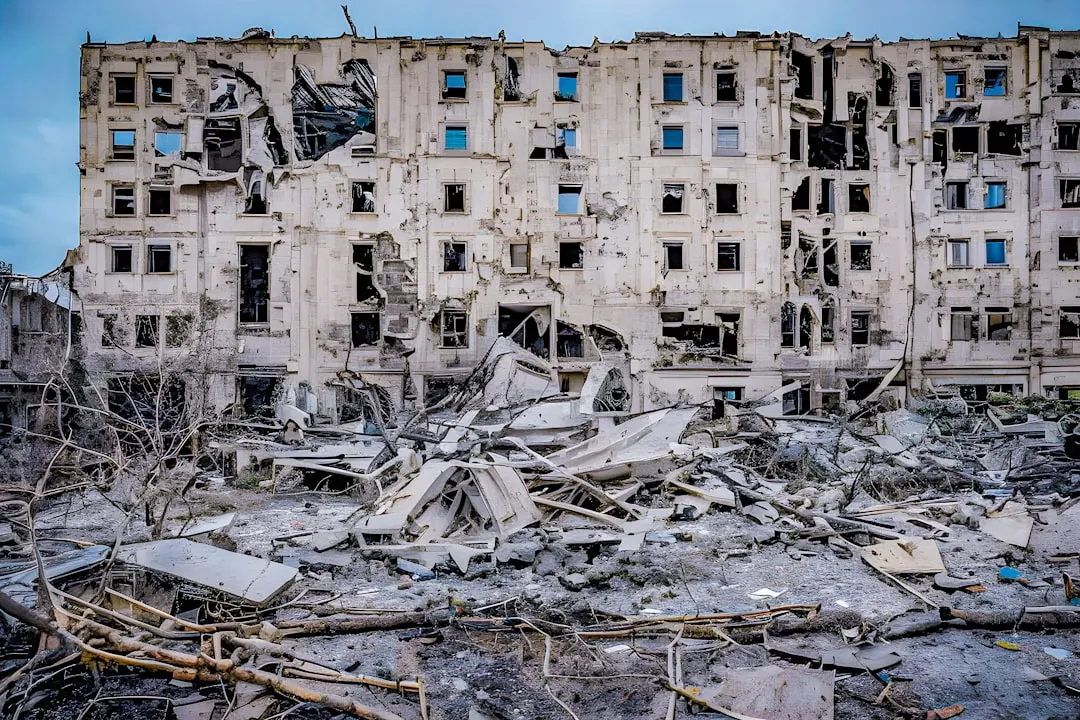
Russia’s Overconfident Launch Meets Stubborn Resistance (Image Credits: Unsplash)
Ukraine – Four years after Russia initiated its full-scale invasion, the nation endures a grueling war of attrition while maintaining control over the majority of its territory.
Russia’s Overconfident Launch Meets Stubborn Resistance
Russian leaders anticipated a swift victory when forces crossed into Ukraine on February 24, 2022. They aimed to seize Kyiv within days and install a pro-Moscow government.[1][2] Ukrainian troops repelled the advance on the capital in the early weeks, forcing a Russian withdrawal and shifting the conflict to eastern strongholds.[1] That initial failure set the tone for a prolonged struggle.
Today, Moscow controls roughly 20 percent of Ukrainian land, a far cry from its original ambitions.[3][1] Gains in 2025 amounted to just 0.8 percent of the country, concentrated in Donetsk Oblast.[3] Putin refuses to halt operations despite these limited results.
Stagnant Fronts and Heavy Losses Define the Grind
Front lines stretch across more than 1,000 kilometers, resembling World War I trenches augmented by modern drones. Russian troops inch forward in Donetsk, targeting cities like Kramatorsk and Sloviansk after capturing Pokrovsk in late 2025.[3][4] Ukrainian forces counter by liberating villages in Zaporizhia and Kharkiv oblasts, reclaiming about 200 square kilometers in recent weeks.[4]
Casualties mount on both sides in this war of exhaustion. Independent Russian media identified over 200,000 soldiers killed.[2] Ukrainian President Volodymyr Zelenskyy reported 55,000 troops lost.[5]
| Side | Estimated Fatalities |
|---|---|
| Russia | 200,000+ |
| Ukraine (military) | 55,000 |
- Recent Ukrainian advances: Ternuvate, Andriivka, and others in Zaporizhia direction.
- Russian focus: Kostiantynivka and Pokrovsk areas in Donetsk.
- Technological shift: Drones dominate, with rapid innovations in both armies.
- Strikes continue: Infrastructure hit in Zaporizhzhia on anniversary.
Europe Bolsters Ukraine Amid Peace Doubts
Leaders gathered in Kyiv for anniversary commemorations, reaffirming support. UK Prime Minister Keir Starmer called Ukraine the frontline of freedom, while NATO’s Mark Rutte stressed daily ammunition needs.[2] French President Emmanuel Macron voiced skepticism about imminent peace talks, citing Russia’s lack of willingness.[2] Zelenskyy spoke from a bunker, urging EU membership and warning of Moscow’s broader threats.
The European Union highlighted its aid efforts over four years, from weapons to reconstruction. Yet challenges persist, including manpower shortages and inconsistent Western supplies that prolong the fight.[6]
Transformed Warfare Signals Lasting Change
Drones have revolutionized the battlefield, enabling automated strikes and forcing constant adaptation. Ukrainian innovations counter Russian Shahed drones, while both sides deploy first-person-view models against infantry.[6] This technological arms race, combined with foreign mercenaries on the Russian side, underscores a conflict reshaping global military doctrines.
Ukraine demonstrates resilience, far from defeat despite odds. Russian objectives remain unmet, with no major breakthroughs since early gains.
Key Takeaways
- Russia holds 20% of Ukraine but advances slowly amid high costs.
- Drones and attrition define a stalemated war entering year five.
- Western aid sustains Ukraine, though peace prospects dim short-term.
Ukraine’s defiance after four years offers a stark lesson in resolve against aggression. As fighting persists, sustained international backing could tip the balance toward resolution. What steps should the world take next? Share your views in the comments.