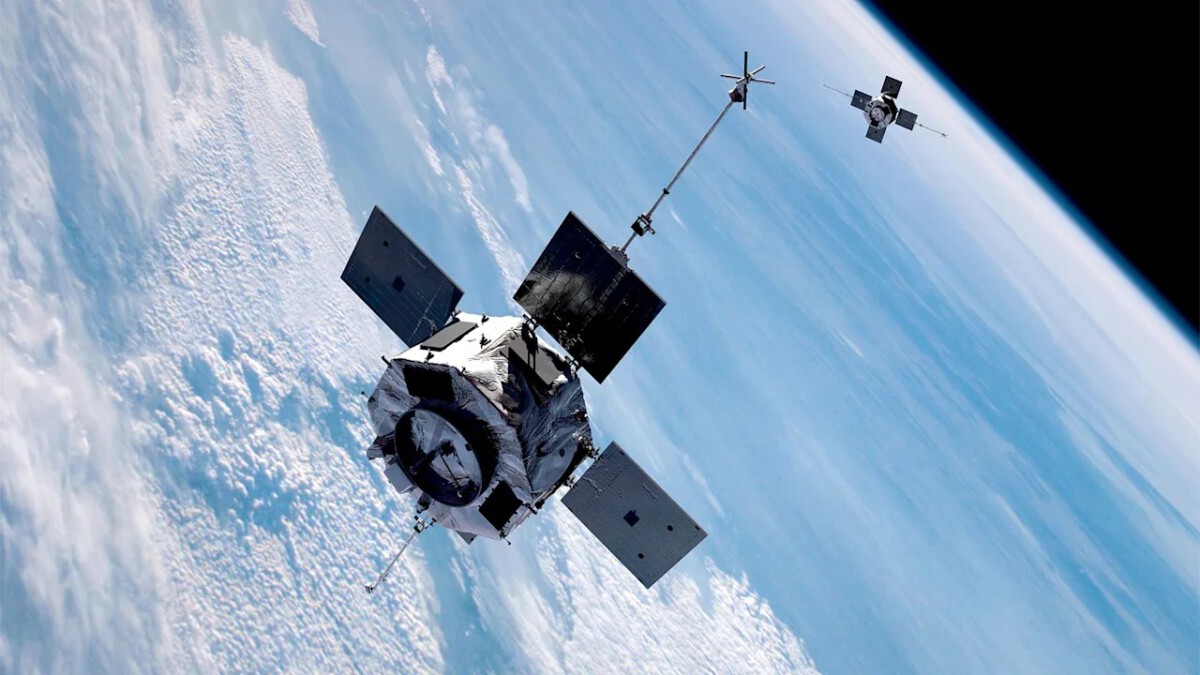
The Probes’ Vital Role in Unveiling Space Weather (Image Credits: Images.fastcompany.com)
A spacecraft that spent more than a decade probing Earth’s radiation belts now approaches the planet for an uncontrolled plunge into the atmosphere.
The Probes’ Vital Role in Unveiling Space Weather
Charged particles trapped in Earth’s magnetic field pose serious threats to satellites, power grids, and communication systems, prompting NASA to launch the Van Allen Probes in 2012.
Designated A and B, these twin spacecraft gathered critical data on these high-energy particles until their mission concluded in 2019 after fuel depletion.
Probe A delivered insights that enhanced forecasts for geomagnetic storms, protecting technologies reliant on space infrastructure.
Today, with its orbit decaying, Probe A marks the end of an era in radiation belt research.
Precise Timing Remains Elusive for Reentry
NASA predicts Van Allen Probe A will pierce the atmosphere around 7:45 p.m. EDT on March 10, though a plus-or-minus 24-hour window introduces uncertainty.
This means debris could reach the surface anytime from late today through March 11.
The 1,323-pound probe, built to withstand harsh space conditions, faces intense atmospheric friction that will incinerate most components.
Agency officials note some sturdy parts may endure the fiery descent intact.NASA’s tracking page provides ongoing updates as the event nears.
Unpredictable Path Over Land and Sea
Current orbital tracking reveals Probe A sweeping over regions including northern South America, central Africa, and Indonesia, as shown on satellite monitors like N2YO.com.
NASA cannot pinpoint the exact landing zone yet due to atmospheric variables and the probe’s spin.
Oceans cover 70 percent of Earth’s surface, offering reassurance that surviving fragments have a strong likelihood of splashing down harmlessly, according to reports from the Times of India.Times of India article
Continuous monitoring will refine predictions in the coming hours.
Risk Assessment: Harm Odds Defy Alarm
The overall probability of the probe causing injury to anyone stands at approximately 1 in 4,200, a figure NASA deems negligible on a global scale.
For any individual, those odds shrink dramatically given Earth’s vast expanse and population distribution.
Here are key factors minimizing concern:
- Vast majority of the spacecraft will disintegrate during reentry.
- Primary overflight paths favor uninhabited ocean areas.
- Historical precedents show similar events pass without incident.
- Real-time surveillance allows for rapid public advisories if needed.
Still, space agencies emphasize vigilance with uncontrolled reentries.
Key Takeaways
- Probe A weighs 1,323 pounds but mostly burns up.
- Reentry window: March 10-11, centered on evening hours EDT.
- Personal risk approaches zero; global harm chance is 1 in 4,200.
This reentry underscores the growing challenge of managing orbital debris as humanity launches more missions into space. While the Van Allen Probe A’s return carries minimal threat, it serves as a reminder to prioritize deorbiting technologies for safer skies. What are your thoughts on handling returning spacecraft? Share in the comments below.