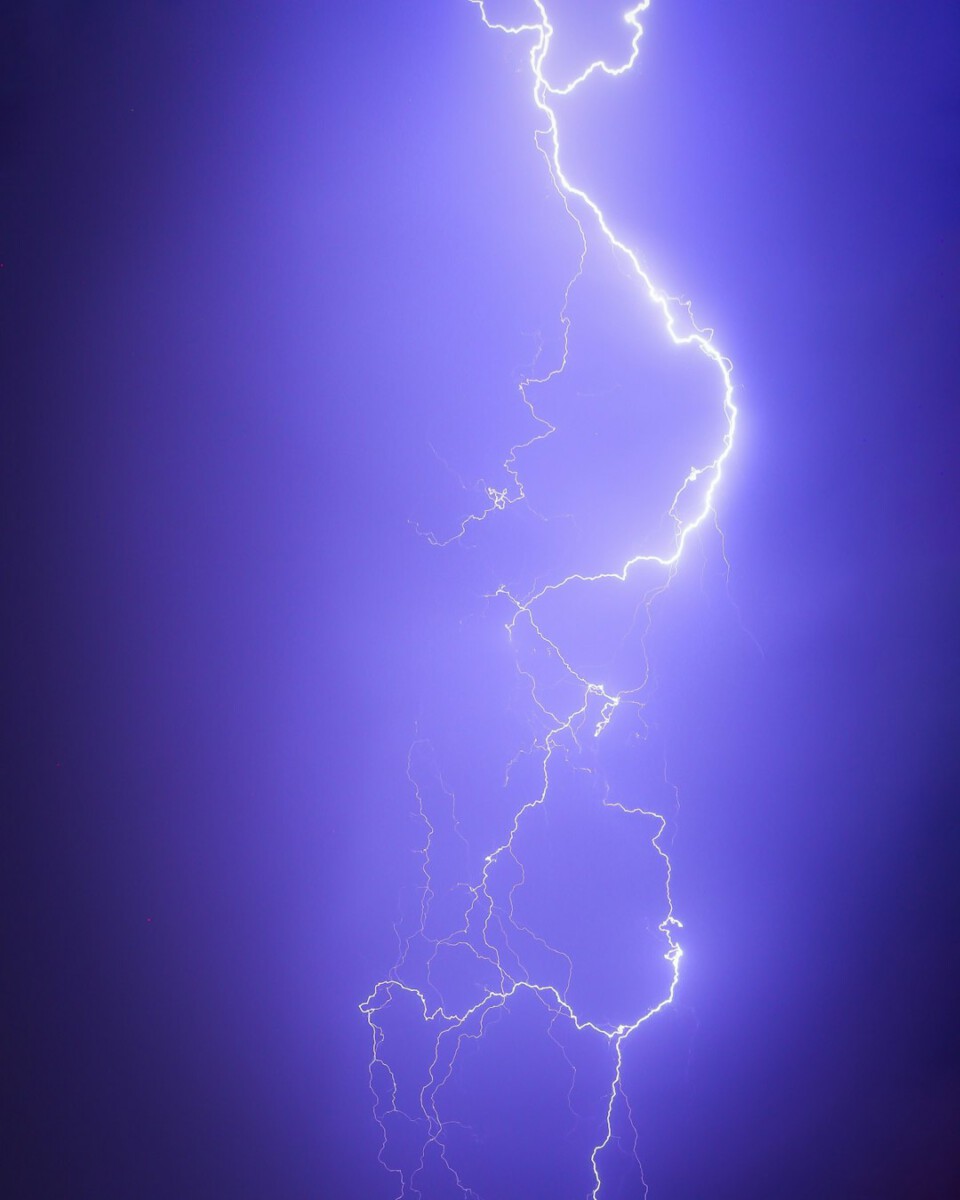
Lightning Ignites the Majority of Major Fires (Image Credits: Unsplash)
Vancouver – A fledgling company positioned itself at the forefront of wildfire prevention by deploying technology aimed at neutralizing lightning before it ignites blazes.[1][2]
Lightning Ignites the Majority of Major Fires
Lightning strikes triggered nearly 60 percent of wildfires in Canada during the record-breaking 2023 season, responsible for 93 percent of the total area scorched.[1] Those fires consumed tens of millions of acres, released nearly 500 million tons of carbon emissions, and displaced hundreds of thousands of residents. Across North America, such strikes cause over 50 percent of burned areas and emissions from wildfires.[2]
Experts noted the trend worsened in boreal forests, where temperatures rose twice the global average. Forecasts predicted further increases in lightning-ignited fires amid climate shifts. Government agencies sought innovative tools beyond traditional suppression efforts.
- Canada lost 18 million hectares – or 5 percent of its forests – in 2023 wildfires.[2]
- Lightning accounts for 85 percent of land area burned by fires in Canada.[2]
- U.S. wildfires impose annual economic costs nearing $893 billion.[2]
Skyward Wildfire’s Suppression Strategy
Skyward Wildfire harnessed artificial intelligence to forecast high-risk storms pinpointing lightning likely to spark fires.[2] Aircraft then dispersed aluminum-coated fiberglass strands – known as metallic chaff – into targeted clouds to discharge electrical buildup and avert cloud-to-ground strikes.[1] The firm described the materials as inert, non-toxic, and compliant with regulatory standards.
Deployments focused on rare high-risk events, comprising less than 0.1 percent of annual lightning activity. Founder Sam Goldman called the approach one of the most immediate climate solutions available. The company avoided the term “cloud seeding” publicly but aligned with historical weather modification techniques.
Trials Show Reductions, But Questions Persist
Skyward partnered with Alberta Wildfire in August 2024 for plane and drone tests, achieving 60 to 100 percent fewer strikes in treated cells versus controls.[1] Preliminary work occurred in British Columbia that year, followed by expanded 2025 operations with provincial agencies. British Columbia Wildfire Service acknowledged the trials and expressed interest in potential tools.
Researchers praised proactive intervention but urged caution. MIT’s Earle Williams deemed past chaff studies controversial due to small samples and overlooked variables like intracloud lightning. Others, including Phillip Stepanian, affirmed the method’s potential while highlighting uncertainties in dosage and storm variability. Environmental advocates called for transparent testing to assess broader weather impacts.
Fresh Capital Powers Growth
In February 2026, Skyward secured $7.9 million Canadian dollars in seed extension funding, led by Climate Innovation Capital with participation from Active Impact Investments and Diagram Ventures.[3] The influx supported product scaling and deployments in new regions. Goldman stated the capital enabled reliable tools for partners facing escalating risks.
| Funding Round | Amount (CAD) | Date |
|---|---|---|
| Seed Extension | $7.9 million | Feb 2026 |
Key Takeaways
- Skyward demonstrated 60-100% lightning reductions in targeted 2024-2025 trials.
- Technology relies on AI forecasting and chaff dispersal, rooted in 1960s U.S. research.
- Experts seek more rigorous data on scalability and environmental effects.
Skyward Wildfire offered a proactive front against lightning-sparked infernos, yet scientific scrutiny underscored the need for robust validation. As wildfires intensify, such innovations could prove pivotal if hurdles clear. What do you think about lightning suppression for fire prevention? Tell us in the comments.