Most travelers assume that reaching a world-famous landmark is as simple as buying a ticket and showing up, but the reality in 2024 is a logistical gauntlet that ruins thousands of vacations every week. While your Instagram feed shows pristine views and empty walkways, the truth involves mandatory 6-month-advance reservations, aggressive crowd-control barriers, and “dynamic pricing” that can triple the cost of entry without warning. From crumbling infrastructure to soul-crushing bureaucratic red tape, these 20 iconic sites have become more of a chore than a bucket-list dream. Here’s what the travel agencies actually say behind closed doors.
#20 — The Acropolis, Greece

If you think you can just stroll up the ancient slopes of Athens to see the Parthenon, you’re in for a wake-up call.
In a desperate bid to save the site from “over-tourism,” Greek authorities recently implemented a strict hourly cap of 20,000 visitors, meaning if you miss your specific 15-minute entry window, your ticket is effectively trash. The logistics of navigating the sweltering heat while standing in “static” queues that stretch for blocks is now the standard experience.
Furthermore, the ongoing restoration projects mean your view is often more steel scaffolding and heavy cranes than ancient marble. Many seasoned travelers now argue that the view of the Acropolis from a nearby rooftop bar is significantly more rewarding than the cramped, dusty reality of the summit.
But while Athens is crowded, it doesn’t compare to the modern logistical “pay-to-play” nightmare found at #19…
#19 — Mount Everest, Nepal

Reaching the world’s highest peak used to be a feat of endurance; now, it is a feat of extreme paperwork and waiting in literal “human traffic jams.”
The Nepalese government has increased permit fees significantly, yet the logistical bottleneck at the “Hillary Step” remains a life-threatening reality where climbers wait hours in the “Death Zone” just for a turn to pass. You aren’t just battling the elements; you’re battling a system that allows nearly 500 permits a season on a mountain that can’t safely hold them.
Beyond the danger, the trash crisis has reached a breaking point, with specialized “cleanup fees” now mandatory for every expedition. The logistics of waste management at 29,000 feet are so poor that the mountain has earned the nickname “the world’s highest junkyard.”
If you think those mountain queues are bad, wait until you see the transport disaster waiting for you at #18…
#18 — Venice, Italy

Venice has officially become the first city in the world to require an “entry fee” just to step foot in the historic center on peak days, adding a layer of digital bureaucracy to every visit.
The logistics of moving through Venice have shifted from romantic to rigid, as GPS-tracked turnstiles monitor the flow of humans through the narrow “calli.” If the city hits its capacity, your day trip is effectively canceled, regardless of how far you traveled.
Worse yet, the ban on large cruise ships has moved the logistical burden to distant mainland ports, forcing tourists into a multi-hour commute via overpriced water taxis just to reach the Grand Canal. It’s no longer a city; it’s a high-priced theme park with a sinking foundation.
Venice is a literal maze, but the transport issues at #17 are much more vertical…
#17 — The Eiffel Tower, France

The “Iron Lady” is currently facing a logistical crisis involving a deadly combination of labor strikes and massive pre-Olympic security overhauls.
Waiting for the elevators is no longer the main issue; it’s the mandatory security screening that now rivals international airport terminals. Gone are the days of lounging on the grass directly beneath the tower—it is now permanently enclosed by a multi-million-dollar bulletproof glass wall that dictates exactly where you can walk.
Even with a “skip-the-line” pass, visitors often report wait times exceeding three hours due to the tower’s aging elevator system constantly undergoing “unscheduled maintenance.” For many, the logistical headache of the ground-level security maze is enough to ruin the romance before they even leave the ground.
French bureaucracy is tough, but the “permit lottery” system at #16 is even more exclusive…
#15 — Petra, Jordan

The “Rose City” is a desert marvel, but the logistical reality of visiting in 2024 involves navigating a gauntlet of unofficial “guides” and aggressive animal transport vendors.
While the walk through the Siq is breathtaking, the site has seen a massive influx of visitors that the single-entry-point infrastructure simply cannot handle. Local authorities have struggled to regulate the “donkey and camel” logistics, leading to ethical concerns and crowded, narrow pathways where tourists and animals constantly collide.
Furthermore, if you want that famous “top-down” photo of the Treasury, you are often extorted by “guards” for extra fees to access restricted paths that were once free. It is a logistical free-for-all where the official ticket price is only the beginning of your expenses.
But at least Petra is on solid ground; the logistics at #15 feel like they’re underwater…
#15 — The Great Barrier Reef, Australia

Visiting this natural wonder is no longer a simple boat ride; it’s a logistical race against environmental regulations and bleaching events.
To protect the coral, the government has restricted the number of licensed operators, leading to skyrocketing prices and vessels that are packed to the gills with hundreds of tourists. You are often shuffled through a “cattle-call” snorkeling experience on a floating pontoon rather than a private exploration of the reef.
The logistical nightmare also involves the “weather lottery.” Because the reef is so sensitive, operators frequently cancel trips at the last minute with no refunds, leaving travelers stranded in expensive coastal towns with nothing to do.
Speaking of restricted access, the landmark at #14 has become almost impossible to enter legally…
#14 — The Statue of Liberty, USA

Most people don’t realize that the Statue of Liberty is not managed by New York City, but by the federal government, leading to a logistical nightmare of TSA-level security.
To even reach the island, you must navigate the Battery Park ferry terminal, which is a notorious hotspot for scams and unauthorized ticket sellers. Once on the island, if you haven’t booked a “Crown Access” ticket at least four to six months in advance, you are strictly forbidden from entering the statue itself.
The physical logistics of the climb are also grueling: 354 steps in a cramped, unconditioned spiral staircase that frequently closes due to “heat safety” issues. Most visitors spend 4 hours in transit and security for a mere 15 minutes of actual sightseeing.
The Statue is a squeeze, but the logistical “lottery” at #13 is based purely on luck…
#13 — The Wave, Arizona

This stunning sandstone formation is perhaps the most logistically frustrating site in the United States.
Because the ecosystem is so fragile, the Bureau of Land Management permits only 64 people per day to visit. To get a spot, you must enter a digital lottery months in advance or a “daily lottery” that requires you to be physically present in a specific radius in Utah with a mobile device.
The odds of winning are less than 3%, meaning thousands of people plan entire trips to the Southwest only to be rejected by a computer algorithm. Even if you win, the “logistics” involve a grueling 6-mile hike in unmarked desert terrain where GPS often fails.
If you hate lotteries, you’ll definitely hate the “timed entry” chaos of #12…
#12 — Machu Picchu, Peru

The Peruvian government has turned Machu Picchu into a logistical giant puzzle by introducing strict “circuits” that prevent you from backtracking.
Once you choose a path, you must follow it one way; if you miss a photo opportunity, you aren’t allowed to turn around to go back. Furthermore, you must now hire an official guide for every entry, and your time on the site is strictly capped at four hours.
The logistics of actually getting there involve a convoluted chain of international flights, high-altitude trains that sell out months in advance, and a shuttle bus system that has lines starting at 4:00 AM. Many travelers find that the “Lost City” feels more like a supervised conveyor belt.
But even a conveyor belt is more organized than the crowds at #11…
#11 — The Louvre, France

The world’s largest museum is currently a logistical disaster zone, specifically the room housing the Mona Lisa.
Because of the sheer volume of visitors, the museum has implemented a forced-queue system that allows you roughly 30 seconds to view the painting from 20 feet away behind bulletproof glass. The logistics of the “Pyramid Entrance” are so botched that visitors often wait two hours even with a reserved time slot.
Internal “traffic jams” are so common that the museum has had to limit total daily capacity, yet the halls remain so packed that seeing the art becomes a secondary concern to simply not being trampled.
Wait until you see the “Instagram vs Reality” logistical nightmare at #10…
#10 — Santorini, Greece

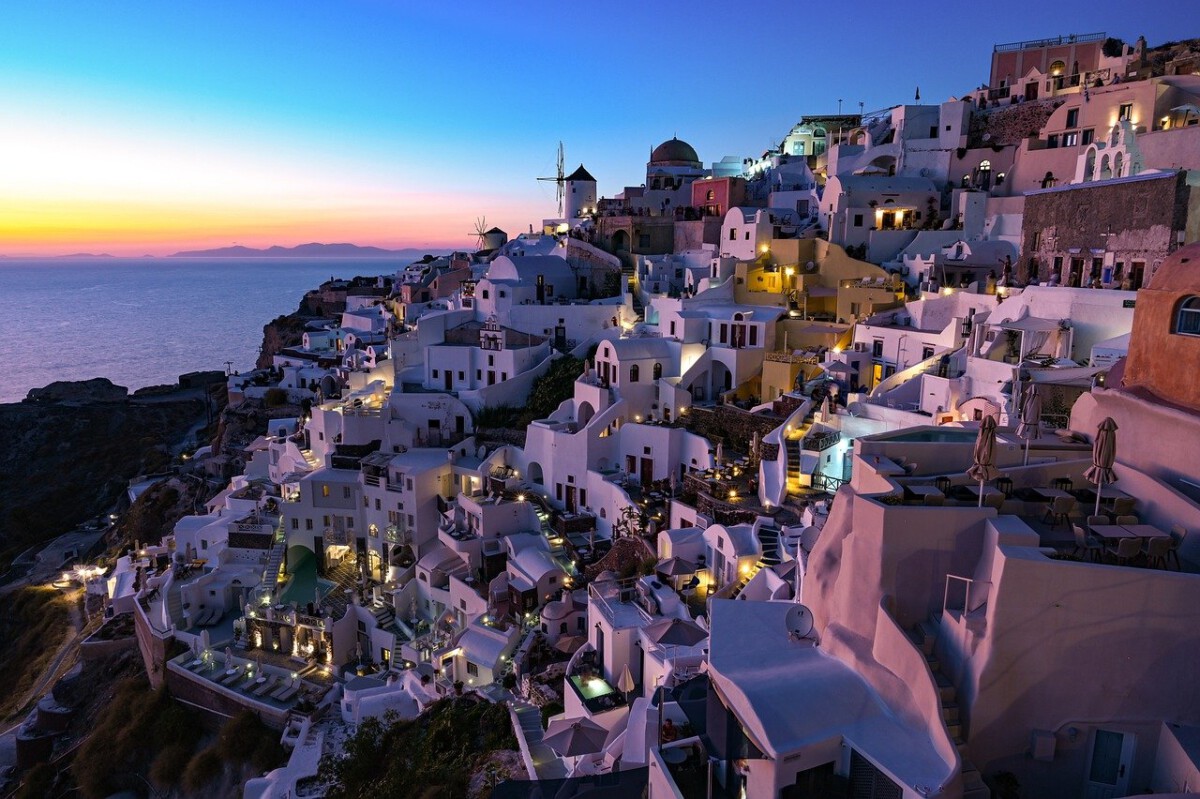
The iconic blue domes of Oia are the backdrop for a logistical collapse caused by the cruise industry.
On days when five or more ships are in port, over 15,000 people descend onto narrow cobblestone streets designed for a few hundred. The logistics of moving from the port to the village involve a “cable car” line that can last three hours or a donkey path that is widely criticized for animal cruelty.
The village handles the volume so poorly that local residents have started putting up “private property” signs on the very stairs tourists use to get their photos. It is a logistical battleground where the “sunset” experience is marred by thousands of elbows in your ribs.
If you think those streets are tight, #9 is a narrow bridge where logistics go to die…
#9 — The Hallstatt Salt Mine, Austria

This “Fairytale Village” has become so popular that it recently made headlines for building a wooden fence to block the view to discourage tourists from staying too long.
The logistics of visiting Hallstatt are a nightmare due to a total lack of parking and a strictly enforced “bus slot” system. If a tour group stays 10 minutes past their allotted time, the company is slapped with a massive fine.
The town is so overwhelmed that they have implemented “quiet zones” where it is illegal to speak loudly, making the entire logistical experience feel like walking through a library under the watchful eye of a librarian.
But at least Hallstatt has a fence; the site at #8 is essentially a permanent construction zone…
#8 — Sagrada Familia, Spain

Gaudi’s masterpiece has been under construction for over 140 years, and the logistics of visiting reflect that chaos.
Because it is an active construction site and a consecrated church, the security and clothing regulations are incredibly strict. Visitors are frequently turned away for wearing “improper” attire, losing their non-refundable $30 tickets instantly.
The logistics of the “tower climb” are also a fail-point: the elevators are small, and the descent is via a narrow, 400-step stone spiral that has no exits. If you have a panic attack halfway down, the entire tower’s visitor flow has to be shut down.
Spain’s rules are tough, but the “transport monopoly” at #7 is even more frustrating…
#7 — The Jungfraujoch, Switzerland

Known as the “Top of Europe,” this landmark is a logistical marvel that has become a financial nightmare.
The only way to reach the site is via a private cogwheel railway that costs over $200 per person, and because the capacity is limited, you must reserve a specific return train time before you even arrive. If the weather turns—which it does 70% of the time—you are logistically “stuck” at a high-altitude station with zero visibility, having spent a fortune for a view of a white wall.
The “logistics” here are designed to keep you in the station’s shopping malls and chocolate shops, as you wait for your designated time slot to leave the mountain.
That high-altitude headache is nothing compared to the “scam logistics” of #6…
#6 — The Pyramids of Giza, Egypt

The logistics of Giza are famous for “The Gauntlet”—a series of unofficial checkpoints, aggressive touts, and fake “official” guides.
While the pyramids are ancient, the logistical management is non-existent. There is no clear signage for where to buy tickets, leading many tourists to be intercepted by camel drivers who claim the “main gate is closed.”
Once inside, the “Grand Egyptian Museum” logistics have been stalled for nearly a decade, with opening dates constantly pushed back, leaving visitors frustrated and confused about where the actual treasures are being kept. It is a logistical “choose your own adventure” where every choice costs you money.
Speaking of expensive choices, the landmark at #5 has basically banned the “budget” traveler…
#5 — Maya Bay, Thailand

Famous from the movie The Beach, this landmark was closed for years due to ecological collapse and has reopened with crushing logistical restrictions.
Boats are no longer allowed to enter the bay; instead, they must drop you at a rear pier where you have to walk through a jungle path. Access is strictly limited to an hourly quota, and swimming is completely banned.
If you are caught so much as dipping your toes in the water, you face immediate fines and expulsion. The logistics are so tightly controlled that your “island paradise” experience feels more like a supervised school field trip.
But even a field trip is more fun than the “ticket war” at #4…
#4 — The Colosseum, Italy

The logistics of the Colosseum are currently embroiled in a “ticket bot” scandal that has made official entry almost impossible.
Scalpers use automated software to buy up the $18 tickets in milliseconds, forcing tourists to buy “guided tours” on the secondary market for $100 or more. The Italian government has tried to implement “nominative tickets” (checking IDs against names), but this has only created massive logistical bottlenecks at the entrance, with lines stretching for hours in the Roman heat.
If your name has a typo on the ticket? You are barred from entry with no recourse. It is a bureaucratic nightmare that overshadows the history of the arena.
The Colosseum is a battle, but the “transportation trap” at #3 is even more complex…
#3 — Neuschwanstein Castle, Germany

The “Disney Castle” is located at the top of a steep hill, and the logistics of getting there are intentionally difficult.
You cannot drive to the castle; you must either walk 40 minutes uphill, pay for a horse carriage with a two-hour wait, or take a shuttle bus that frequently breaks down. The most shocking logistical fail? The tickets are not sold at the castle.
If you arrive at the castle gates without a ticket—which must be picked up miles away in the valley at a specific time—you are turned away. Thousands of people make the trek every year only to realize they can only look at the exterior.
The German efficiency fails here, but the logistical “crowd crush” at #2 is world-renowned…
#2 — The Taj Mahal, India

To combat “yellowing” from pollution and overcrowding, the Taj Mahal has implemented some of the most frustrating logistics in Asia.
Your ticket is only valid for exactly three hours; if you stay longer, you are met by “turnstile guards” who demand extra payment at the exit. Furthermore, the logistics of even getting to the gate involve a mandatory “electric vehicle” transfer because gas-powered cars are banned within kilometers of the site.
The security logistics are equally baffling, with a long list of prohibited items (including extra camera batteries and gum) that require you to wait in a separate “locker line” for an hour before even joining the entry line.
But the #1 logistical nightmare in the world involves a site where you might not even be allowed to take a photo…
#1 — The Vatican Museums, Vatican City

The Vatican is the ultimate logistical nightmare because it combines religious sovereignty with extreme commercialism.
The “standard” path through the museums is a forced 4-mile walk where you are herded like cattle toward the Sistine Chapel. There are no “shortcuts,” and the sheer density of people means that if you stop to look at a piece of art, you are physically pushed by the crowd behind you.
The logistical “final boss” is the Sistine Chapel itself, where “silence” is enforced by shouting guards, and the “no photo” rule is monitored by a small army of security. To top it off, many of the most famous areas are frequently closed for “private VIP tours” without notice, leaving the regular ticket holders to find their way through a labyrinth of closed doors and “No Entry” signs. It is the most beautiful, claustrophobic, and logistically broken experience in modern travel.
The Bottom Line
Modern travel has changed, and these 20 landmarks prove that a “bucket list” item can quickly turn into a logistical tragedy if you aren’t prepared for the red tape. Between ticket-buying bots, mandatory “entry fees” for whole cities, and the end of the “walk-up” era, the most famous places on Earth are now the most difficult to actually enjoy. The “hidden gems” of the world are looking better every day as these icons struggle under the weight of their own fame.
Did we get it right? Have you experienced a logistical nightmare at one of these spots, or did we miss one even worse? Let us know in the comments!