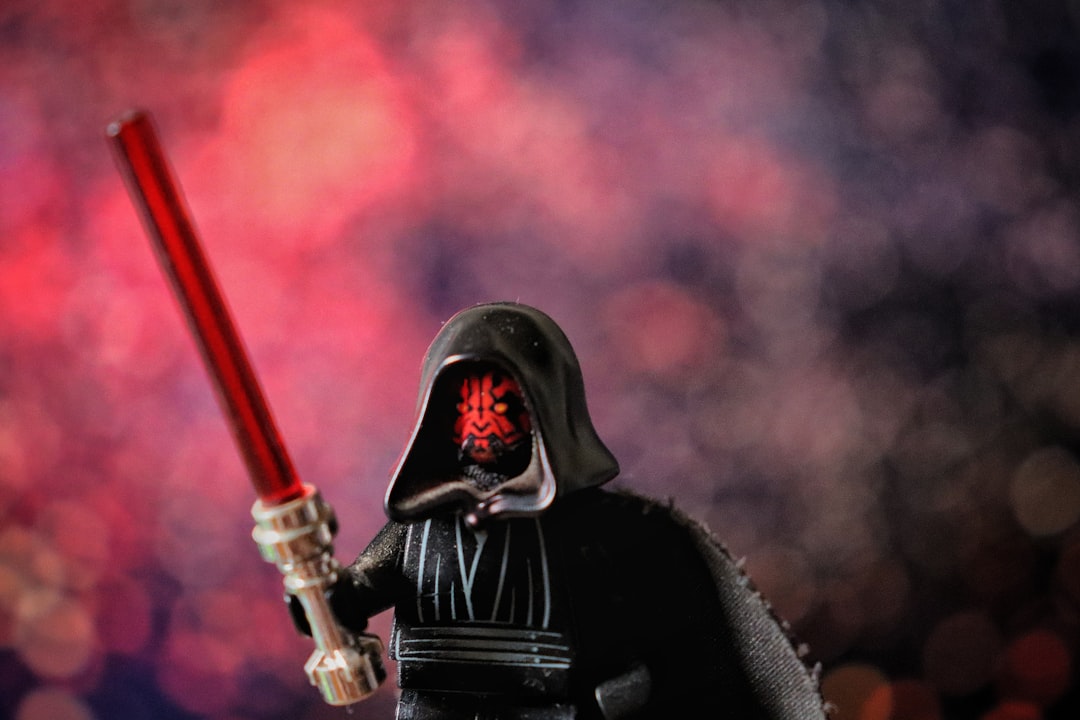
Lucas’s Vision Took Shape in Post-War Turmoil (Image Credits: Unsplash)
George Lucas envisioned a bold continuation of the Star Wars saga with Darth Maul returning as the central antagonist in his planned Episodes VII-IX. This concept emerged from detailed treatments he shared before selling Lucasfilm to Disney in 2012. The idea positioned the horned Sith as a crime overlord amid post-Empire chaos, but it carried significant risks that could have diluted the franchise’s narrative momentum.[1][2]
Lucas’s Vision Took Shape in Post-War Turmoil
The trilogy would have unfolded shortly after Return of the Jedi, capturing a galaxy in disarray. Former stormtroopers, unwilling to disband, retreated to a distant corner and ignited their own rebellion, drawing inspiration from real-world events like the Iraq War aftermath. Gangsters, including Hutt syndicates, exploited the power vacuum, leading to widespread lawlessness.[1]
At the heart of this unrest stood Darth Maul. Resurrected through cybernetic enhancements – first spider-like legs, then metal ones that made him larger and more imposing – he united the criminal factions. Lucas described him evolving into “the godfather of crime in the universe” as the Empire crumbled.[3] His apprentice, Darth Talon from the comics, served as a fierce enforcer, handling much of the action like a new Darth Vader.[1]
Maul’s Character Arc Defied Expectations
Darth Maul debuted in The Phantom Menace as a silent, acrobatic assassin under Darth Sidious. His dramatic bisection by Obi-Wan Kenobi marked a shocking early exit, emphasizing the Sith’s ruthless hierarchy. Bringing him back decades later as a strategic crime lord stretched this persona thin.[4]
The prequels established Maul as expendable muscle, not a visionary leader. Transforming him into a galaxy-spanning kingpin required heavy retconning, including survival beyond his canon death in Rebels. Such changes risked alienating fans who valued the finality of his original defeat.[2] Moreover, pairing him with Darth Talon, a non-canon figure, complicated the lore further.
Continuity Strains and Retcon Overload
Lucas’s outline clashed with established history. Order 66 wiped out nearly all Jedi, yet he proposed 50 to 100 survivors for Luke to rally, forcing a 20-year rebuild with toddler recruits. This contradicted the prequels’ portrayal of near-total annihilation.[1]
Maul’s prominence overshadowed Sidious’s ultimate victory, diminishing the Emperor’s shadow over the saga. Fans had accepted Maul’s expanded role in animated series like The Clone Wars, but elevating him to sequel-level threat felt like undoing narrative payoffs from three trilogies. The focus on underworld chaos also scaled down the epic scope of prior galactic wars.
- Maul’s death in The Phantom Menace lost impact with repeated resurrections.
- Jedi survivor count undermined prequel stakes.
- Crime syndicates paled against Empire-scale tyranny.
- Reliance on comic characters like Talon invited canon conflicts.
- Timeline jumps diluted generational handoff to new heroes.
Shifting Focus from Fresh Heroes
Luke rebuilt the Jedi, Leia steered the Republic toward renewal as Supreme Chancellor, and their children loomed large. Yet the villain’s familiarity hogged the spotlight, potentially stunting new protagonists. A young Force-sensitive seeker hunting a reclusive Luke echoed later stories but lacked originality under Maul’s dominance.[2]
Disney’s sequels introduced Kylo Ren and Rey for emotional depth tied to legacy characters. Maul, lacking Skywalker blood ties, offered spectacle over personal stakes. This choice might have repeated the prequels’ visual flair at the expense of relatable arcs.
| Aspect | Lucas Plan | Disney Sequels |
|---|---|---|
| Villain | Darth Maul (crime lord) | Kylo Ren (Skywalker heir) |
| Hero Focus | Leia/Luke rebuild | Rey/Finn new generation |
| Threat | Underworld chaos | First Order empire |
Echoes Persist, But Wisdom Prevailed
Elements of Lucas’s ideas surfaced indirectly: Maul’s crime empire in Solo, Imperial remnants, and Luke’s Jedi struggles. Recent projects like the upcoming Maul – Shadow Lord series nod to his criminal ascent without sequel commitment.[2] Disney’s path allowed bolder innovations, avoiding the pitfalls of nostalgia overload.
Ultimately, sidelining Maul preserved his mystique and opened doors for unforeseen triumphs. The saga thrived by evolving beyond its icons.
Key Takeaways:
- Maul’s return risked cheapening past sacrifices.
- Retcons threatened prequel integrity.
- New threats better served sequel freshness.
What do you think – would Maul have made a compelling sequel foe, or was shelving the idea the right call? Share in the comments.