

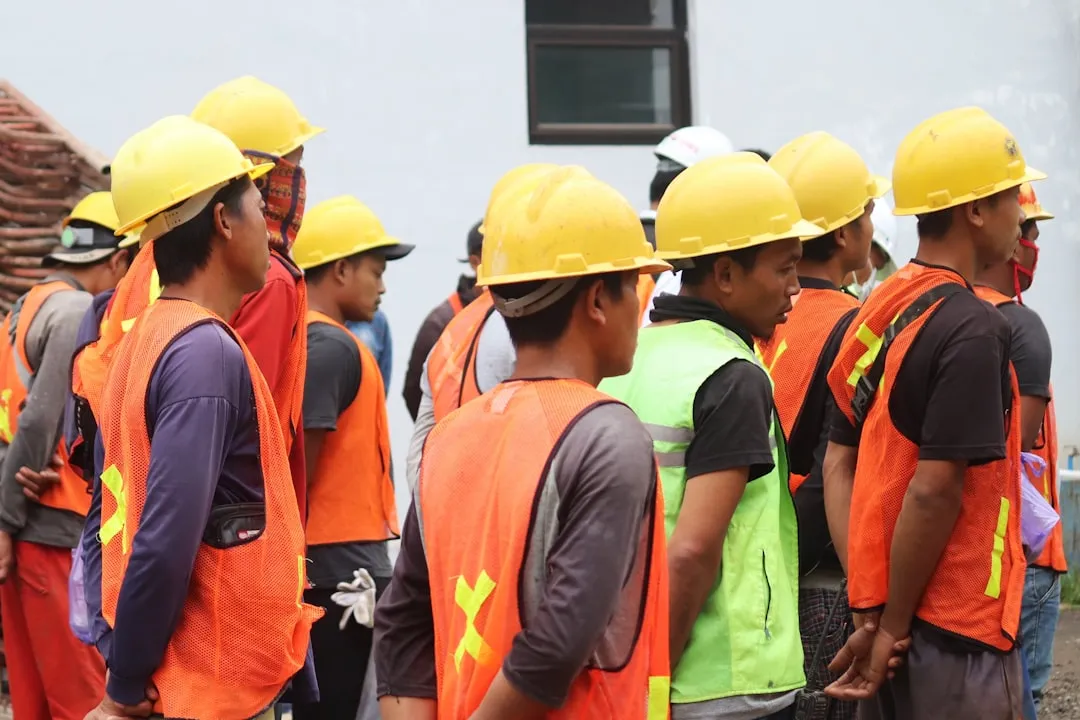
A Persistent Cry of Indifference (Image Credits: Unsplash)
Working-class voters across the United States harbor profound skepticism toward politicians, viewing Democrats and Republicans alike as distant elites who ignore everyday economic pressures.
A Persistent Cry of Indifference
Journalist Greg Kaufmann, after 14 years chronicling working-class communities, repeatedly encountered the same refrain from laborers: “They don’t care about me,” or “They only come around at election time.”
This distrust endures even as Donald Trump’s poll numbers decline sharply. Surveys reveal that many workers see little distinction between the parties, opting for the lesser of two evils when casting ballots. Their concerns center on soaring grocery bills, unaffordable rents, stagnant paychecks, uncertain retirements, and inadequate schooling for their children. Politicians’ sporadic appearances fuel the perception that workers matter only during campaigns.
The Birth of #Listen2Workers
Following the 2024 election, a coalition of state and national organizations, including EPIC, initiated the #Listen2Workers campaign to foster genuine dialogue. Elected officials commit to one-on-one conversations with workers, eschewing prepared speeches in favor of open exchanges about lived experiences, pressing challenges, and policy proposals.
State legislators in 11 states have pledged participation. In California, more than a dozen lawmakers engaged directly with care workers, gig drivers, security guards, and trade professionals. Organizers emphasize follow-through: coalitions produce concise social media clips highlighting legislators’ actions, adhering to the principle of “show, don’t tell.” A notable event occurred when Georgia House Minority Leader Carolyn Hugley hosted a forum in Macon, moderated by Stacey Abrams, drawing about 25 diverse union and nonunion workers from urban and rural areas.
Raw Stories Reshaping the Narrative
Participants shared unfiltered accounts that underscore systemic failures. A retired law enforcement officer lamented that his wage after 26 years on the job matched the starting pay for new NYPD recruits, despite comparable risks.
A union leader decried the $7.25 federal minimum wage as absurd, noting parents juggle multiple jobs at the expense of family time. A second-generation brick mason highlighted how high schools stripped vocational programs, eroding opportunities for youth and the skilled trades pipeline. Gig workers described their plight bluntly: one said his “boss is AI,” offering no protections or explanations for sudden deactivations. A bartender captured the exhaustion: “I don’t want three jobs. I want one job. I want to live – not just survive.”
- Retired officer on wage stagnation after decades of service.
- Union leader on minimum wage’s failure to support families.
- Brick mason on lost vocational training in schools.
- Gig worker navigating algorithm-driven instability.
- Bartender seeking dignity in a single, livable job.
Solutions Straight from Workers
These sessions yielded practical ideas rooted in real needs. Workers advocated rent stabilization to combat evictions, local banks to fund entrepreneurs, and career pathways funded by targeted tax revenues.
They urged legislators to appear regularly, not just at election cycles. Stacey Abrams, reflecting on the Macon forum, noted, “People are hungry for solutions.… They are smart. They have clever, doable ideas. What they desperately need is someone who can listen to those ideas and help make them manifest.” Such input could anchor a worker-focused policy agenda, linking abstract proposals to personal narratives.
Key Takeaways
- Genuine listening builds intimacy and counters perceptions of elite indifference.
- Worker stories reveal actionable paths on wages, housing, and training.
- Consistent follow-up via visible actions can shift polls and trust before 2028.
Democrats stand at a crossroads: embrace these conversations to reconnect with the working class, or risk perpetuating the status quo of voter apathy. Tying policies to authentic voices offers a blueprint for revival – what do you think about this approach? Tell us in the comments.