

There’s something in the air right now, a kind of quiet electricity humming beneath the headlines. While many of us scroll through news of geopolitical tensions and economic uncertainty, a different story is taking shape in board rooms, research labs, and venture capital firms. Four critical sectors are undergoing transformations so profound that analysts increasingly describe this period – specifically the window between late 2023 and 2025 – as nothing short of a golden era. We’re talking about real structural shifts, not hype cycles. The question isn’t whether these changes are happening. It’s whether you’re paying attention.
Let’s be real. Golden eras aren’t usually recognized while they’re happening. People realized the dot-com boom only after fortunes were made and lost. The Industrial Revolution took decades to fully appreciate. Yet here we stand, with credible data suggesting that artificial intelligence, renewable energy, biotechnology, and space technology are all hitting inflection points simultaneously. What makes this moment different is the convergence – these sectors aren’t just advancing independently but beginning to reinforce one another in ways that could reshape global economies for decades.
Artificial Intelligence Shifts From Hype to Economic Engine

AI captured close to fifty percent of all global funding in 2025, up from thirty four percent in 2024, a statistic that reveals how quickly this technology has moved from experimental curiosity to core business infrastructure. Think about that for a second. Half of all venture capital flowing into a single sector. That’s not diversification, it’s conviction. In 2024, U.S. private AI investment grew to over one hundred nine billion dollars and seventy eight percent of organizations reported using AI, up from fifty five percent the year before.
The transformation isn’t theoretical anymore. In the first half of 2025, AI-related capital expenditures contributed over one percent to GDP growth, outpacing the U.S. consumer as an engine of expansion. When AI spending beats consumer spending as a growth driver, you’re witnessing a fundamental economic realignment. Companies aren’t just piloting chatbots – they’re embedding AI into production workflows, supply chains, and strategic planning. Nvidia became the first company to reach four trillion dollars on July 9, 2025 and subsequently five trillion dollars on October 29, 2025, reflecting the insatiable demand for the computational power that makes all of this possible.
Productivity gains are starting to materialize beyond the lab. Workers report generative AI time savings equivalent to approximately one point six percent of all work hours, suggesting that generative AI may have increased labor productivity by up to one point three percent since the introduction of ChatGPT. That might sound modest, yet it represents a measurable acceleration in output during a remarkably short window. I think what’s striking is how quickly adoption has outpaced even optimistic forecasts – generative AI adoption increased by ten percentage points to nearly fifty five percent in just twelve months.
Renewable Energy Breaks Records and Redefines Power Generation

Renewable energy is experiencing its own coming-of-age moment, and the numbers are staggering. Global renewable power capacity increased by 585 GW in a single year, indicating a record rate of fifteen point one percent annual growth, smashing previous benchmarks and demonstrating that clean energy deployment is accelerating rather than plateauing. Renewables accounted for over ninety two percent of total power capacity expansion in 2024, and their share in the world’s total installed power capacity rose from forty three percent to over forty six percent.
Here’s the thing. Solar power alone is driving an energy revolution that would have seemed fantastical a decade ago. The solar sector grew by over thirty two percent, adding almost 452 GW to reach a total capacity of 1,865 GW worldwide. That kind of growth isn’t incremental improvement – it’s exponential expansion backed by plummeting costs and improving efficiency. Electricity generation from renewables is expected to increase sixty percent from nearly ten thousand terawatt hours in 2024 to over sixteen thousand terawatt hours by 2030, with renewables expected to surpass coal by the end of 2025.
The shift has profound economic implications. The global renewable energy market size was estimated at over one and a half trillion dollars in 2024 and is projected to reach nearly five trillion dollars by 2033, growing at a compound annual growth rate of nearly fifteen percent. Investment is flooding into wind farms, solar installations, battery storage, and grid modernization. Honestly, it’s hard to overstate how fundamentally this rewrites the energy playbook that has dominated since the industrial age.
Biotechnology Matures Beyond Blockbuster Drugs
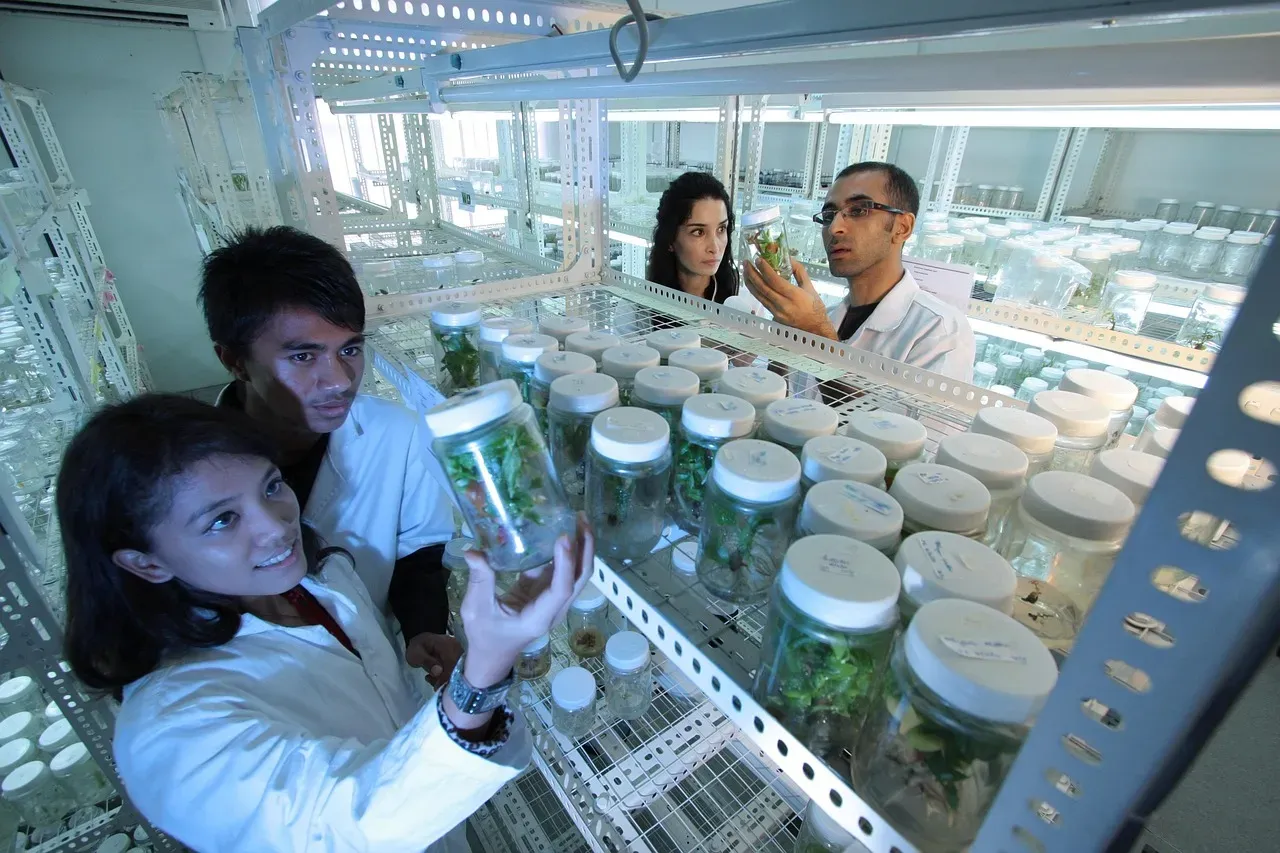
Biotechnology is entering what many insiders call a productivity renaissance. After a challenging funding environment in 2022 and 2023, the sector has stabilized and refocused. In 2024, biotech funding through venture capital surpassed pre-pandemic levels, with early venture rounds reaching over fifteen billion dollars and late-stage rounds bringing in more than seven and a half billion dollars, indicating a rebound from previous lows. Capital is returning, but it’s more selective – investors are backing proven science and experienced teams rather than moonshots.
Market projections underscore the sector’s structural strength. The global biotech industry market size is estimated to grow from 483 billion dollars in 2024 to 546 billion dollars by 2025, at a growth rate of approximately thirteen percent. This isn’t speculative froth. The global biotechnology market is expected to reach over five and a half trillion dollars by 2034, with a compound annual growth rate of over thirteen percent from 2025 to 2034, driven by advances in precision medicine, gene therapies, and AI-integrated drug discovery platforms.
What’s particularly exciting is how AI and biotech are beginning to intersect. AI-driven platforms reduce drug development timelines from five years to twelve to eighteen months, compressing innovation cycles and lowering the cost of bringing new therapies to market. Advanced therapeutic medicinal products – gene therapies, cell therapies, antibody-drug conjugates – are moving from experimental protocols to approved treatments. The infrastructure is maturing, manufacturing processes are scaling, and regulatory pathways are becoming clearer. It feels like biotechnology is finally crossing the threshold from promise to delivery.
Space Technology Escapes Gravity and Attracts Serious Capital

Space used to be the domain of governments and science fiction. Now it’s a commercial sector attracting billions in private investment and genuine economic activity. The global space economy reached an unprecedented 613 billion dollars in 2024, a figure that reflects not just satellite launches but applications ranging from Earth observation to broadband constellations and national security infrastructure.
Investment momentum is building rapidly. In 2024, investments in the space technology sector totaled over nine billion dollars, with funding shifting toward later-stage companies. The trend continued into 2025, with total funding for space technology startups in the first quarter reaching approximately one point six billion. More telling is the nature of these investments – companies focused on national security customers and technologies raised over five hundred million dollars so far in 2025.
The sector is projected to triple in size over the next decade. The space sector is expected to grow from 630 billion dollars today to one point eight trillion dollars by 2035, driven by dramatically reduced costs and increased private company participation. Launching cargo to orbit now costs roughly ninety percent less than it did two decades ago, fundamentally changing the economics of space-based ventures. The record pace of space launch in the first half of 2025 saw a liftoff to orbit every twenty eight hours, and SpaceX accounted for more than half of the world’s launches.
Convergence Creates Compounding Growth Across Sectors

What makes this era truly golden isn’t just that four sectors are booming independently – it’s that they’re beginning to amplify each other. AI is accelerating drug discovery in biotech. Renewable energy infrastructure requires advanced materials developed through biotech processes. Space-based solar power and Earth observation satellites depend on both renewable energy technology and AI-driven analytics. The feedback loops are tightening.
Consider data centers, which have become critical infrastructure for AI training. Global electricity demand is rising rapidly, with a projected increase of over four percent in 2025 driven by electric transit, economic growth, and greater demand for cooling, as well as the rapid growth of data centers in developed countries. Those data centers are increasingly powered by renewable energy contracts, creating massive demand for clean power. Meanwhile, AI is being deployed to optimize renewable energy grid management and forecasting.
The capital intensity of this convergence is unprecedented. Consensus capex estimates have proven too low for two years running, with AI capital expenditures exceeding fifty percent growth in both 2024 and 2025. Companies are making structural, long-term bets on these technologies rather than treating them as experimental line items. Total corporate AI investment reached over 252 billion dollars in 2024, with private investment climbing nearly forty five percent year-over-year.
Productivity Gains Begin Materializing in the Real Economy

The ultimate test of any golden era is whether the hype translates into measurable economic output. Early signs suggest that this one might pass the test. Research confirms that AI boosts productivity and, in most cases, helps narrow skill gaps across the workforce, addressing a key concern about technology-driven unemployment. Companies that have integrated AI aren’t just cutting costs – they’re enabling employees to tackle higher-value work.
In renewable energy, productivity gains manifest differently. In 2024, more than ninety percent of all new electricity capacity worldwide came from renewable sources such as solar, wind, hydro and geothermal, fundamentally altering the energy mix faster than most forecasts anticipated. Lower energy costs ripple through entire supply chains, making manufacturing more competitive and reducing overhead for everything from data centers to food processing.
Biotech productivity is harder to quantify but no less real. Faster drug development timelines mean therapies reach patients years earlier. Gene editing tools that once required specialized labs are becoming accessible to smaller research institutions. Space-based Earth observation provides agricultural insights, disaster monitoring, and climate data that improve decision-making across industries. These aren’t abstract benefits – they’re measurable improvements in efficiency, cost, and outcomes.
Investment Patterns Reveal Confidence in Long-Term Transformation

Follow the money, as they say. The scale and nature of investment flowing into these four sectors tells a story of deep structural confidence. Foundation model companies raised eighty billion dollars in 2025, representing forty percent of global AI funding and more than doubling from thirty one billion dollars in 2024. That’s not speculative capital chasing short-term returns – it’s patient money betting on decade-long buildouts.
Renewable energy is seeing similar commitment. Overall energy investment reached a record of over three trillion dollars in 2025, with more than two trillion directed toward clean energy, despite a slowdown in year-over-year growth rates. The absolute scale of capital deployment is staggering and reflects a global consensus that the energy transition is not a question of if but when.
Space investment is becoming more strategic and disciplined. Growth-stage deals show sustained volume and magnitude, with the amount invested in Series C deals in 2025 already exceeding the total for 2024. Investors are moving beyond early-stage experimentation toward companies with proven technology, commercial traction, and clear paths to profitability. Biotechnology, after a period of retrenchment, is seeing capital concentrate in companies with strong fundamentals. In 2024, the average size of funding rounds increased significantly, reflecting a trend where investors are opting for larger bets on fewer companies.
Talent and Workforce Dynamics Signal Irreversible Shifts

Labor markets are adjusting in real time to these sectoral transformations. AI literacy is no longer optional – AI literacy is now one of the most in-demand skills employers seek across all jobs, and C-suites rank it as the number one skillset for navigating business change. Companies are hiring aggressively for AI expertise, renewable energy engineering, biotech specialists, and space technology roles. The talent war reflects genuine demand rather than speculative hiring.
Generative AI adoption among senior leaders has accelerated dramatically. Eighty two percent of senior leaders use generative AI weekly, compared with seventy two percent in 2024, and forty six percent use it daily, compared with twenty nine percent in 2024. When executives are personally using these tools daily, it signals a cultural shift that goes beyond top-down mandates. Organizations are embedding AI into their operating rhythms.
Employment in biotechnology is expanding. Global employment in the biotech sector stands at over thirteen million, and companies created seven hundred forty thousand new jobs last year, reflecting growth that is broad-based rather than concentrated in a few elite firms. Space technology employment is similarly growing, with the workforce at around three and a half million, adding about one hundred eighty four thousand employees over the last year.
Regulatory and Policy Frameworks Begin Catching Up

Governments worldwide are recognizing the strategic importance of these sectors and adjusting policy accordingly. U.S. federal agencies introduced fifty nine AI-related regulations in 2024 – more than double the number in 2023, and globally, legislative mentions of AI rose over twenty one percent across seventy five countries since 2023. Regulation often lags innovation, yet the pace of policy development suggests lawmakers understand the stakes.
Renewable energy is receiving unprecedented government support. Canada pledged two point four billion dollars, China launched a nearly fifty billion dollar semiconductor fund, France committed over one hundred billion euros, India pledged over one billion dollars, and Saudi Arabia’s initiative represents a one hundred billion dollar commitment. These aren’t symbolic gestures – they’re industrial policy aimed at capturing leadership in technologies that will define the next economic era.
Space policy is also evolving rapidly. U.S. military spending on space was poised for rapid growth, with the proposed missile defense system authorized with a twenty five billion dollar initial investment and another five hundred million allocated to improve military space launch infrastructure. National security concerns are driving space investments globally, creating stable demand for commercial space capabilities.
Challenges Remain But Momentum Appears Unstoppable

Let’s not pretend this golden era is without friction. AI adoption faces real barriers – sixty percent of organizations evaluated enterprise-grade AI tools, but only twenty percent reached pilot stage and just five percent reached production, with most failing due to brittle workflows and lack of contextual learning. Scaling from pilot to production remains a massive challenge for most organizations.
Renewable energy deployment is falling short of climate targets. Despite a record growth rate of over fifteen percent in 2024, progress still falls short of the capacity needed to align with the global goal to triple installed renewable energy capacity by 2030, and if the current growth rate persists, the world will be short approximately 0.8 terawatts by 2030. Infrastructure constraints, permitting delays, and financing gaps in emerging markets remain significant obstacles.
Biotechnology struggles with market volatility and uncertain exit opportunities. Only eight of the thirty biotech IPOs in 2024 finished the year above their initial offering prices, and more than half of publicly traded biotech firms ended 2024 with less than two years of cash runway. The science may be advancing, yet the financial mechanics remain challenging for all but a select few companies.
Space technology must prove sustainable business models beyond satellite internet. Many ventures remain heavily dependent on government contracts or speculative business plans. Yet despite these headwinds, the overall trajectory for all four sectors remains upward. The question is not whether these industries will grow but how fast and who will capture the value.
The Golden Era Is Defined by Structural Change, Not Just Growth

What distinguishes a golden era from a bubble is whether the underlying transformation proves durable. The dot-com boom collapsed because too many companies lacked viable business models, yet the internet itself fundamentally reshaped commerce, media, and communication. This moment feels different because the transformations are already embedded in critical infrastructure. AI is processing mortgage applications, diagnosing medical images, and optimizing logistics networks. Renewable energy is powering cities and industrial facilities. Biotech therapies are saving lives. Satellites are delivering broadband to remote regions.
Enterprise AI has surged from less than two billion dollars to thirty seven billion dollars since 2023, now capturing six percent of the global SaaS market, and companies spent thirty seven billion dollars on generative AI in 2025, up from over eleven billion in 2024. That kind of spending growth reflects operational necessity rather than experimental budgets. Companies are buying productivity, not potential.
The pace of adoption often determines who wins and who gets left behind. The market is projected to grow forty six percent annually to three hundred fifty six billion dollars by 2030, and the gap between AI leaders and laggards will only widen in 2025. Similar dynamics are playing out in renewable energy, biotech, and space – early movers are establishing positions that will be difficult to dislodge.
Honestly, the most remarkable aspect of this golden era might be its simultaneity. Rarely do multiple transformative technologies mature in parallel. The convergence creates opportunities for breakthroughs that would be impossible in isolation. AI-designed proteins, space-based renewable energy collection, biotech solutions for sustainable materials – these aren’t science fiction but active research areas with commercial potential.
The period between 2023 and 2025 may be remembered as the moment when these technologies crossed from emerging to essential. Whether businesses, governments, and individuals can adapt quickly enough to capitalize on the opportunities remains an open question. What’s certain is that the transformation is underway, the capital is committed, and the momentum appears unstoppable. The golden era isn’t coming – it’s here. The only question left is what you’re going to do about it.