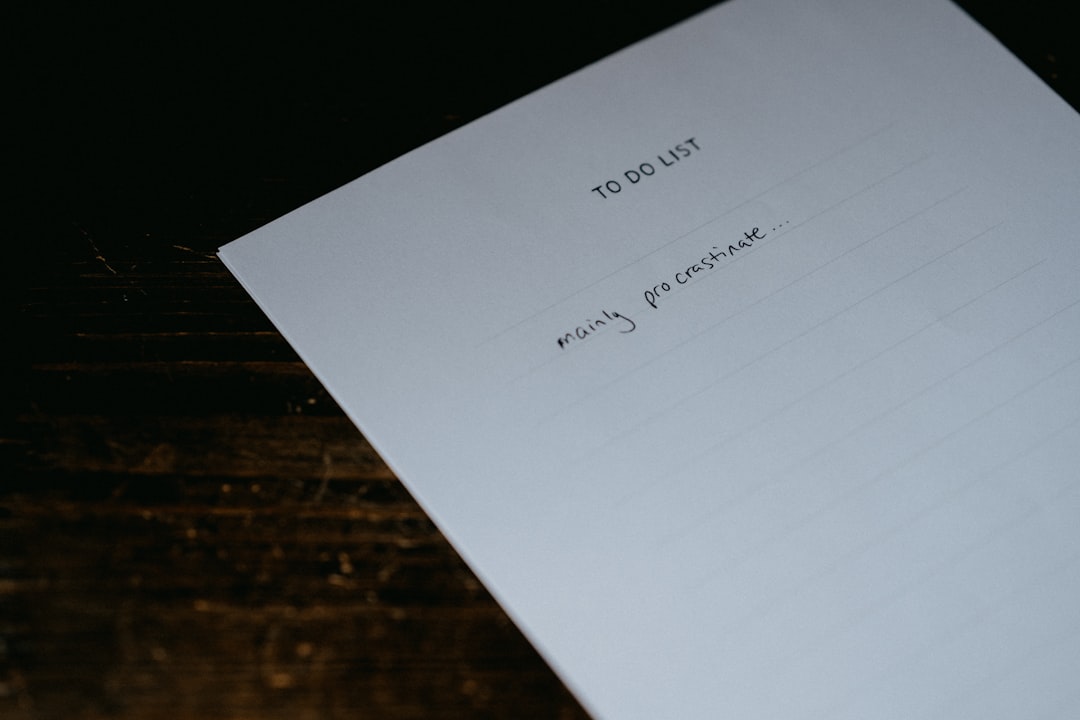
The Irresistible Pull of Crossing Things Off (Image Credits: Unsplash)
In a world saturated with apps promising to streamline every aspect of work and life, professionals often chase the latest software for better efficiency. Yet a basic tool from decades past – the handwritten to-do list – delivers results that high-tech alternatives struggle to match. Crossing off completed tasks on paper creates a profound sense of progress, fostering focus without the constant pull of notifications or screens.
The Irresistible Pull of Crossing Things Off
Picture the moment a pen slashes through a task: instant gratification hits. This physical act triggers a dopamine release, reinforcing the brain’s reward system far more effectively than a digital checkmark that vanishes into an app’s archive. People who rely on paper lists report sustained motivation throughout the day, as each strike builds visible momentum on the page.
Unlike virtual interfaces, paper demands no battery, login, or updates. It stays put on a desk, serving as a constant, distraction-free reminder. Workers find themselves tackling items faster when progress stares back in bold ink.
Apps’ Hidden Costs to Focus
Productivity applications, while feature-rich, introduce subtle barriers to real output. Endless customization options lead to setup time that rivals the tasks themselves. Notifications ping relentlessly, fragmenting attention and pulling users into social media or email rabbit holes.
Digital tools track data meticulously, yet this overload often paralyzes decision-making. A simple list cuts through the noise, prioritizing essentials without algorithmic suggestions or gamified streaks that fade under pressure. Professionals reclaim hours once lost to scrolling through unfinished digital queues.
How Paper Lists Forge Better Habits
Handwriting engages the brain differently than typing. The deliberate motion of forming letters cements tasks in memory, making recall effortless during execution. Lists evolve organically as priorities shift, with users scribbling adjustments on the fly rather than navigating menus.
This analog approach builds discipline over time. Daily rituals of list-making sharpen planning skills, turning vague intentions into concrete steps. Teams adopting shared paper lists during meetings report clearer alignment and faster follow-through.
Practical Strategies to Harness List Power
Start small to maximize impact. Limit lists to five to seven key items, focusing on high-value actions that propel the day forward. Place the list in a prominent spot, like next to the keyboard, to maintain visibility without screen dependency.
Refine the practice with these steps:
- Write tasks in active voice, such as “Call client” instead of “Client follow-up.”
- Rank items by urgency, starring the top three for immediate attention.
- Review and rewrite unfinished tasks at day’s end, carrying momentum forward.
- Experiment with colored pens for categories like urgent (red) or creative (blue).
- Keep a master list nearby for brainstorming, then distill to daily versions.
- Share lists in collaborative settings to enhance accountability.
These tweaks transform a scrap of paper into a productivity engine, adaptable to any workflow.
Paper vs. Pixels: A Quick Comparison
Traditional lists shine in simplicity, while apps excel in scalability for complex projects. Consider this breakdown:
| Aspect | Paper List | Digital App |
|---|---|---|
| Setup Time | Seconds | Minutes to hours |
| Distraction Risk | Low | High |
| Satisfaction | Tactile, immediate | Abstract, fleeting |
| Accessibility | Always on | Device-dependent |
The table highlights why paper often wins for everyday use, reserving apps for team-scale operations.
Key Takeaways
- Handwritten lists deliver unmatched psychological rewards through physical completion.
- They eliminate digital pitfalls like notifications and over-customization.
- Consistent use builds lasting habits for sharper focus and higher output.
The to-do list endures because it strips productivity to its essence: clear goals, visible progress, and steady action. In 2026, as tech proliferates, this low-tech gem reminds us that effectiveness trumps complexity. What old-school method has boosted your productivity? Share in the comments.