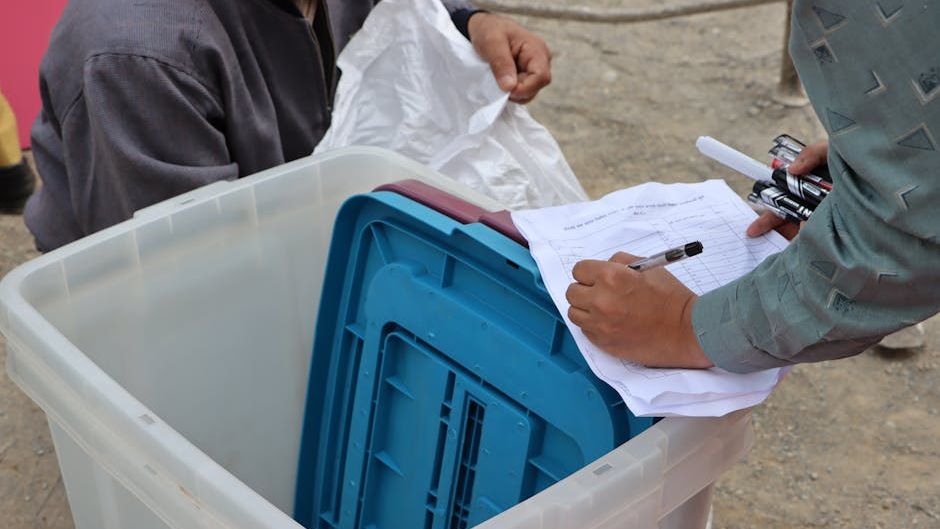
ECI Election Results 2026 LIVE: BJP dominates Bengal, Assam; UDF set for landslide victory in Kerala; ruling AINRC poised for Puducherry win – Image for illustrative purposes only (Image credits: Pexels)
Voters in five key regions of India delivered their verdicts on May 4, 2026, as counting wrapped up for assembly elections across 823 constituencies. The outcomes signal significant shifts in political power, particularly in West Bengal where the Bharatiya Janata Party secured a commanding majority. These results will influence regional governance and national coalition dynamics for years ahead.[1][2]
With high stakes for incumbent parties and emerging challengers, the elections tested voter priorities on development, welfare, and local issues. Final tallies from the Election Commission of India confirmed trends that emerged early in the day, reshaping alliances and leadership in West Bengal, Tamil Nadu, Kerala, Assam, and Puducherry.
BJP Secures Decisive Victory in West Bengal
The Bharatiya Janata Party crossed the majority mark comfortably in West Bengal’s 294-seat assembly, leading in 204 seats according to Election Commission data.[1] This outcome ends the All India Trinamool Congress’s long hold on power, with the regional party managing leads in 83 constituencies. Smaller outfits like the Aam Janata Unnayan Party and Indian National Congress each secured two seats, while others trailed far behind.
Practical implications include policy realignments toward central government priorities, affecting infrastructure projects and welfare schemes previously driven by state initiatives. Stakeholders such as business leaders and minority communities now anticipate changes in administrative focus. The BJP’s sweep underscores its growing footprint in eastern India, potentially stabilizing its position in national politics.
UDF Poised for Landslide in Kerala
In Kerala, the United Democratic Front alliance, led by the Indian National Congress, dominated with the Congress alone leading in 63 of 140 seats.[2] The Indian Union Muslim League followed with 22, and Kerala Congress added seven, pushing the coalition well past the 71-seat majority threshold. The ruling Communist Party of India (Marxist) managed 26 seats, with allies like the Communist Party of India at eight.
This shift returns the UDF to power after a single term out, promising continuity in social welfare programs while introducing reforms on education and healthcare. Affected stakeholders include trade unions aligned with the Left and the sizable Christian and Muslim voter bases that bolstered the front. The result reinforces Kerala’s alternating political pattern, with governance changes expected to unfold over the next few months.
TVK Emerges as Surprise Force in Tamil Nadu
Tamil Nadu witnessed an unexpected rise for the Tamilaga Vettri Kazhagam, which led in 109 of the 234 assembly seats, positioning it near the 118-seat majority.[3] The Dravida Munnetra Kazhagam trailed with 58, and All India Anna Dravida Munnetra Kazhagam had 45. Minor parties like the Indian National Congress and Pattali Makkal Katchi picked up single-digit figures.
The TVK’s performance disrupts the traditional Dravidian dominance, compelling quick alliance negotiations. For businesses and urban voters, this could mean fresh approaches to industrial growth and youth employment. Incumbent leaders face immediate pressure to adapt, as coalition formations determine the next government’s timeline.
Assam and Puducherry Hold Steady for Rulings Coalitions
Assam saw the Bharatiya Janata Party maintain control with 82 seats in the 126-member house, surpassing the 64 needed for majority.[4] The Indian National Congress led in 19, while allies like Asom Gana Parishad and others filled the rest. In Puducherry, the ruling All India N.R. Congress topped with 11 seats out of 30, followed by Dravida Munnetra Kazhagam at five and Bharatiya Janata Party at four.[5]
These retainments ensure policy continuity on security and development in the Northeast and the union territory. Stakeholders such as tea plantation workers in Assam and tourism operators in Puducherry benefit from stable leadership. Potential alliances in Puducherry could solidify the AINRC’s position soon after results.
What Matters Now
– BJP’s Bengal win bolsters national influence.
– UDF’s Kerala return emphasizes welfare focus.
– TVK’s Tamil Nadu leads spark coalition talks.
– Assam and Puducherry stability aids regional projects.
As new governments take shape over the coming weeks, these elections highlight voters’ preference for change in larger states while favoring incumbents in smaller ones. The verdicts set a course for balanced regional development amid India’s evolving political landscape.