The Eye-Opening Cost of Perfection (Image Credits: Img-cdn.inc.com)
A single notebook prototype priced at £500 exposed the rigorous trade-offs at the heart of Cortex Brand’s product development.
The Eye-Opening Cost of Perfection
Co-founder Myke Hurley commissioned a full-spec sample during the update to the Theme System Journal. The notebook emerged from the same production machines and materials intended for the final run.[1][2]
He described the process as turning on “all the big machines that make all the noise” to simulate real manufacturing. Upon arrival, the prototype fell short of expectations. This led to further revisions rather than rushing to production.
Such samples carry a steep price tag – around £500 per unit – because they lack the economies of scale found in larger runs, where costs drop to about £3 each. Hurley has repeated this investment multiple times to ensure the final product feels right.
Physical Products Demand Unique Trade-Offs
Unlike digital creations, physical goods impose lasting constraints. A flawed podcast episode fades away, and software updates fix issues swiftly. Mistaken notebooks, however, result in unsellable stock or items lingering on desks.[1]
Cortex Brand navigates these challenges through hands-on testing. Hurley starts with personal needs, sketches ideas, and evaluates competitors. He then progresses to swatch books, handmade mocks, and full prototypes.
Manufacturing in London allows direct oversight, though it elevates costs with premium materials like fountain-pen-friendly paper. Every decision – from binding to cover stock – involves balancing quality, price, and feasibility.
| Aspect | Digital Products | Physical Products |
|---|---|---|
| Error Correction | Instant updates | Inventory waste |
| Iteration Cost | Low | High (e.g., £500 samples) |
| User Experience | Ephemeral | Permanent |
From Podcast Roots to Premium Tools
Cortex Brand emerged from the Cortex podcast, hosted by Hurley and CGP Grey. Rather than simple merchandise, it delivers wholly original designs like the Theme System Journal and Sidekick Notepad.
Hurley views it as “more of a product business that happens to be run by two content creators as opposed to a creator merch business.”[1] Development spans 1.5 to over two years per item, prioritizing tools that aid creative thinkers.
Sidekick Notepad Embodies the Approach
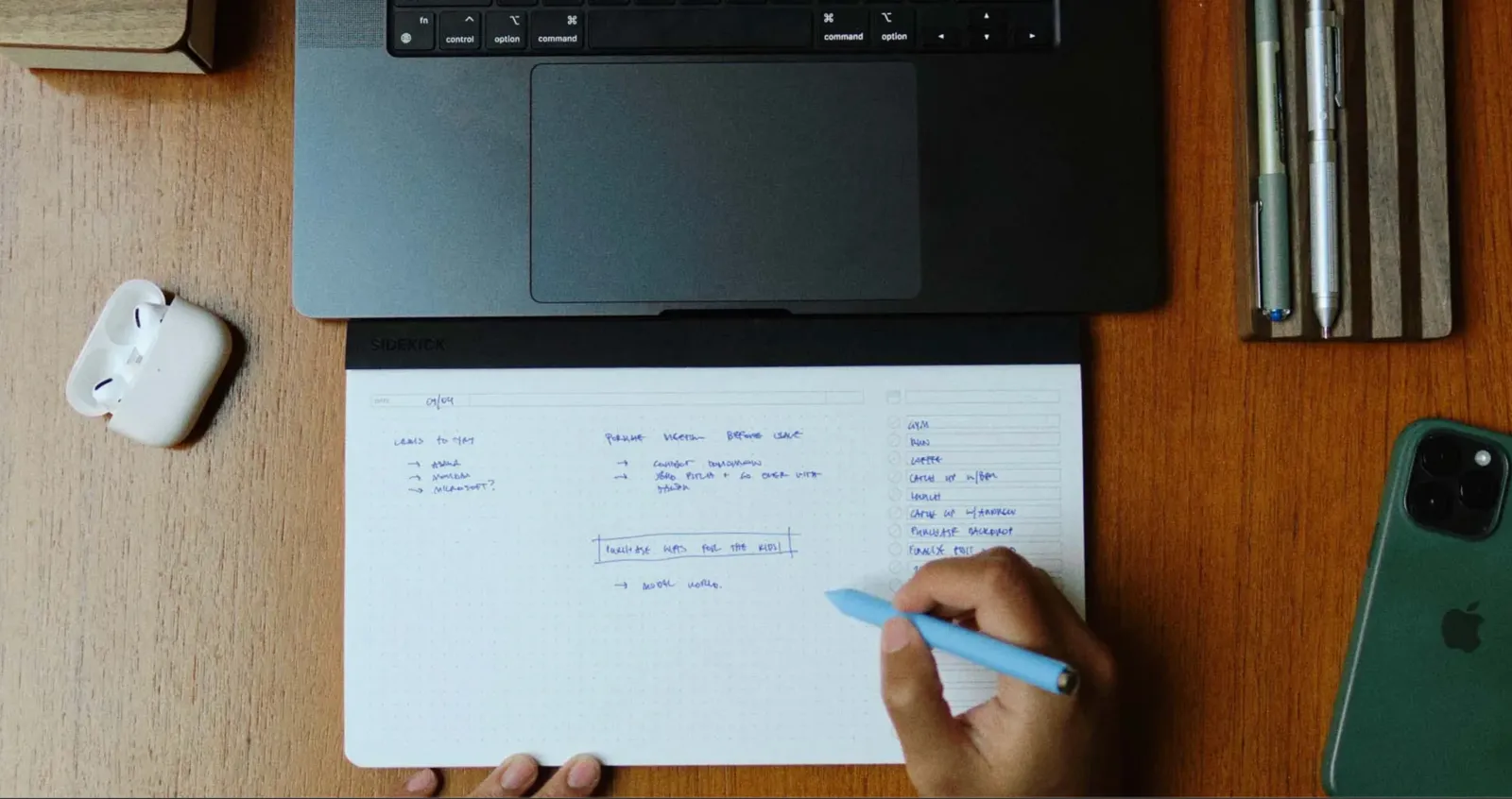
The Sidekick Notepad sits between user and keyboard, featuring a dot grid for notes, a to-do list, and a time zone converter for 10 cities.[3]
It boasts 60 pages of 100gsm Munken Lynx paper to resist ink bleed, with a cover from recycled coffee cup material. Hand-assembled in London, the PUR-bound, perforated pages and rigid back reflect meticulous craftsmanship.
- Landscape format solves binding discomfort for left-handers.
- Flip cover protects notes during travel.
- Rounded corners and debossed design enhance durability.
- Engineered for desk use without flexing.
Key Takeaways:
- Invest in prototypes to avoid costly production errors.
- Embrace trade-offs for premium quality over mass-market speed.
- Start with real user needs to create lasting value.
Cortex Brand’s £500 notebook sample illustrates a commitment that yields products customers cherish. What trade-offs would you make for perfection? Tell us in the comments.