First Attempt Stumbles on Hydrogen Leak (Image Credits: Cdn.mos.cms.futurecdn.net)
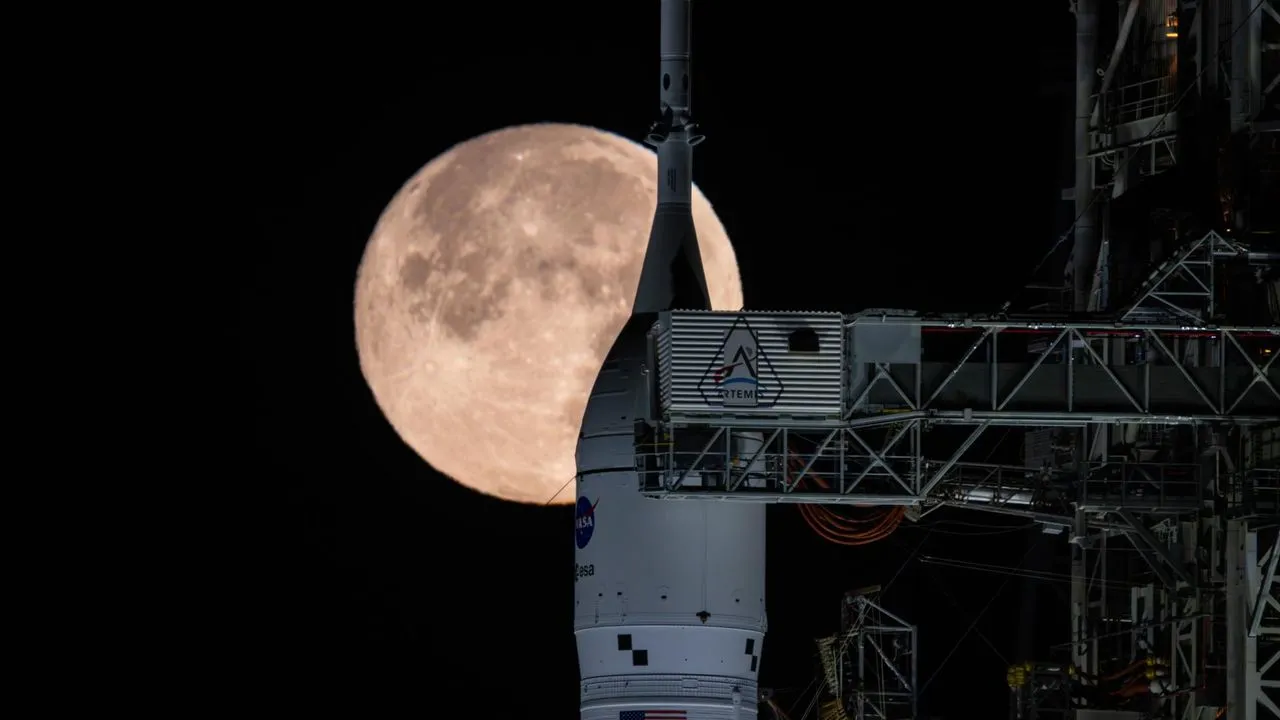
Kennedy Space Center, Florida – NASA launch teams initiated the countdown for a vital wet dress rehearsal of the Artemis 2 Space Launch System rocket, culminating in a full propellant load on February 19.[1][2]
First Attempt Stumbles on Hydrogen Leak
The initial wet dress rehearsal in early February exposed a persistent challenge. Engineers detected a liquid hydrogen leak at the tail service mast umbilical interface as they shifted from slow to fast fill rates on the core stage.[3]
Sensors registered leak rates beyond acceptable limits, prompting pauses and halting progress at about five minutes before a simulated liftoff. The issue echoed problems during Artemis 1 preparations, which delayed that uncrewed flight by months before its eventual success in 2022.[2]
Teams troubleshot on site but fell short of key goals, including terminal countdown holds and a clock recycle to mimic potential scrubs.
Swift Fixes Restore Team Confidence
Following the setback, technicians replaced two seals in the propellant fill area and addressed a clogged filter identified later. A partial fueling confidence test on February 12 confirmed improvements, with leak rates dropping significantly compared to the prior run.[3]
Ground support equipment briefly restricted hydrogen flow during that check, but operators gathered sufficient data from critical interfaces. NASA officials noted the test met several objectives despite the hiccup.[2]
Over the weekend, crews installed a new filter and reset conditions, clearing the path for the redo.
Intricate Rehearsal Simulates Launch Day
The current two-day operation began February 17 at 6:40 p.m. EST, targeting over 700,000 gallons of liquid hydrogen and oxygen by February 19. Controllers aim for a simulated launch at 8:30 p.m. EST within a four-hour window.[1]
Key steps include powering up Orion and the core stage, chilling transfer lines, slow and fast fills, topping off tanks, and two terminal countdown runs with built-in holds at T-minus 1:30 and 33 seconds. A recycle back to T-minus 10 minutes tests scrub recovery.[4]
- Orion spacecraft powers up around L-minus 45 hours.
- Core stage liquid hydrogen slow fill starts at L-minus 9:55.
- Closeout crew practices hatch closures during a one-hour hold.
- Ground launch sequencer activates near L-minus 13 hours.
- Propellant drain follows to rehearse safe offload.
Though the four astronauts monitor remotely, pad crews rehearse Orion closeouts.
Path Clears for Historic Crewed Flight
A flawless test positions Artemis 2 for a March 6 liftoff, with backups on March 7 through 9 and 11. The mission sends NASA astronauts Reid Wiseman, Victor Glover, and Christina Koch, plus Canadian Jeremy Hansen, on a 10-day lunar orbit.[2]
This flight validates crewed operations for SLS and Orion, teeing up Artemis 3’s planned 2028 landing.
Key Takeaways
- Repaired seals and filter promise lower leak risks.
- Rehearsal practices full countdown, holds, and scrubs.
- Success unlocks early March launch window.
Engineers emphasize safety above all, with data reviews dictating the final launch call. This rehearsal stands as a linchpin for NASA’s lunar ambitions – what do you think the odds are for a leak-free run? Tell us in the comments.