A Rover Designed to Unearth Hidden Life (Image Credits: Unsplash)
Kennedy Space Center, Florida — NASA recently approved the next phase of support for the European Space Agency’s ambitious Rosalind Franklin mission, paving the way for a late 2028 liftoff.[1][2] SpaceX’s Falcon Heavy rocket will carry the life-detecting rover from Launch Complex 39A, marking the private company’s debut planetary launch beyond Earth orbit. This international effort promises to probe deeper into Mars than any prior rover, targeting preserved clues to the planet’s potential habitability.
A Rover Designed to Unearth Hidden Life
No Mars mission has drilled as deep as Rosalind Franklin plans to go. The rover features a specialized 2-meter subsurface drill, capable of extracting core samples protected from surface radiation and oxidation.[3]) These samples will feed into an onboard laboratory for detailed chemical analysis, seeking organic molecules and biosignatures that could indicate past microbial life.
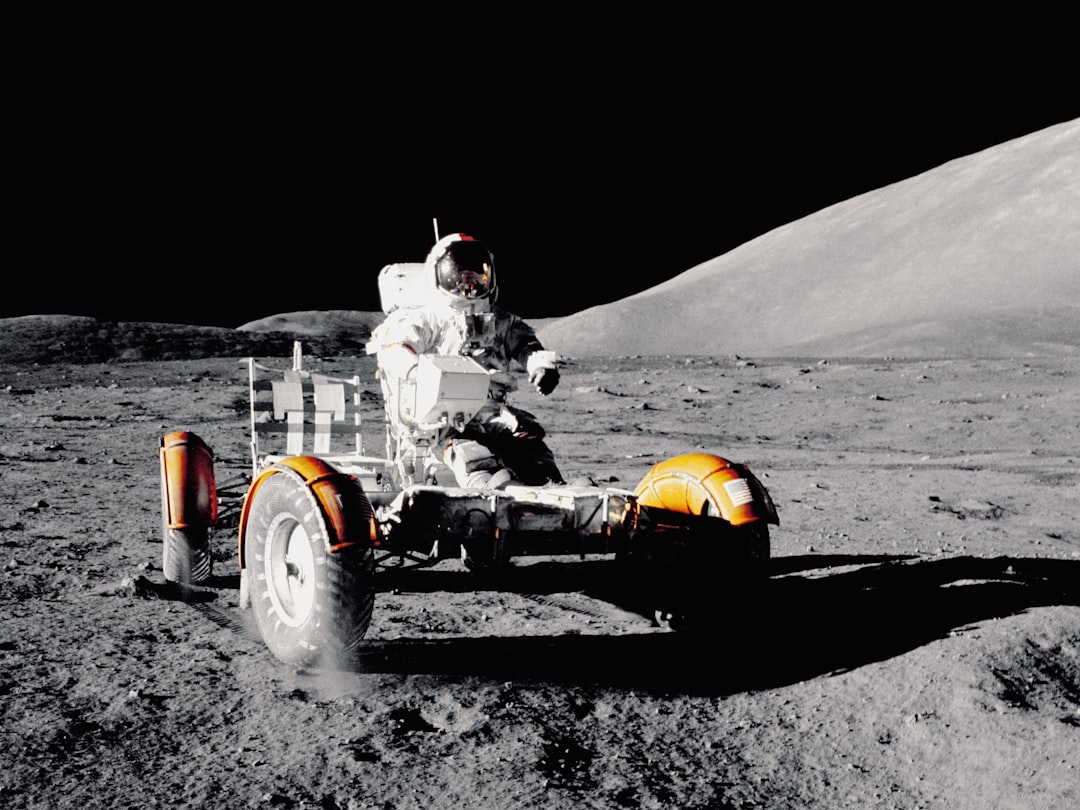
Engineers at Airbus in the United Kingdom assembled the 310-kilogram vehicle, complete with six wheels for rugged terrain navigation. It draws power from solar panels producing up to 1,200 watt-hours per day, supplemented by a lithium-ion battery and radioisotope heater units to endure Martian nights.[4] The rover’s suite of nine instruments enables comprehensive study of rocks, soils, and subsurface layers.
- Panoramic Camera (PanCam): Maps terrain and identifies geological features.
- ISEM infrared spectrometer: Analyzes mineral composition from afar.
- WISDOM ground-penetrating radar: Detects underground structures up to 3 meters deep.
- CLUPI close-up imager: Captures high-resolution details of samples.
- MOMA mass spectrometer: Identifies complex organics, with NASA-supplied components.
Autonomous operations allow it to traverse up to 70 meters per Martian day, prioritizing scientifically rich targets over at least seven months.
Overcoming Decades of Setbacks
The path to this launch spanned more than two decades, marked by shifting partnerships and technical hurdles. Conceived in 2001 under ESA’s Aurora program, the mission evolved into ExoMars with initial NASA collaboration for a 2018 dual-rover launch.[2] Budget overruns on projects like the James Webb Space Telescope forced NASA’s withdrawal in 2012.
ESA turned to Roscosmos, launching the Trace Gas Orbiter in 2016 but postponing the rover from 2018 to 2020, then 2022 amid parachute failures and the COVID-19 pandemic. Russia’s 2022 invasion of Ukraine prompted ESA to end the partnership, leaving the completed rover in storage despite integrated Russian elements.[3]) A new European landing platform emerged from Airbus, featuring retro-propulsion and dual ramps for rover deployment.
Recent revivals included software upgrades and heater additions. Thales Alenia Space in Italy handles final assembly, while the 2016 orbiter relays data back to Earth.
United Efforts Propel the Mission Forward
NASA’s Rosalind Franklin Support and Augmentation (ROSA) project coordinates U.S. contributions, including the Falcon Heavy launch under the Launch Services II contract.[1] Additional aid covers lander braking engines, electronics, and enhancements to the MOMA instrument for organic detection.
ESA leads with the rover, carrier module from OHB in Germany, and surface operations. SpaceX provides the heavy-lift capability, strapping three Falcon 9 cores together for unprecedented payload to Mars trajectory.
| Partner | Key Contributions |
|---|---|
| ESA | Rover, carrier module, landing platform, operations |
| NASA | Launch vehicle, propulsion, heaters, MOMA parts |
| SpaceX | Falcon Heavy rocket |
| Airbus | Rover assembly, landing platform design |
This setup ensures a six-minute descent using parachutes and rockets, targeting a gentle touchdown under 3 meters per second.[4]
Oxia Planum: A Prime Hunting Ground
Rosalind Franklin will touch down at Oxia Planum, a vast plain rich in 3.6-billion-year-old clays signaling ancient water flows. The site’s flat expanse and mineral evidence make it ideal for subsurface sampling, free from the dust storms that plague other regions.
Upon arrival in 2030, the rover will exit via lander ramps, conducting vertical drills to 2 meters before horizontal traverses. Instruments like the Raman Laser Spectrometer and MicrOmega will scrutinize crushed samples for hydrated minerals and organics, building on surface findings from prior missions.
WISDOM radar will guide drilling by mapping layers beforehand, maximizing scientific yield from at least 17 cores.
As preparations accelerate, this mission stands as a testament to perseverance in space exploration. Rosalind Franklin could redefine our understanding of Mars’ biological past, bridging European ingenuity with American launch prowess.
Key Takeaways
- First Mars rover to drill 2 meters deep for radiation-shielded life traces.
- SpaceX Falcon Heavy launch in late 2028 from Kennedy Space Center.
- ESA-NASA partnership overcomes years of geopolitical and technical delays.
What do you think this mission might uncover on Mars? Share your thoughts in the comments.