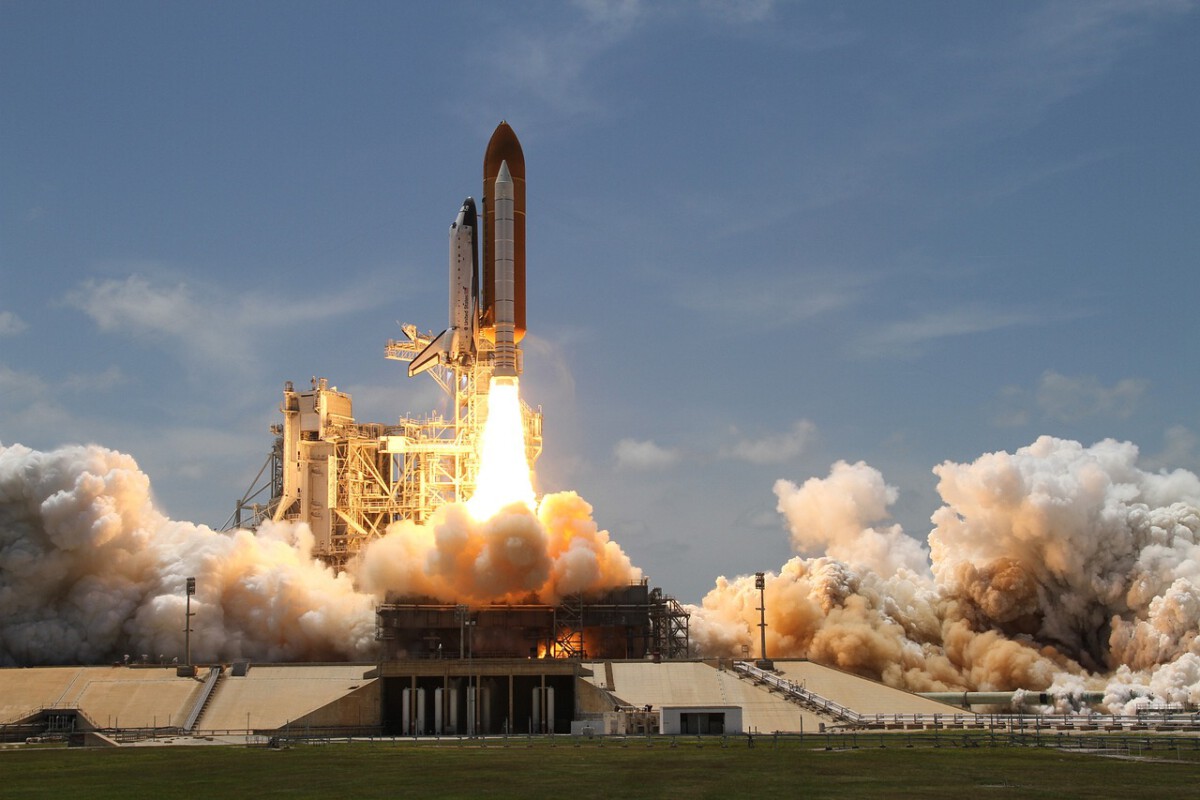
Reusability Takes Center Stage (Image Credits: Pixabay)
Cape Canaveral Space Force Station, Florida – Excitement builds along Florida’s Space Coast as Blue Origin readies its New Glenn rocket for a pivotal third launch on Sunday morning. This mission represents the company’s first attempt to reuse a first-stage booster, a step toward more affordable access to orbit. The NG-3 flight will deploy a satellite designed to beam cellular service directly to smartphones worldwide.[1][2]
Reusability Takes Center Stage
The standout feature of this launch lies in the return of the first-stage booster named “Never Tell Me The Odds.” That same booster powered the successful NG-2 mission last November, when it separated from the upper stage and descended to a precise landing on the offshore platform Jacklyn.[3] Engineers refurbished it with upgrades, including new BE-4 engines and enhanced thermal protection on one nozzle, before a recent 19-second hot fire test confirmed its readiness.[1]
Blue Origin designed the first stage for at least 25 flights, much like a commercial airliner, to slash costs and increase launch frequency. The booster will separate about 3.5 minutes after liftoff and aim for another landing roughly six minutes later, 620 miles downrange in the Atlantic. Success here could challenge the dominance of reusable rockets in the commercial sector.[4]
New Glenn: A Heavy-Lift Powerhouse
Standing over 320 feet tall with a seven-meter diameter, New Glenn dwarfs many competitors and packs immense power. Its first stage relies on seven BE-4 methane-fueled engines, each delivering 640,000 pounds of thrust at sea level. The second stage employs two restartable BE-3U hydrogen engines optimized for vacuum operations.[4]
The rocket’s capabilities shine in its payload performance: up to 45 metric tons to low Earth orbit or 13 metric tons to geostationary transfer orbit. Key features include:
- A seven-meter payload fairing with double the volume of traditional designs.
- Four aerodynamic fins and wing-like strakes for controlled descent.
- Six hydraulically actuated landing legs for barge touchdowns.
- Cleaner-burning liquefied natural gas propellant to ease refurbishment.
Launched from the newly rebuilt Launch Complex 36, New Glenn supports diverse missions from satellite constellations to lunar landers.[4]
BlueBird 7: Bridging Earth and Orbit
Atop the stack sits AST SpaceMobile’s BlueBird 7, a Block 2 satellite boasting a massive 2,400-square-foot communications array. This payload aims to expand a direct-to-smartphone broadband network, enabling initial service rollout later this year without ground infrastructure changes.[1] Once in low Earth orbit, it will help provide global cellular connectivity from space.
The mission underscores growing demand for commercial orbital services. Blue Origin secured this contract as part of partnerships with satellite operators seeking reliable heavy-lift options. Liftoff from LC-36 will send the stack southeast over the Atlantic before upper-stage maneuvers place the satellite precisely.[2]
Building on Early Successes
New Glenn’s path to this moment included hurdles but steady progress. The inaugural NG-1 flight on January 16, 2025, achieved orbit with the Blue Ring Pathfinder payload, though the booster was lost during reentry.[3] Lessons from that debut fueled improvements.
NG-2 followed on November 13, 2025, lofting NASA’s ESCAPADE twin satellites toward Mars to study solar wind interactions. That flight marked the first successful booster recovery, proving the landing system on Jacklyn. Recent preparations for NG-3, including rollout on April 13 and the static fire test, proceeded smoothly.[1]
| Mission | Date | Payload | Booster Outcome |
|---|---|---|---|
| NG-1 | Jan 16, 2025 | Blue Ring Pathfinder | Lost |
| NG-2 | Nov 13, 2025 | ESCAPADE (NASA) | Successful landing |
| NG-3 | Apr 19, 2026 (NET) | BlueBird 7 | Reuse & landing attempt |
Tune In for Liftoff
Blue Origin will stream the launch live on its website, NG-3 mission page, starting 30 minutes before the window opens at 6:45 a.m. EDT (10:45 UTC).[5] Coverage extends across social media platforms like X for real-time updates.
Viewers can expect commentary on ascent, stage separation, and the booster’s dramatic return. Local traffic alerts and viewing zones apply near the Space Coast, with the rocket visible rising southeast.
This launch cements New Glenn’s role in the reusable rocket revolution, paving the way for frequent, cost-effective missions that could transform industries from telecom to exploration. As Blue Origin eyes expansions like Vandenberg launches and lunar support, Sunday’s flight offers a glimpse of reliable orbital access for all.[4] What does this milestone mean for the future of spaceflight? Share your thoughts in the comments.
Key Takeaways
- First reuse of New Glenn booster “Never Tell Me The Odds” from NG-2.
- BlueBird 7 satellite advances space-based cellular broadband.
- Launch window: 6:45-8:45 a.m. EDT; live on BlueOrigin.com.