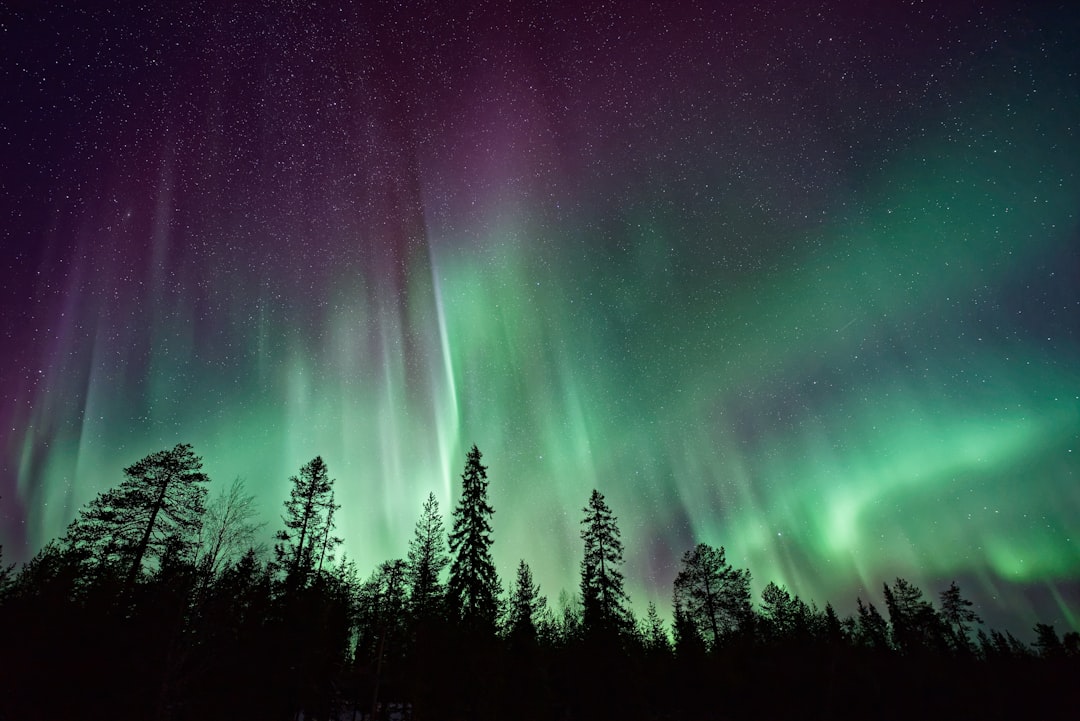
Storm Conditions Escalate Rapidly (Image Credits: Unsplash)
Earth’s magnetic field faced a moderate G2 geomagnetic storm on April 18, 2026, triggered by high-speed solar winds from a vast coronal hole.[1][2] This event marked an escalation from quiet conditions, with storm levels reaching Kp 5-6 as a co-rotating interaction region amplified the effects. Sky enthusiasts now anticipate vivid auroral displays through April 19, particularly under clear nighttime skies.[1]
Storm Conditions Escalate Rapidly
Geomagnetic activity surged early on April 18. Conditions crossed the G1 minor storm threshold at 2:41 a.m. CDT, or 7:41 UTC, before hitting G2 moderate levels by 8:25 UTC.[1] The Kp index, a key measure of magnetic disturbance, climbed to 5-6, signaling widespread effects.
Forecasters noted that these storms stemmed from the precise alignment of solar features. Periods of G1 and G2 activity persisted throughout the day, with unsettled conditions forecast to linger into April 19. By April 20, the planet’s magnetosphere should calm to quiet or unsettled states.[1]
Solar Winds from Coronal Hole Take Center Stage
A massive coronal hole, now positioned geoeffectively toward Earth, released fast solar winds that drove the storm. These regions feature lower-density plasma, allowing streams to accelerate to high speeds. EarthSky experts explained: “Essentially, the fast solar wind streaming from the huge coronal hole we’ve been tracking combined with the arrival of a co-rotating interaction region (CIR).”[1]
The CIR forms when faster winds overtake slower ones, compressing and intensifying the flow. Solar wind speeds rose to moderate-high levels starting late on April 17, with the interplanetary magnetic field’s Bz component turning southward – a key trigger for auroras. This setup pushed Earth’s defenses into storm mode after days of relative quiet.[1]
Aurora Alerts Light Up the Forecast
Auroral displays became likely across higher latitudes this weekend. The NOAA OVATION model projected an expanded auroral oval from about 4 to 8 UTC on April 18, roughly midnight to 4 a.m. EST.[1] EarthSky urged: “Aurora chasers, take note! Auroral display sightings are possible this weekend. Clear skies!”[1]
G2 conditions often extend the northern lights’ reach toward mid-latitudes, around 47 degrees geomagnetic latitude. Viewers in northern U.S. states, Canada, Scandinavia, and similar regions stood the best chance. Ongoing G1-G2 levels through April 19 promised repeated opportunities for sightings.
Solar Activity Remains Measured
Flare production stayed low over the prior 24 hours, with seven events recorded: one C1.6 from active region AR4416 and six B-class flares. No coronal mass ejections headed toward Earth heightened the risk. Sunspot regions AR4416 and AR4419 drew attention, the latter featuring a beta-gamma magnetic configuration.[1]
Forecasts predicted low-to-moderate flare chances: 75% for C-class, 25% for M-class, and 5% for X-class. Earlier days showed similar restraint, with no major disruptions from far-side solar blasts. This focus on wind-driven storms rather than explosive ejections defined the current cycle’s pattern.[1]
| Geomagnetic Storm Scale | Description | Aurora Visibility |
|---|---|---|
| G1 (Minor) | Kp 5 | High latitudes |
| G2 (Moderate) | Kp 6 | Mid-latitudes (47°) |
| G3 (Strong) | Kp 7 | Lower mid-latitudes |
Key Takeaways
- G2 storm active April 18-19 from coronal hole winds and CIR.
- Auroras favored at higher latitudes; check NOAA SWPC for live updates.
- Low flare risk, no Earth-aimed CMEs currently.
Space weather events like this G2 storm remind us of the sun’s dynamic influence on our planet. While impacts stayed limited to potential power fluctuations and radio disruptions, the real reward lay in the sky’s natural light show. Aurora hunters prepared for clear nights ahead – what prime viewing spots would deliver the most memorable displays?
Have you spotted the northern lights amid this storm? Tell us in the comments.