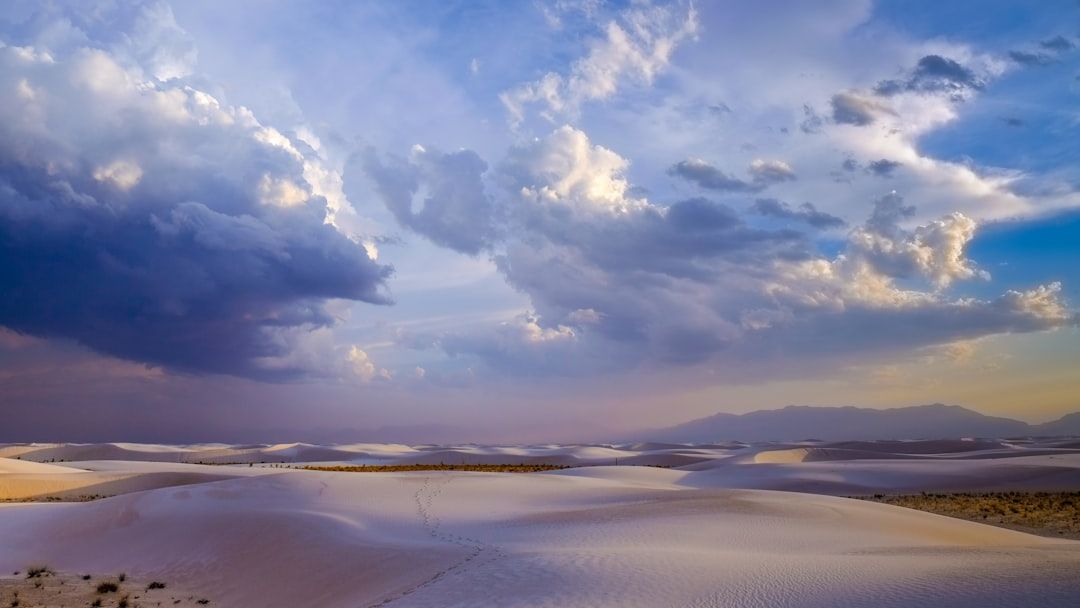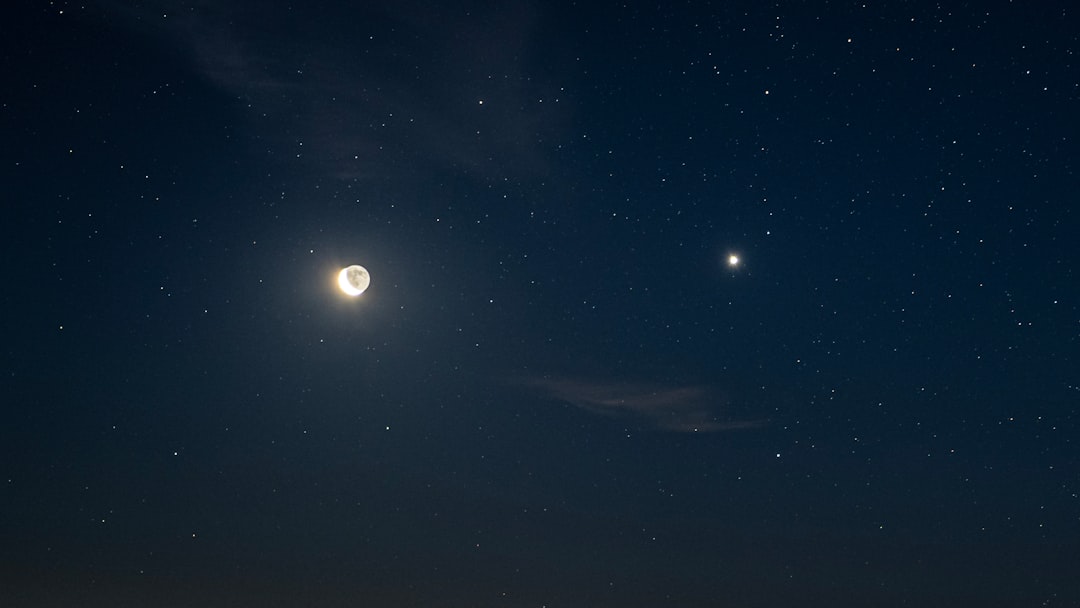
Brilliant Venus Leads Evening Skies (Image Credits: Unsplash)
April 2026 offers stargazers a rich tapestry of celestial events, from the dazzling duo of Venus and a slender crescent moon in the evening sky to a compact gathering of planets low in the east at dawn. On this mid-month mark, observers can catch these highlights with the naked eye under clear skies. The month also builds toward the Lyrid meteor shower, promising streaks of light for patient watchers.[1][2]
Brilliant Venus Leads Evening Skies
Venus dominates the western horizon after sunset, outshining every star and planet with its intense white light. The planet climbs higher each evening, lingering about two hours past sundown by month’s end. Tonight and over the next couple of evenings, a thin waxing crescent moon joins Venus, creating a striking pair framed by the stars of Taurus.[1]
This conjunction peaks visibility on April 18 and 19, as the moon appears just above or near Venus low in the twilight. Aldebaran, the reddish eye of Taurus, glows nearby, while the Pleiades star cluster sparkles higher up. Viewers should scan westward 30 to 60 minutes after sunset, before the pair dips below the horizon around midnight. Binoculars reveal finer details in the moon’s earthshine and the cluster’s delicate stars.[3]
Jupiter Commands the Early Night
Jupiter gleams brightly overhead as full darkness settles, positioned among the twins of Gemini. The gas giant remains prominent until well after midnight early in the month, though it sinks lower by April’s close. On April 22, the moon passes close to Jupiter, offering another easy naked-eye target in the western sky.[1]
Castor and Pollux flank Jupiter, helping pinpoint its location. The planet sets progressively earlier, providing a reliable evening beacon before fading into twilight. Telescopes uncover Jupiter’s four large moons and banded clouds, weather permitting. Northern Hemisphere viewers enjoy the best overhead views, while southern locations see it lower but still vivid.[2]
Dawn Reveals a Planetary Huddle
Before sunrise, a rare alignment unfolds low in the eastern sky from April 16 to 23, featuring Mercury, Mars, Saturn, and faint Neptune. Mercury leads as the brightest, hugging the horizon about 30 to 90 minutes before dawn. Mars adds a reddish tint, Saturn a steady yellow glow, while Neptune demands binoculars or a scope at magnitude 7.8.[4]
The tightest clustering occurs around April 18 to 20, spanning just a few degrees near the Pisces-Cetus border. Southern Hemisphere skies lift the group higher, easing naked-eye spotting of the trio excluding Neptune. A clear horizon proves essential, as twilight brightens quickly. On April 15-16, a waning crescent moon glides through the scene, guiding eyes to the planets.[3]
- April 18: Mercury, Mars, Saturn line up compactly; Neptune nearby for scopes.
- April 19-20: Mars edges past Saturn; Mercury joins closely.
- Best pre-dawn window: 60 minutes before sunrise in south, 30 in north.
- Tips: Face east, use clear view over water or fields; avoid city glare.
Lyrids and Lunar Phases Cap the Month
The Lyrid meteor shower activates from April 14 to 30, peaking overnight April 21-22. Up to 20 meteors per hour streak from Lyra near Vega, best after midnight when the radiant rises northeast. The recent new moon on April 17 ensures dark skies, with the moon setting early.[1]
Earthshine illuminates the moon’s dark side around new moon, visible April 20-21 evenings. First quarter arrives April 24, followed by pairings with Regulus in Leo on April 24-25 and Spica in Virgo April 28-30. These events trace the ecliptic path shared by sun, moon, and planets.[2]
April opened with the full Pink Moon on April 2, a nod to spring wildflowers. Perigee on April 19 brings the moon slightly closer, enhancing its glow during the Venus meetup.
Key Takeaways
- Evening: Venus + crescent moon (now through April 20); Jupiter high west.
- Dawn: Mercury-Mars-Saturn alignment (April 16-23, low east).
- April 21-22: Lyrids peak; lie back and scan whole sky.
April’s skies blend easy planet spotting with dynamic moon dances and fleeting meteors, reminding us of the cosmos’s quiet rhythm. Grab a blanket, find dark skies, and tilt your gaze upward – what celestial surprise awaits you tonight? Share your sightings in the comments.