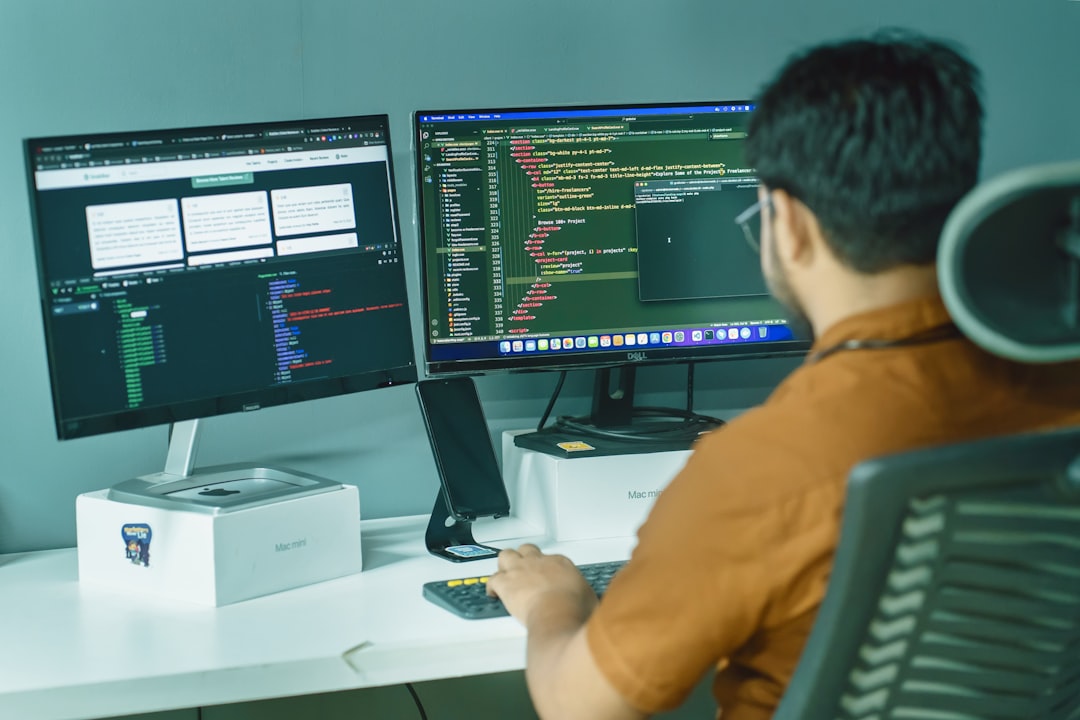
Employees Face Unavoidable Surveillance for AI Gains (Image Credits: Unsplash)
United States – Meta Platforms has launched a mandatory tracking program on its U.S.-based employees’ work computers, capturing detailed interactions to train advanced AI models. Company leaders frame the effort as crucial for developing autonomous agents capable of handling complex digital tasks. Yet the initiative arrives against a backdrop of planned layoffs and heightened scrutiny over workplace privacy.[1][2]
Employees Face Unavoidable Surveillance for AI Gains
Meta rolled out the software this week, deploying it across various teams, including the Meta Superintelligence Labs. An internal memo urged staff to contribute simply by performing their routine duties, positioning everyday actions as valuable data sources.[1] The program targets U.S. workers specifically, running silently on approved work applications and sites.
Officials emphasized that the tool serves AI development exclusively. They assured employees that no performance evaluations would stem from the collected information. Still, the lack of an opt-out option has fueled unease within the ranks.[2]
Precise Data Capture Mimics Real-World Computing
The tracking system logs a range of user behaviors essential for AI replication. It records mouse movements, button clicks, and keystrokes, alongside periodic screen snapshots when needed. These elements help models master nuances like dropdown navigation and shortcut deployment.
- Mouse movements: Tracks cursor paths for natural interaction simulation.
- Clicks and keystrokes: Captures precise inputs on interfaces.
- Screen snapshots: Occasional captures on work-related platforms only.
- Targeted scope: Limited to designated apps and websites.
A Meta spokesperson explained the rationale clearly. “If we’re building agents to help people complete everyday tasks using computers, our models need real examples of how people actually use them,” the representative stated, highlighting uses such as “mouse movements, clicking buttons, and navigating dropdown menus.”[3][2]
Strategic Push in Fierce AI Competition
Meta views this data as a competitive edge in the race for superior AI. The company leads the Meta Superintelligence Labs, now headed by former Scale AI CEO Alexandr Wang following a $14 billion acquisition of a 49% stake in the firm. Capital expenditures for AI could reach $135 billion this year alone.
Executives aim to create agents that tackle white-collar workflows autonomously. The internal memo reinforced this vision: “This is where all Meta employees can help our models get better simply by doing their daily work.” Safeguards reportedly filter sensitive content, ensuring data stays confined to training purposes.[1][2]
| Data Type | Purpose in AI Training |
|---|---|
| Mouse/Click Patterns | Simulate human navigation |
| Keystrokes | Learn efficient inputs |
| Snapshots | Contextual task understanding |
Backlash Highlights Privacy and Job Security Fears
Staff reactions have ranged from skepticism to alarm. One current employee labeled the setup “very dystopian,” especially with impending workforce reductions on the horizon. Reports indicate Meta plans to cut up to 20% of its staff, potentially 8,000 positions, starting in May.
A former worker dismissed it as “just the latest way they’re shoving AI down everyone’s throat.” Critics draw parallels to broader surveillance trends, like those at financial firms monitoring junior staff. Meta maintains strict protocols, but questions persist about long-term implications for trust and morale.[3]
Key Takeaways:
- Tracking limited to U.S. employees on work tools, with privacy filters.
- Data fuels AI agents for tasks like menu navigation and shortcuts.
- No performance use, per company assurances, amid massive AI investments.
Meta’s experiment underscores a pivotal shift in how tech giants leverage internal resources for AI supremacy. As automation accelerates, workers grapple with blurred lines between productivity aids and oversight. What do you think about this balance between innovation and privacy? Tell us in the comments.