A Record Deployment Draws to a Close (Image Credits: Unsplash)
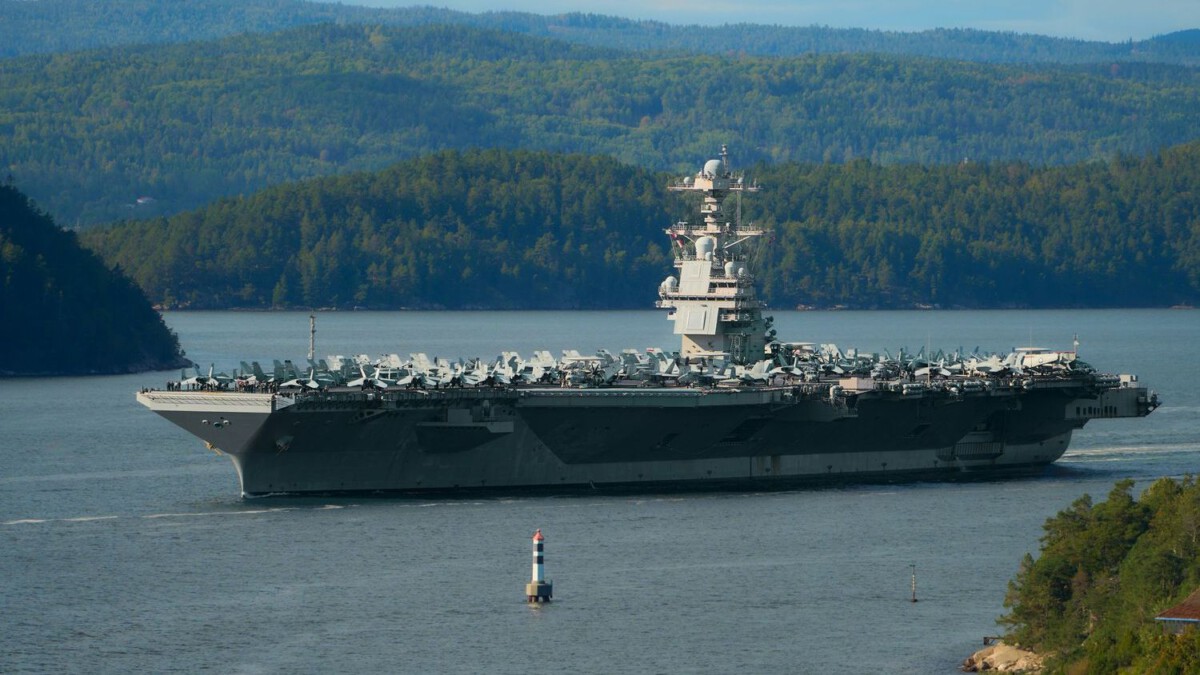
Washington — The USS Gerald R. Ford aircraft carrier strike group stood as a vital pillar of American military presence in the Middle East throughout the intensifying conflict with Iran. A U.S. official confirmed to CBS News that the Navy’s most advanced carrier will depart the region in the coming days, marking the end of a grueling deployment.[1] This withdrawal coincides with fresh disclosures from Pentagon leaders about the war’s mounting expense, now estimated at $25 billion for U.S. taxpayers.[1]
A Record Deployment Draws to a Close
The USS Gerald R. Ford embarked on what became a 10-month odyssey in the Middle East, shattering post-Cold War records with over 300 days at sea. Sailors aboard the carrier, numbering around 4,500, supported operations central to the U.S. response against Iran, including enforcement of a naval blockade on Iranian ports. The vessel’s departure reduces firepower in a tense theater where three carriers once operated.
Maintenance demands played a key role in the timing. Earlier incidents, such as an onboard fire and sewage system issues, had already forced brief stops for repairs in places like Crete and Croatia. Now, with the carrier in dire need of a full overhaul, the Navy prioritizes its return to Virginia. Officials emphasized that two other carriers remain in the area to maintain readiness.[2][3]
The Pentagon’s Sobering Cost Breakdown
Defense officials laid bare the financial strain during recent congressional briefings. The conflict reached a staggering $25 billion in U.S. military spending to date, according to the Pentagon’s chief financial officer. That figure covers air strikes, missile defenses, and sustained carrier operations like those of the Ford.[4][5]
Early tallies set the tone for escalation. The first week alone consumed over $11 billion, with daily outlays hovering near $1 billion thereafter. Analysts at the Center for Strategic and International Studies tracked these expenses, highlighting munitions, fuel, and personnel as primary drivers. Democrats in Congress have seized on the numbers ahead of midterms, pressing for supplemental funding requests that the Pentagon has yet to formalize.[6]
These costs strain the fiscal 2026 defense budget of $839 billion, prompting questions about long-term sustainability. Without a supplemental appropriation, ongoing operations could dip into reserves. The Ford’s exit, while routine for such extended missions, underscores the human and mechanical toll of prolonged engagements.
Ripple Effects Reach Gas Pumps Nationwide
American consumers felt the war’s bite beyond Washington ledgers. Disruptions in the Strait of Hormuz, a chokepoint for global oil shipments, drove up energy prices as Iran threatened key shipping lanes. Gasoline costs climbed steadily, adding pressure to household budgets already tested by inflation.
The International Energy Agency described the supply shock as the largest in years, with U.S. drivers paying more at the pump due to heightened risks in the Bab el-Mandeb Strait as well. Defense contractors and oil firms reported gains amid the chaos, but everyday stakeholders bore the brunt. Pentagon estimates tied a portion of the $25 billion directly to securing these vital routes.[7]
- First-week military spending: Over $11 billion, per Pentagon data.
- Total to date: $25 billion, including blockade enforcement.
- Daily operational average: Nearly $1 billion.
- Oil market impact: Surging prices from Hormuz threats.
Shifting Dynamics in the Region
The Ford’s pullout signals no immediate de-escalation. Peace negotiations between the U.S. and Iran stalled, leaving the blockade intact and other carriers on station. President Trump’s administration dispatched the Ford earlier this year as tensions boiled, joining groups like the USS Abraham Lincoln.
This rotation maintains U.S. leverage without fully withdrawing. Yet, the move invites scrutiny over strategy as costs mount and public fatigue grows. Military leaders insist the posture deters further aggression, but analysts watch for Iranian responses to the reduced carrier presence.
As the USS Gerald R. Ford steams toward home, its departure encapsulates the war’s dual legacy: operational resolve paired with undeniable economic weight. Taxpayers funded a formidable campaign, but the path to resolution remains elusive, with oil markets and federal coffers hanging in the balance.