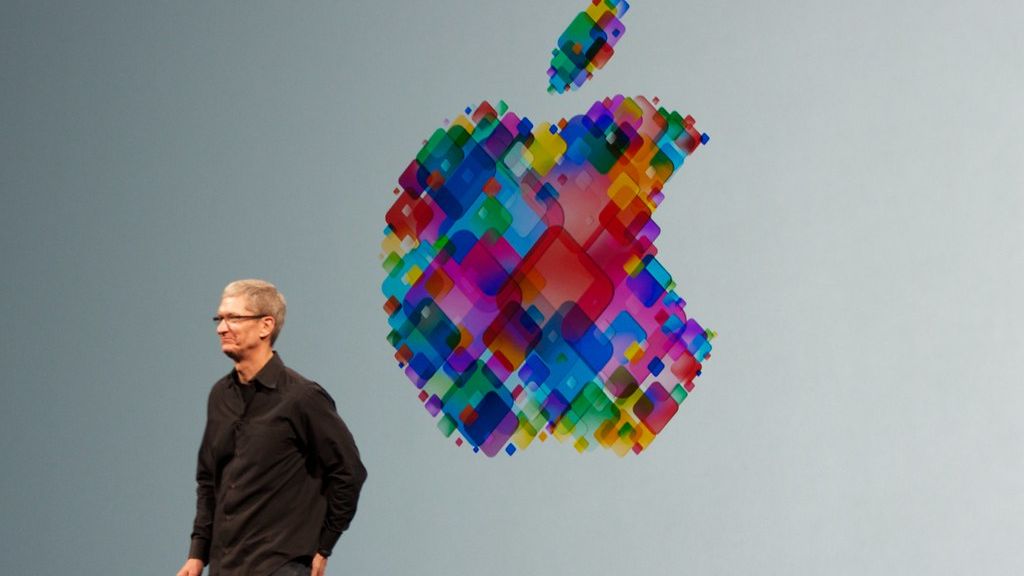
We’re Going To Miss Tim Cook – Image for illustrative purposes only (Image credits: Flickr)
Apple’s long-serving CEO Tim Cook announced his intention to step down in September 2026, paving the way for John Ternus, the company’s senior vice president of hardware engineering, to take the helm.[1][2] This leadership shift, revealed in late April, arrives at a moment when global trade faces mounting pressures from tariffs and political rhetoric. Cook’s 15-year tenure transformed Apple into a colossus through sophisticated supply chain orchestration, a strategy that not only fueled the company’s growth but also contributed to broader economic uplift. His exit prompts reflection on how globalization underpinned these successes amid shifting winds.
Building Apple’s Global Supply Chain Empire
Cook assumed the CEO role in 2011, inheriting a company already revolutionized by the iPhone, which debuted in 2007. Skeptics questioned his background as a supply chain expert in a software-driven era. Yet he proved instrumental in crafting the iPhone’s physical form through worldwide networks.[1]
Central to his approach was labor cost efficiencies: assemblers in China earned about $2 an hour initially, rising to $6 today, compared to $37 an hour for American workers. This arbitrage enabled affordable pricing; iPhones assembled domestically might have retailed for $3,000, potentially ceding ground to competitors like Huawei. Cook’s model shipped billions of devices by pairing prior-year hardware with cutting-edge software updates.
Lifting Economies Through Trade and Productivity
Globalization under Cook extended beyond Apple’s walls. The company helped foster China’s middle class, its third-largest market, while China accumulated U.S. debt reserves that freed American capital for investments like Apple stock, now valued at $4 trillion. This benefited pension funds, unions, and endowments funding retirements and scholarships.[1]
The iPhone supercharged U.S. productivity across sectors. Ride-sharing services like Uber, delivery platforms such as DoorDash, and lodging networks including Airbnb emerged partly due to smartphone ubiquity. Even traditional roles – realtors, plumbers, doctors – gained efficiency tools, amplifying economic output for workers at all levels.
Key Products and Strategic Wins
Cook diversified Apple’s portfolio with wearables and services that capitalized on globalization’s scale. The Apple Watch curbed discreet phone checks, AirPods offered wireless audio despite design debates, and Apple TV carved a niche between Netflix’s breadth and HBO’s prestige. Recently, Mac Minis flew off shelves for AI applications via OpenClaw.[1]
- Apple Watch: Practical accessory for notifications.
- AirPods: Ubiquitous earbuds redefining audio.
- Apple TV: Streaming service blending accessibility and quality.
- Mac Mini: AI powerhouse amid agent computing rise.
High-margin apps and software complemented hardware, though not without stumbles like the underutilized Siri or the scrapped Apple Car project.
Navigating Criticism in a Protectionist Climate
Detractors labeled globalization “neoliberalism” and decried tax maneuvers like Apple’s “Double Irish with a Dutch Sandwich,” though legal and enabling trade. A New York Times opinion piece faulted Cook for aiding China’s rise under Xi Jinping at America’s expense. Current policies, including tariffs, signal a retreat from the model Cook championed.[1]
Still, proponents argue trade generates wealth societally. Workers adapt, safety nets cushion transitions, and economies evolve. Cook’s strategies expanded prosperity even for non-shareholders, countering narratives of unfairness.
The Road Ahead Under John Ternus
Ternus, another hardware specialist, inherits a formidable enterprise. The next frontier involves AI agents – commands like “book a flight” or “summon a car” – demanding fresh interfaces. Possibilities range from VR headsets like the Vision Pro to AR glasses, wearables, or even innovations from ex-Apple designer Jony Ive’s OpenAI project.[1]
A multi-year handover looms, with markets likely pricing future prospects before profits crest. Whether the iPhone evolves into an AI hub or yields to new vessels remains uncertain. Cook will serve as executive chairman, positioned to advocate for globalization’s proven track record.
As Apple transitions, Tim Cook’s blueprint endures as a testament to interconnected prosperity. In an era questioning open trade, his achievements underscore its capacity to elevate billions while driving innovation. The challenge for his successor lies in adapting that vision to tomorrow’s demands.