
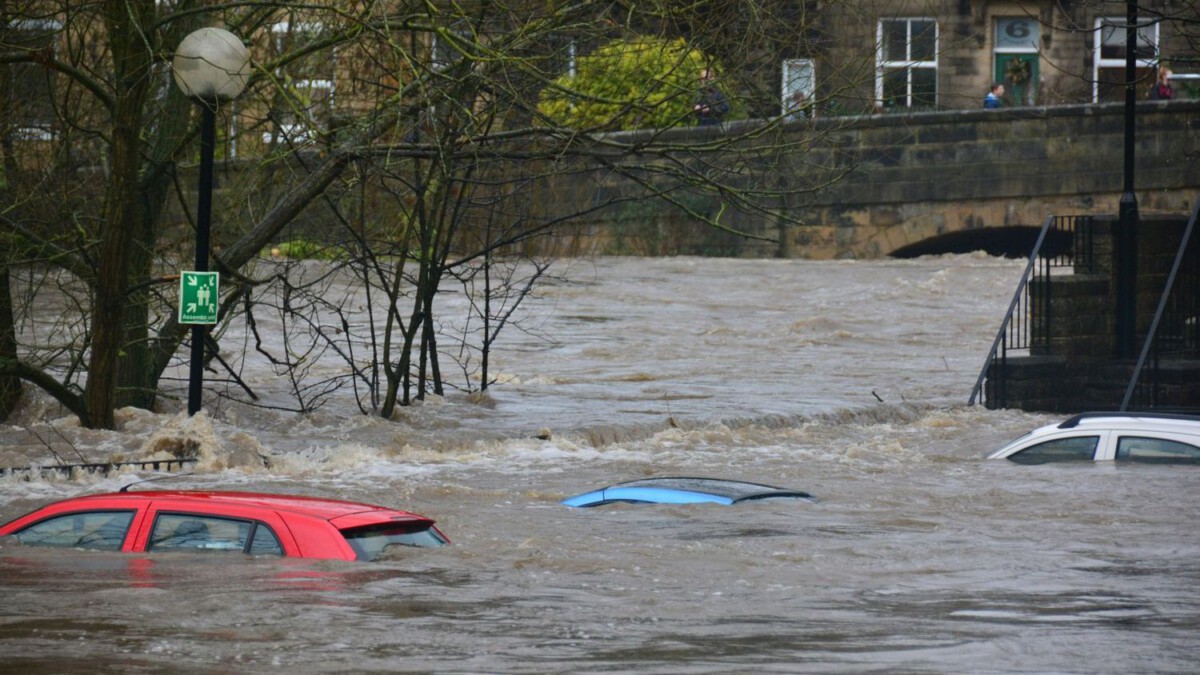
Few Chicago residents buy flood insurance, but should they? – Image for illustrative purposes only (Image credits: Unsplash)
Recent figures show that fewer than one percent of residents in some large urban counties carry flood insurance. Intense storms are delivering heavier rainfall in shorter bursts, overwhelming local drainage systems and sending water into basements across the country. Standard homeowners policies typically exclude this type of damage, leaving many families exposed to sudden and costly losses.
Why Basement Flooding Is Increasing
Big thunderstorms now occur more often and drop larger volumes of rain in a single event. Neighborhood sewers in many cities were built to manage only about two inches of rainfall over 24 hours, yet some storms deliver four times that amount. The excess water backs up through drains and finds its way into homes before it can reach larger flood-control tunnels.
Basement flooding has become a recurring problem, especially in older neighborhoods where infrastructure upgrades have lagged. Industry data indicate that severe storms producing floods, hail, and tornadoes have generated roughly $50 billion in insured losses nationwide in each of the past three years. Homeowners who assume their regular policy will handle the cleanup often discover the opposite once water reaches their property.
What Standard Policies Actually Cover
Major insurers state clearly that standard homeowners insurance does not cover flood damage from any source, including sewer backups. Water that enters through drains or overflows from streets falls under separate flood or sewer-backup endorsements that must be purchased in addition to the base policy. Without those add-ons, repairs to furnaces, appliances, wiring, and personal belongings remain the homeowner’s responsibility.
One Chicago-area resident learned this distinction the hard way when more than five feet of water entered his basement through sewer lines. The damage destroyed two furnaces, multiple appliances, power tools, and an electrical panel, resulting in roughly $70,000 in total costs. His existing policy provided no reimbursement.
How to Review and Strengthen Coverage
Policyholders should examine the exclusions section of their homeowners contract and ask their agent specific questions about sewer-backup protection. A useful starting point is to confirm whether an endorsement exists that covers both structural items and personal property when water backs up through drains. Running through several realistic scenarios with an insurer helps ensure the right limits are in place before the next heavy rain arrives.
Private companies offer add-on coverage that can cost several hundred dollars annually, though eligibility depends on the property’s risk profile. The federal National Flood Insurance Program provides another option available to most communities. That program caps structural coverage at $250,000 and generally excludes personal items stored in basements or improvements in finished spaces. Estimated premiums start around $700 per year and can be checked through official flood-mapping tools.
Practical Steps Before the Next Storm
- Schedule a policy review with an agent to identify current exclusions.
- Request quotes for sewer-backup endorsements and compare limits for both structure and contents.
- Consider federal flood insurance if private options are unavailable or too expensive.
- Document basement contents and keep receipts for any future claims.
Understanding these coverage gaps now can prevent far larger financial setbacks later. Homeowners who take the time to verify their protection stand a better chance of recovering quickly when heavy rain returns.