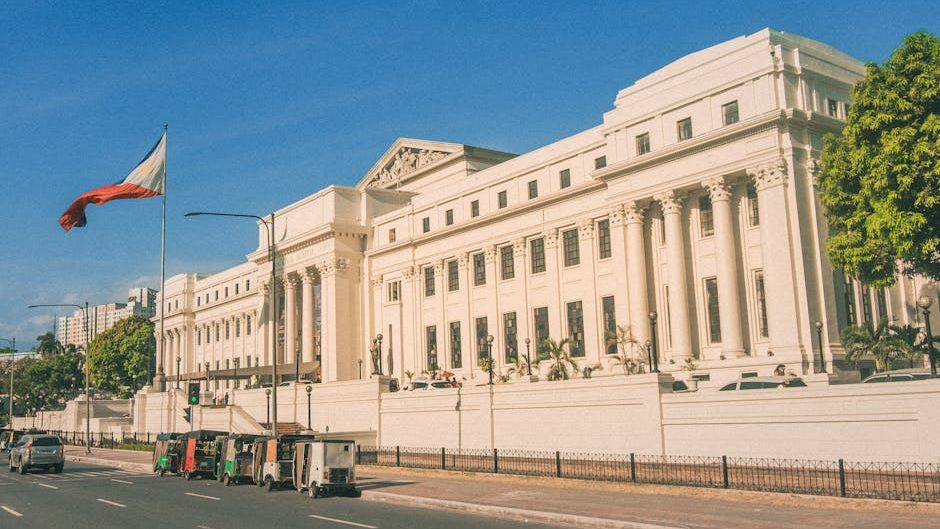
Philippine senate convenes as impeachment court to try vice president as political storm rages – Image for illustrative purposes only (Image credits: Pexels)
Manila – The Philippine Senate convened Monday as an impeachment court to examine serious allegations against Vice President Sara Duterte, thrusting the country into a fresh round of political upheaval that has already produced gunfire inside the legislative chamber. The proceedings come at a moment when longstanding alliances have fractured, leaving ordinary citizens to navigate the fallout from disputes that once united the nation’s top leaders. What began as a partnership in the 2022 election has now produced open confrontations that threaten institutional stability and public confidence in governance.
Charges That Sparked the Crisis
The House of Representatives approved the impeachment articles last week by a wide margin, citing claims of unexplained wealth, improper use of public resources, and a direct threat against President Ferdinand Marcos Jr. Duterte has rejected the accusations without offering detailed rebuttals and continues to position herself as a candidate for the 2028 presidential race. Her father, former President Rodrigo Duterte, remains in custody at the International Criminal Court in The Hague on charges tied to the thousands of deaths during his administration’s anti-drug operations.
These developments have exposed fractures that run deeper than personal disagreements. The vice president has publicly accused Marcos of orchestrating her father’s arrest and transfer abroad, describing the action as a form of abduction. Such statements have intensified the sense of betrayal among supporters on both sides and underscored how quickly yesterday’s allies can become today’s adversaries in Philippine politics.
Power Shift Inside the Senate Chamber
Thirteen senators aligned with the Duterte family moved swiftly to install Sen. Alan Peter Cayetano as the new Senate president, altering the balance of power just days before the trial was set to begin. This maneuver placed the outcome of the proceedings in doubt and demonstrated how procedural votes can reshape the trajectory of high-profile cases. The shift occurred while several key figures remained absent or in hiding, adding layers of uncertainty to an already volatile situation.
One of the most striking developments involved Sen. Ronald dela Rosa, who had avoided the chamber for months out of concern for his own legal exposure. Dela Rosa, who once led the national police under Rodrigo Duterte, appeared suddenly to help secure the slim majority needed for the leadership change. He later described slipping past agents and seeking protection inside the Senate hall, an episode that illustrated the personal risks now attached to routine legislative duties.
Violence and Calls for Calm
A standoff between Senate security and government agents outside the building escalated into gunfire on Wednesday evening, with warning shots fired amid efforts to locate dela Rosa. President Marcos addressed the nation that night, urging restraint and emphasizing the need to prevent further escalation. Authorities continue to investigate whether the exchange was staged to facilitate an escape, leaving many observers questioning how such incidents could occur within the heart of government.
The episode has left lasting impressions on those who work in or near the Senate. Staff members and lawmakers now operate under heightened security protocols, while families of public officials weigh the personal costs of continued involvement in national politics. These human dimensions often receive less attention than the headlines yet shape daily life for thousands connected to the institutions at the center of the storm.
What Comes Next
Observers are watching several developments closely as the trial moves forward:
- The Senate’s ability to maintain order and complete the proceedings without further disruption.
- Any new statements from the vice president or her allies regarding the charges.
- Possible legal actions involving other senators who have faced international scrutiny.
- Public reaction and its influence on upcoming electoral calculations.
The coming weeks will test whether the country’s democratic institutions can absorb these shocks or whether deeper divisions will continue to surface in unpredictable ways. For now, the focus remains on delivering a fair process amid an atmosphere charged with suspicion and unresolved grievances.