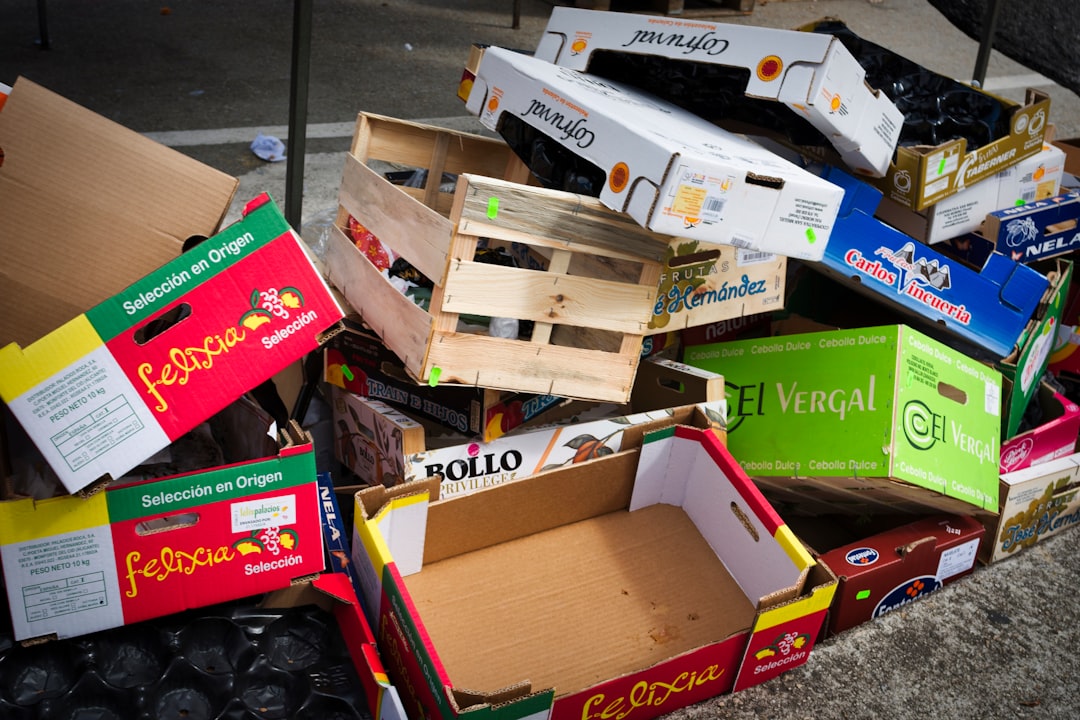
Manual Methods Exposed a Massive Inefficiency (Image Credits: Unsplash)
American grocery stores discarded approximately four million tons of food last year, with fresh produce and meats bearing the brunt of the losses. Managers struggled to predict demand accurately, leading to overstocking and spoilage. A San Francisco-based startup called Afresh has developed AI software that addresses this issue head-on, achieving waste reductions of up to 25% in stores. The company recently secured $34 million in funding to fuel its growth.
Manual Methods Exposed a Massive Inefficiency
A decade ago, Stanford MBA students Matt Schwartz and Nathan Fenner visited grocery stores and discovered produce managers relying on printed spreadsheets for inventory decisions. Packaged goods benefited from basic software, but fresh items demanded educated guesses based on experience alone. This pen-and-paper approach failed to account for variables like daily weight fluctuations in fruits and vegetables or inconsistent scanning at checkouts.
Spoiled goods often went untracked, exacerbating the problem. Stores threw out raspberries and salmon without precise records, distorting future orders. Schwartz later described the process as fundamentally unreliable, prompting the duo to launch Afresh.
Advanced AI Transforms Inventory Forecasting
Afresh’s platform analyzes vast datasets, including hundreds of billions of transactions from partner grocers. It factors in pricing trends, promotional impacts, product origins, and perishability rates to model real-world conditions. Deep learning algorithms predict demand by incorporating external influences such as weather patterns and food assistance program schedules.
An optimization engine then recommends exact order quantities for each item. The system evolves continuously, refining predictions based on new data. For instance, it detects evaporation in weighed produce or scanning errors where customers pay for standard items instead of premium ones.
Real-World Results Drive Rapid Adoption
Afresh typically pilots its technology in 10 to 20 stores within a chain, benchmarking against control groups. Implementations consistently delivered 20% to 25% reductions in shrink, the industry term for waste. Today, the software operates across more than 12,500 departments nationwide, including major chains like Safeway and Albertsons.
Beyond ordering, the tool offers practical optimizations. It identifies oversized produce displays, suggesting adjustments or fillers to maintain visual appeal with less stock. Stores also redirect near-expired items into prepared foods, such as turning avocados into guacamole. A new feature aids deli demand forecasting, further minimizing losses.
Ripple Effects Across the Supply Chain
Improved store-level accuracy stabilizes upstream operations. Distribution centers receive clearer signals on required volumes, enabling precise purchases. This, in turn, allows growers to align production more effectively with retailer needs.
Customers benefit from fresher selections that last longer at home. Environmentally, retail food waste generated about 16 million tons of CO2-equivalent emissions in 2024. Financially, grocers absorbed $26.9 billion in losses that year. Schwartz emphasized that each dollar saved on waste translates directly to profit in a sector with 1-3% net margins.
| Impact Area | Annual Savings Potential |
|---|---|
| Shrink Reduction | 20-25% |
| CO2 Emissions Avoided | Up to 16M tons equivalent |
| Grocer Losses Mitigated | $26.9B industry-wide |
- Transaction data integration for perishability insights
- Weather and promotion forecasting
- Continuous model learning
- Display and repurposing recommendations
- Supply chain signal improvement
Key Takeaways:
- Afresh’s AI cuts fresh food waste by 20-25%, now in 12,500+ stores.
- $34M funding supports national expansion amid $27B industry challenge.
- Benefits extend to environment, profits, and fresher customer options.
Afresh demonstrates how targeted AI can turn a persistent industry pain point into a competitive edge. Grocers stand to gain substantial profits while curbing environmental harm. What steps can more retailers take to embrace such innovations? Share your thoughts in the comments.