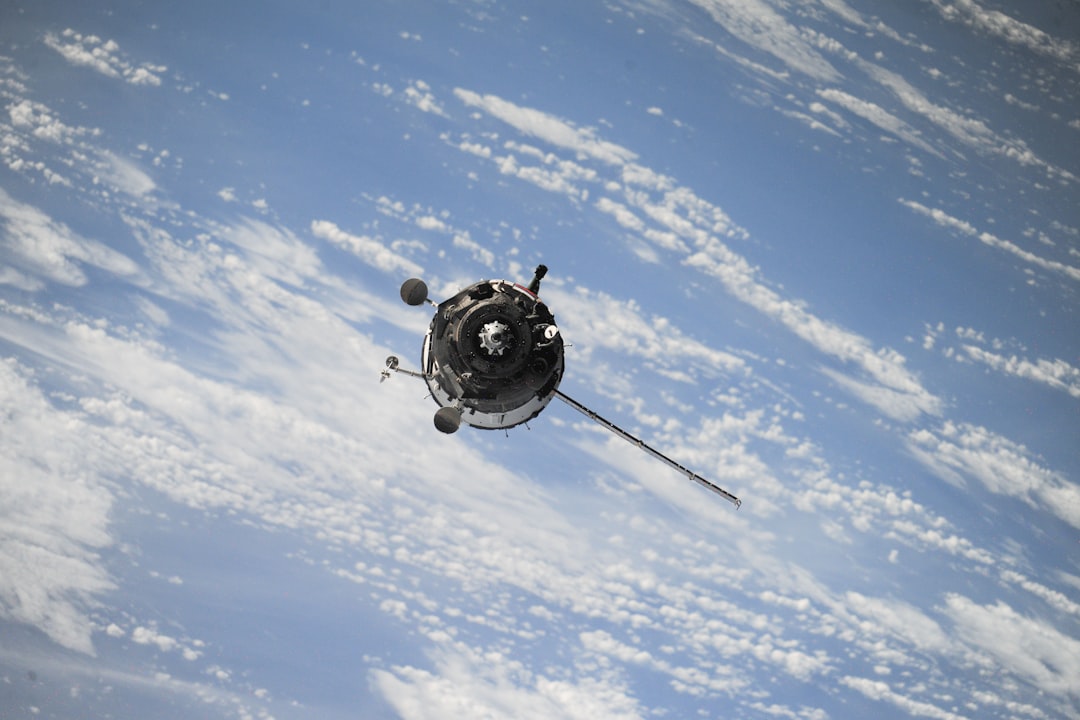
A Landmark Deal Unfolds (Image Credits: Unsplash)
Amazon announced a transformative merger with satellite operator Globalstar valued at $11.57 billion, a strategic leap to integrate direct-to-device technology into its expanding Amazon Leo network. The deal equips unmodified mobile phones with the ability to handle voice calls, texts, and data transmissions even in areas devoid of cell towers, such as remote wilderness or disaster zones.[1] Company leaders emphasized the potential to bridge connectivity gaps for billions worldwide, fostering innovation across consumer, enterprise, and government sectors. This acquisition underscores Amazon’s commitment to reshaping global communications amid intensifying competition.
A Landmark Deal Unfolds
Globalstar shareholders approved the transaction through written consents representing 58% of the company’s voting power.[1] Under the terms, investors can elect $90 in cash or 0.321 shares of Amazon stock per Globalstar share, with cash capped at 40% of shares and the stock value also limited to $90. The total consideration faces a potential $110 million downward adjustment if operational milestones for replacement satellites go unmet.
Regulatory approvals and achievement of specific satellite milestones remain conditions for closure, targeted for 2027. Globalstar, with over 30 years in non-geostationary orbit satellites, brings a fleet of about two dozen spacecraft, key spectrum licenses in Band 53/n53, and proven infrastructure.[2] This marks Amazon’s second-largest purchase ever, trailing only the 2017 Whole Foods acquisition.
Supercharging Amazon Leo’s Capabilities
Amazon Leo, rebranded from Project Kuiper, already boasts more than 150 satellites in orbit and partnerships with entities like JetBlue and Australia’s NBN Co.[3] The integration of Globalstar’s assets accelerates deployment of a next-generation direct-to-device system slated for 2028. This setup promises enhanced spectrum efficiency for quicker services on standard cellular devices.
Panos Panay, Amazon’s Senior Vice President of Devices & Services, stated, “By combining Globalstar’s proven expertise and strong foundation with Amazon’s customer-obsession and innovation, customers can expect faster, more reliable service in more places – keeping them connected to the people and things that matter most.”[1] The combined network aims to support hundreds of millions of endpoints, from IoT sensors to remote workforces.
Continued Support for Apple Ecosystem
Globalstar long powered Apple’s Emergency SOS via satellite on iPhone 14 models and later, along with Messages via satellite, Find My, and Roadside Assistance. Amazon and Apple forged an agreement to sustain these features using the Leo D2D system while exploring expansions.[1]
Greg Joswiak, Apple’s Senior Vice President of Worldwide Marketing, noted the service’s life-saving impact, citing rescues from stranded hikers to car crash victims. “Apple and Amazon have a long and proven track record of working together… This ensures our users will continue to have access to the vital satellite features they have come to rely on.” The partnership extends to Apple Watch Ultra 3, ensuring seamless off-grid connectivity.
Intensifying the Satellite Connectivity Battlefield
The acquisition catapults Amazon into direct competition with SpaceX’s Starlink, which operates nearly 10,000 satellites and serves over 9 million users.[4] While Starlink dominates broadband, Amazon targets niche direct-to-cell services for everyday phones, leveraging Globalstar’s spectrum for global reach without hardware modifications.
Key applications include:
- Emergency response in hurricanes, wildfires, or floods.
- Rural broadband extension and remote asset tracking.
- Supply chain monitoring across oceans and isolated regions.
- IoT connectivity for industrial automation and fleets.
- Global roaming for travelers and field workers.
Paul Jacobs, Globalstar’s CEO, affirmed, “The combination with Amazon Leo will advance innovations in digital connectivity that will benefit our customers and advance us toward a more intelligent, continuously connected world.”[1]
This move not only closes the gap in satellite counts – Amazon plans 3,200 by 2029 – but positions it for future dominance in hybrid terrestrial-satellite networks.
As satellite constellations proliferate, Amazon’s bold investment promises resilient connectivity worldwide, potentially redefining how people stay linked in an increasingly mobile world. The true test lies in execution amid regulatory scrutiny and technical hurdles.
Key Takeaways
- Amazon gains immediate D2D expertise and spectrum, fast-tracking 2028 rollout.
- Apple users benefit from uninterrupted emergency satellite services.
- Competition heats up, driving innovation but raising orbital crowding concerns.
What do you think of this satellite showdown? Share your views in the comments.