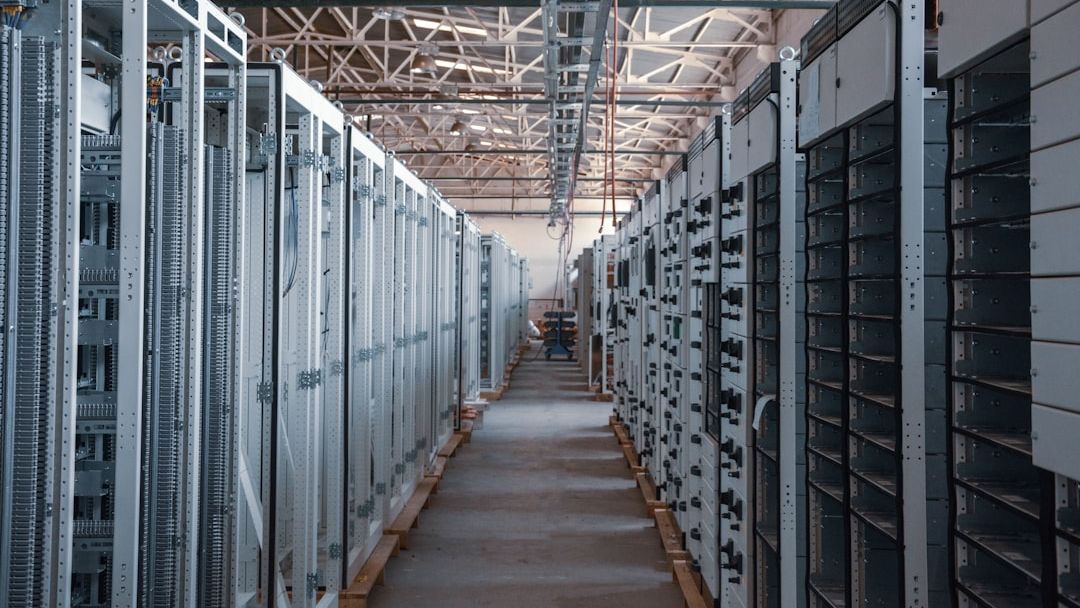
Data Center REITs: One Of My Highest-Conviction Calls – Image for illustrative purposes only (Image credits: Unsplash)
Across the United States and beyond, demand for data centers has reached levels that few analysts anticipated even a few years ago. The relentless expansion of artificial intelligence applications, combined with ongoing cloud migration, has placed enormous pressure on existing facilities and accelerated plans for new capacity. In this environment, data center real estate investment trusts have emerged as a focused way for investors to participate in the buildout of essential digital infrastructure.
AI Spending Creates Sustained Tailwinds
Major technology companies continue to allocate record amounts of capital toward AI-related infrastructure. Projections show the largest hyperscalers directing more than $450 billion in spending during 2026 alone, much of it directed at expanding data processing and storage capabilities. This level of investment has translated directly into leasing activity for data center operators, with preleasing rates in primary markets holding well above historical averages.
Occupancy levels remain elevated, and pricing power has held firm in established locations. Industry forecasts point to vacancy rates staying near historic lows through the year, supported by the difficulty of bringing new supply online quickly enough to meet demand. The result is a backdrop that favors owners of high-quality, well-located assets.
Key Operators Position Themselves for Growth
Two of the most prominent data center REITs have outlined clear expansion plans that align with these trends. Digital Realty has guided core funds from operations per share to rise roughly 8 percent in 2026, with total revenues expected to reach approximately $6.6 billion. The company is committing between $4 billion and $5 billion annually through 2029 to double its capacity over that period.
Equinix, meanwhile, anticipates revenue growth of 9 to 10 percent this year after posting a 6 percent increase in 2025. Its adjusted funds from operations per share are projected to advance between 8 and 10 percent. Both firms have emphasized disciplined development pipelines and long-term lease structures that provide visibility into future cash flows.
Broader Market Dynamics and Investor Sentiment
After a more challenging 2025, data center REITs have staged a notable rebound. Year-to-date total returns for the sector have reached nearly 22 percent, outpacing other REIT categories and reflecting renewed confidence in the underlying fundamentals. This performance comes even as broader REIT indices have advanced more modestly.
Global forecasts reinforce the scale of the opportunity. Analysts anticipate roughly 100 gigawatts of new data center capacity coming online between 2026 and 2030, representing more than $1.2 trillion in real estate value creation. When tenant fit-out costs are included, total expenditures across the sector could approach $3 trillion over the same span.
Navigating Risks While Maintaining Conviction
Power availability and rising construction costs represent the most immediate constraints. Regions with abundant energy resources and favorable regulatory environments continue to attract the bulk of new development, yet delays in grid connections remain common. Interest-rate sensitivity also persists, though many operators have locked in long-duration leases that help insulate earnings.
Despite these headwinds, the sector’s structural advantages – high barriers to entry, recurring revenue from creditworthy tenants, and alignment with multi-year technology cycles – continue to support a constructive outlook. Investors who focus on operators with strong balance sheets and proven development track records appear best positioned to capture the upside.
Key takeaways
- AI-driven capital spending by hyperscalers is expected to exceed $450 billion in 2026.
- Leading data center REITs project mid-to-high single-digit growth in revenue and funds from operations.
- Global capacity additions through 2030 could generate more than $1.2 trillion in real estate value.
- Power constraints and construction costs remain the primary risks to monitor.
Looking ahead, data center REITs appear well placed to deliver steady income and capital appreciation as the digital economy continues its expansion. Their role in enabling the next wave of technological progress gives the sector a durable foundation that extends well beyond any single year’s results.