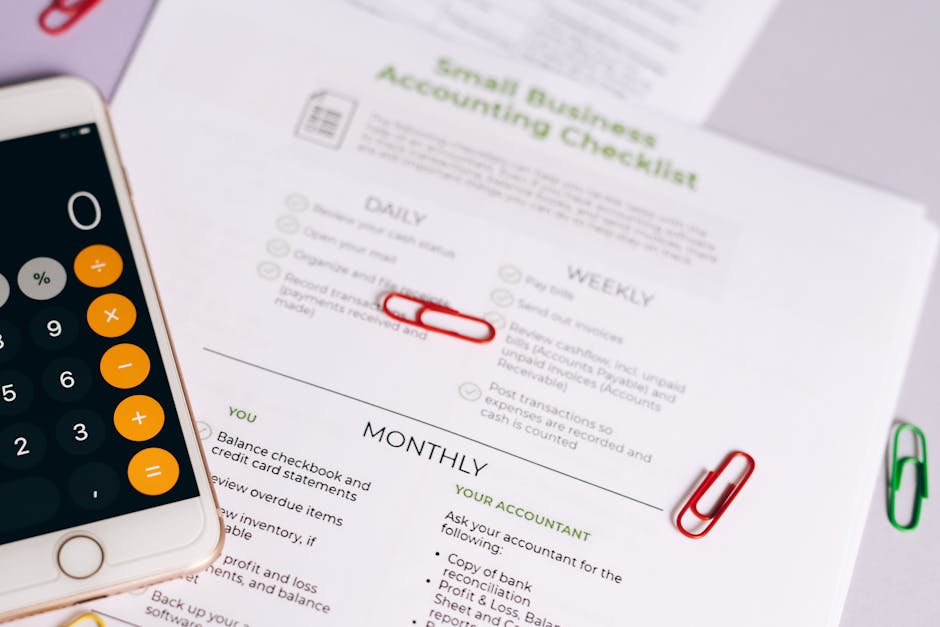
Defining Accounts Payable and Its Core Role (Image Credits: Pexels)
Accounts payable forms the backbone of a company’s short-term financial obligations. Businesses large and small depend on it to handle payments to suppliers efficiently. Mastering these essentials helps prevent cash flow disruptions and fosters stronger vendor partnerships.
Defining Accounts Payable and Its Core Role
Accounts payable represents the money a company owes to suppliers or vendors for goods and services already received.[1][2] This liability appears on the balance sheet as a current obligation, typically due within 30 to 90 days. Companies track it closely to maintain liquidity and operational momentum.
Effective AP management directly influences cash flow planning and working capital. Poor handling leads to late payments, strained relationships, or missed discounts. In contrast, streamlined processes reveal spending trends and reduce fraud risks.[3] Finance teams view AP not just as a clerical task but as a strategic function.
Navigating the Accounts Payable Workflow
A typical AP cycle begins with invoice receipt and ends with payment reconciliation, often involving multiple checks for accuracy. This structured approach prevents errors that could cost businesses thousands. Teams commonly use a three-way match to verify details against purchase orders and receipts.[4][5]
| Step | Description | Key Goal |
|---|---|---|
| 1. Invoice Receipt | Collect and log supplier invoices via email, mail, or portal. | Ensure complete capture without loss. |
| 2. Verification and Matching | Compare invoice to purchase order and goods receipt. | Confirm accuracy and prevent overpayments. |
| 3. Approval | Route for internal sign-off based on amount and department. | Enforce spending controls. |
| 4. Payment Execution | Schedule and issue payment per terms. | Maintain cash flow balance. |
| 5. Recording and Reconciliation | Update ledger and resolve discrepancies. | Close the loop for audits. |
Each stage demands clear roles to avoid bottlenecks. Automation tools now speed up data entry and matching, cutting manual effort significantly.[6] Businesses that standardize this workflow report fewer disputes and faster cycles.
Essential Best Practices for AP Success
Top performers prioritize automation and controls from the start. They limit system access and segregate duties between approval and payment to curb fraud.[3] Regular invoice prioritization based on due dates and discounts optimizes cash use.
- Implement three-way matching for all purchases over a set threshold.
- Adopt electronic invoicing to eliminate paper delays.
- Monitor key metrics like days payable outstanding and error rates.
- Build vendor portals for self-service updates.
- Renegotiate terms with key suppliers for flexibility.
- Conduct periodic audits to catch duplicates early.
- Leverage software for predictive cash flow insights.
These steps transform AP from a cost center into a value driver. Companies applying them often see processing costs drop by double digits.[7]
Tackling AP Challenges Head-On
Duplicate payments and late approvals plague many teams, eroding profits quietly. Manual data entry invites errors, while scattered invoices create visibility gaps. Finance leaders address these by centralizing processes and training staff on red flags.[8]
Scaling businesses face vendor volume spikes, complicating reconciliations. Solutions include cross-training teams and integrating ERP systems. Proactive monitoring of KPIs helps spot trends before they escalate. Ultimately, technology bridges most gaps, enabling real-time tracking.
Key Takeaways
- Accounts payable tracks short-term vendor debts, vital for cash flow health.[1]
- Follow a five-step process with three-way matching to minimize risks.
- Automate and audit routinely to unlock efficiency gains.
Strong accounts payable management secures a business’s financial footing amid uncertainties. It turns routine payments into opportunities for savings and growth. What strategies have you implemented in your operations? Share your experiences in the comments.