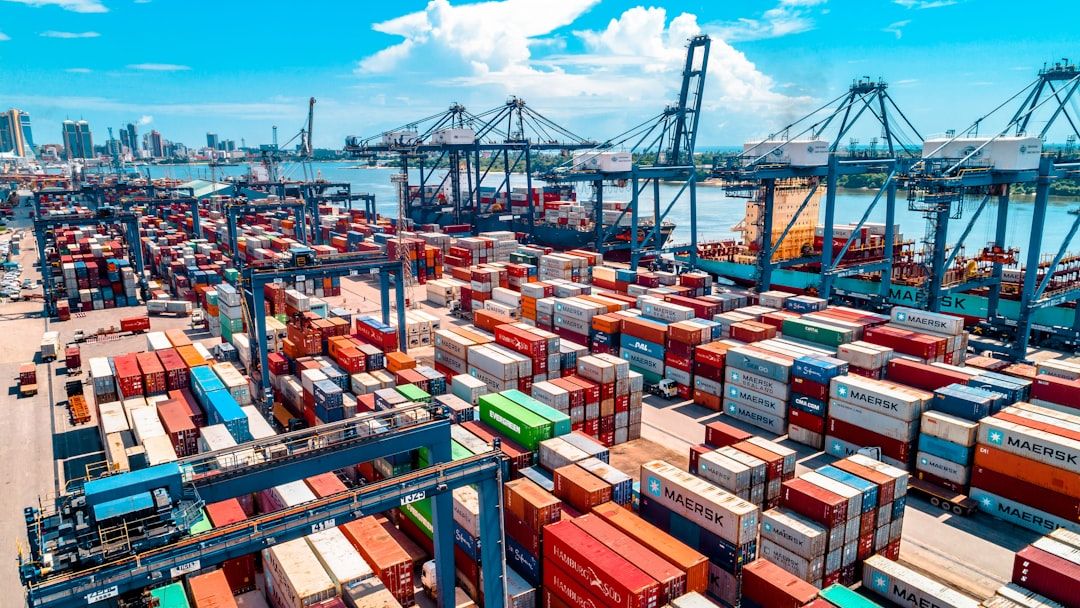
The Strait of Hormuz Blockade Unfolds (Image Credits: Unsplash)
Container vessels crowd the docks at Fujairah and Khor Fakkan, ports on the UAE’s Gulf of Oman coastline, as shipping lines reroute around the Strait of Hormuz blockade that has persisted for nearly two months. DP World, the Dubai-based logistics giant, has intensified its overland trucking services to move discharged cargo directly to Jebel Ali Port for customs processing.[1][2] This strategy keeps vital supply chains operational, especially for the bustling India-UAE trade corridor disrupted by the conflict.
The Strait of Hormuz Blockade Unfolds
Tensions escalated in late February 2026 when Iran restricted access to the strait following strikes by the United States and Israel. Commercial shipping traffic ground to a halt as major carriers suspended transits due to security risks and insurance hurdles.[3] By early March, the waterway had become a no-go zone for most vessels, stranding thousands of containers and forcing importers across the Gulf to scramble for alternatives.
The blockade stemmed from broader regional hostilities, including retaliatory attacks and naval posturing. Iranian forces mined parts of the strait, while U.S. countermeasures targeted Iran-linked ships. As of late April, no resolution appeared imminent, with both sides digging in.[4] Gulf economies, heavily reliant on the route for 20 percent of global oil flows, faced mounting pressures on food, medicine, and industrial imports.
Shipping Diversions to Eastern Ports
Major lines quickly pivoted to safer harbors outside the strait. Vessels now discharge at UAE facilities like Khor Fakkan in Sharjah and Fujairah, as well as Omani ports including Sohar and Salalah.[5] These locations front the Arabian Sea and Gulf of Oman, allowing ships to avoid the perilous Persian Gulf entry altogether.
Congestion soon followed. Queues at Khor Fakkan stretched beyond 10 days, with dwell times at Fujairah climbing amid surging demand. Sohar reached capacity limits, while Salalah handled overflow transshipments.[6] Freight rates spiked, and trucking bottlenecks emerged as inland movements ramped up.
DP World’s Bonded Overland Network Takes Center Stage
DP World moved swiftly in early March to address the gap. The company introduced bonded road transit arrangements, enabling containers unloaded at Khor Fakkan or Fujairah to travel directly to Jebel Ali under seal, without intermediate customs checks.[1][7] Dubai Customs supported the initiative through temporary notices, streamlining transfers to free zones and the main port hub.
This inland push coordinates trucking fleets with shipping lines and authorities, covering standard imports and free-zone cargo alike. Routes span hundreds of kilometers across UAE roads, transforming Jebel Ali into a land-fed gateway rather than a direct maritime one. Demand for haulage has surged, prompting DP World to scale operations and manage flows to prevent overloads.[2] The setup minimizes delays for time-sensitive goods, from perishables to pharmaceuticals, while preserving bonded status throughout.
Extensions apply to outbound cargo too, linking Jebel Ali to destinations like Dammam in Saudi Arabia or Sohar in Oman. Such flexibility has eased some terminal pressures at Jebel Ali, which remains fully operational despite reduced inbound calls.[8] Stakeholders praise the coordination, though added road legs have nudged up costs and complexity for forwarders.
- Khor Fakkan and Fujairah: Primary discharge points on UAE east coast.
- Bonded trucking: Direct to Jebel Ali, overseen by DP World.
- Customs facilitation: No clearance until final destination.
- Scope: Imports, free-zone shipments, select exports.
Protecting the India-UAE Trade Lifeline
India-UAE commerce stands out among affected corridors. New Delhi’s exporters ship fruits, vegetables, drugs, and machinery to Dubai and beyond, routes now vulnerable to stranding or rejection.[1] DP World’s measures provide a buffer, allowing vessels from Indian ports like Nhava Sheva to offload safely and proceed overland.
India responded with its own relief. Authorities waived entry formalities for returned containers, canceling export documents to avert incentive losses. This “back to town” process aids stranded perishables and builds resilience against prolonged disruptions.[2] Bilateral trade volumes, already robust, now test the limits of these workarounds.
Persistent Hurdles and Path Forward
Challenges persist. Port backlogs, elevated surcharges, and road capacity strains have extended lead times. Importers report delays pushing beyond two weeks, with some Gulf food supplies tightening despite UAE stockpiles.[9]
Yet the adaptations signal Gulf logistics evolution. DP World’s inland expansion underscores a shift toward multimodal resilience, potentially reshaping regional hubs long-term. As diplomatic efforts stall, such infrastructure proves essential for economic continuity in an uncertain seascape.