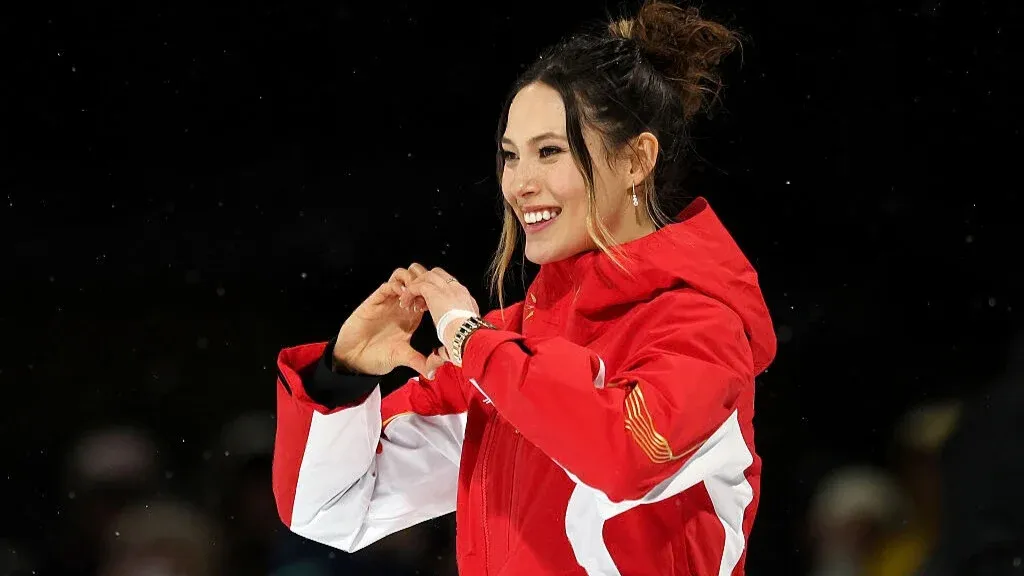
A Question Born of Admiration (Image Credits: Img-cdn.inc.com)
Milano Cortina, Italy – Freestyle skiing sensation Eileen Gu captivated reporters at the 2026 Winter Olympics with a response that blended personal reflection and brain science.[1]
A Question Born of Admiration
The inquiry came from The Athletic’s Charlotte Harpur, who prefaced it carefully. She noted Gu’s ability to deliver quick, comprehensive answers on diverse topics, from geopolitics to aerodynamics.[1]
“This isn’t supposed to be a rude question, but do you think before you speak?” Harpur asked. “Can you take us into your brain?” Gu, already the most decorated female freeskier in Olympic history at age 22, appreciated the intent.[1]
She began with thanks: “Thank you, Charlotte. That’s very kind.” The exchange highlighted Gu’s poise under scrutiny, a trait that has defined her career across skiing, modeling, and studies at Stanford University.
Diving Deep into Introspection
Gu described herself as pensive and introspective. She spends considerable time in her own head, a space she views positively. Journaling forms a core practice; she breaks down thought processes and applies an analytical lens.[1]
“I modify it because it’s so interesting,” she explained. This tinkering extends to self-improvement. Gu likened her approach to her skiing craft, constantly refining techniques for better performance.[1]
Her words revealed a deliberate mindset. At 22, she leverages youth’s advantages in brain adaptability. The result? A commitment to daily evolution, making today’s self worthy of admiration from her younger version.
The Power of Neuroplasticity Explained
Central to Gu’s philosophy is neuroplasticity, the brain’s capacity to reorganize neural pathways through experience and thought. She stated plainly: “You can control what you think. You can control how you think, and therefore, you can control who you are.”[1]
Especially empowering for the young, this principle allows intentional shaping of identity. Gu called it “the biggest flex of all time,” where past aspirations fuel present growth. Her method avoids ego; instead, it mirrors scientific experimentation on the mind.
Practices like journaling and analytical reflection reinforce these changes. Gu approaches mental training with the same rigor as physical preparation, ensuring progressive improvement.
Practical Strategies from a Champion
Gu’s insights offer actionable steps for anyone seeking mental edge. She demonstrated how elite performers treat the brain as trainable muscle.
- Journal regularly to dissect and refine thoughts.
- Adopt an analytical viewpoint on personal thinking patterns.
- Experiment like a scientist, testing modifications for better outcomes.
- Align daily growth with long-term ideals, honoring younger ambitions.
- Embrace neuroplasticity’s potential, particularly in formative years.
These habits extend beyond sports. Professionals in demanding fields can apply them to build resilience and innovation.
| Approach | Benefit |
|---|---|
| Introspection via journaling | Identifies unhelpful patterns |
| Thought control | Shapes identity and behavior |
| Neuroplasticity focus | Enables rapid adaptation |
Key Takeaways:
- Thoughts are malleable; direct them intentionally.
- Youth amplifies brain rewiring, but change remains possible anytime.
- Treat your mind like a skill to master daily.
Eileen Gu’s exchange underscored a timeless truth: mastery starts within. By harnessing neuroplasticity, individuals craft their paths with precision. What mental practice will you adopt next? Share in the comments.