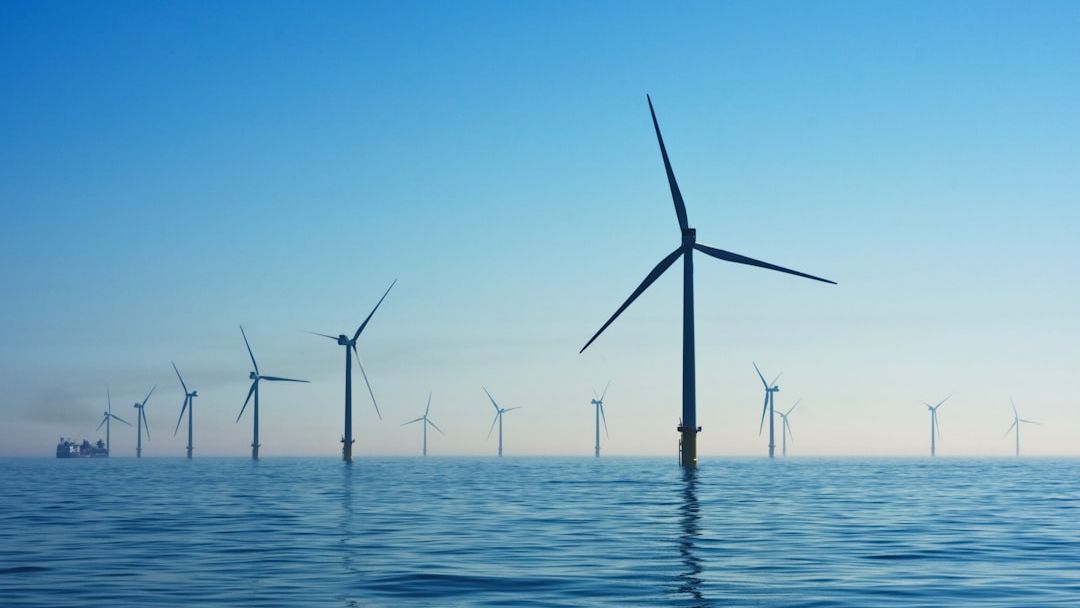
‘Party Is Over’ In European Offshore Wind As Developers Turn Cautious – Image for illustrative purposes only (Image credits: Unsplash)
Europe’s push for renewable energy faces a pivotal moment as offshore wind developers adopt a more restrained approach to new projects. Financial pressures and persistent supply chain constraints have tempered the sector’s once-relentless expansion, prompting industry leaders to warn that aggressive timelines may no longer hold.[1][2] This shift comes at a time when the continent seeks to bolster energy security and meet climate targets, raising doubts about achieving installed capacity goals by the end of the decade.
Failed Auctions Expose Market Realities
Recent tender processes have underscored the changing landscape for offshore wind in Europe. Developers increasingly balk at terms that fail to account for escalated costs, leading to unsubscribed or low-ball auctions in key markets.[3] In Denmark, a high-profile auction flopped after imposing stringent conditions, including state ownership requirements and no subsidies, which amplified developer risks.[4]
Executives from major firms highlighted how erratic auction designs and permitting delays hinder manufacturing scale-up. These setbacks threaten Europe’s broader offshore wind ambitions, as firms hesitate to commit without viable economics.[3] Sweden’s abrupt cancellation of 13 projects on defense grounds further illustrates regulatory unpredictability.[5]
Supply Chain Bottlenecks Fuel Restraint
Persistent limitations in ports, vessels, and critical components have forced developers to reassess project pipelines. Industry groups like WindEurope have flagged these infrastructure gaps as primary barriers to scaling up deployment.[6] Manufacturers struggle to plan investments amid uncertain demand signals from delayed timelines.
Geopolitical tensions add another layer, with European governments growing wary of reliance on Chinese suppliers for turbines and rare earth materials. Probes into subsidies for firms like Goldwind signal efforts to protect domestic competitiveness, even as they complicate supply dynamics.[7][8] Developers now prioritize projects with secured local sourcing to mitigate these risks.
Financial Strains Reshape Investment Calculus
Higher interest rates and inflation have eroded the profitability that once drove offshore wind’s rapid growth. What began as a response to energy crises has evolved into a sobering recalibration, with one executive noting that recent disruptions crystallized the need for caution in placing big bets.[1] Rising raw material costs and extended development timelines – often exceeding 10 years – further deter aggressive expansion.[9]
What Matters Now:
- Europe risks installing only 70 GW of offshore wind by 2030, short of the 120 GW target.
- Auctions must offer realistic pricing to attract bids.
- Streamlined permitting could unlock stalled projects.
- Supply chain diversification remains urgent amid China tensions.
Oil majors and traditional utilities, once eager entrants, now step back from unprofitable ventures, signaling a market maturing beyond subsidy-driven booms.[10]
Toward Realistic Energy Transition Goals
Summits like the recent North Sea gathering underscore political commitment to offshore wind, yet execution lags behind rhetoric. Nine governments pledged accelerated deployment, but developers demand policy stability and infrastructure support to deliver.[11] WindEurope projects 151 GW of new wind capacity across Europe from 2026 to 2030, with offshore playing a key role if bottlenecks ease.[12]
The sector’s pivot to prudence reflects a healthier, if slower, path forward. As Europe navigates these headwinds, success will hinge on aligning ambitious targets with practical economics, ensuring offshore wind contributes reliably to the energy mix without overpromising.