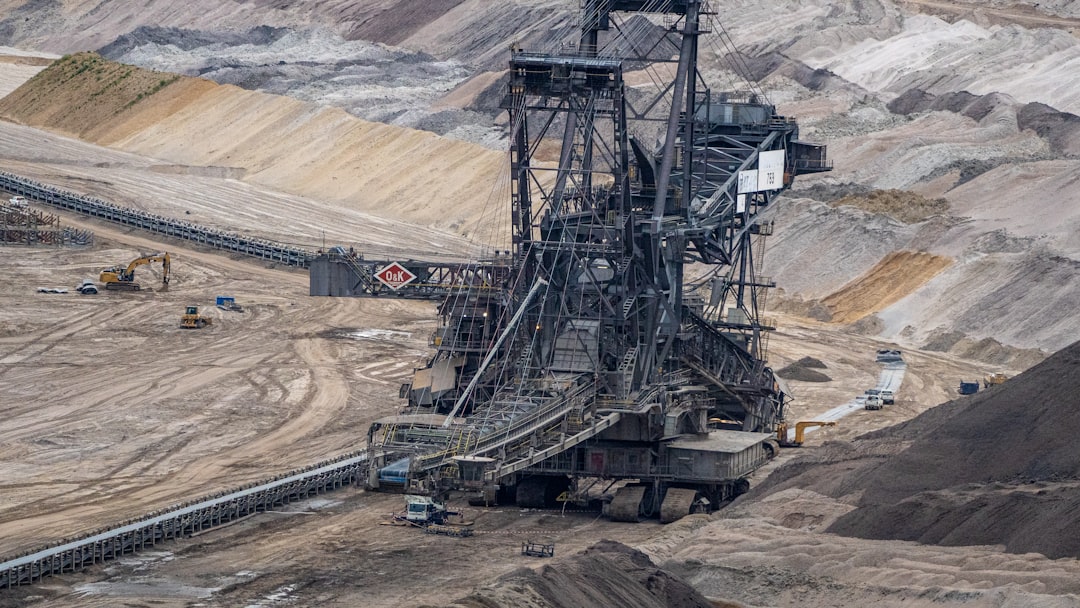
Riverside Resources reports high-grade assays at La Union project – Image for illustrative purposes only (Image credits: Unsplash)
Sonora, Mexico — High-grade surface sampling at the La Union project has opened new possibilities for junior explorers Riverside Resources and Questcorp Mining. The companies disclosed results showing 20 grams per tonne gold and 226 grams per tonne silver across 30 meters of continuous chip-channel samples from the Union Mine area.[1] These polymetallic hits, laced with zinc, underscore the site’s potential to host significant carbonate replacement deposits in a historically mined district. Investors and local stakeholders now eye accelerated drilling as the venture advances into its next phase.
Impressive Channel Samples from Historic Workings
Teams collected the standout samples along an access wall in the oxidized upper section of the Union Mine, reachable from the surface. The 30-meter interval averaged 20 g/t gold, 226 g/t silver, and 2.7% zinc, though true widths remain undetermined due to structural complexities.[1] A denser 24-meter portion within that run climbed to 25 g/t gold and 277 g/t silver.
John-Mark Staude, president and CEO of Riverside Resources, highlighted the significance. “Riverside is excited by the high grade of 30 meters chip-channel sampling within the oxidized upper part of the Union Mine,” he stated. These results build on earlier rock chip grabs that reached 83.2 g/t gold and over 4,800 g/t silver in prior campaigns.[2][1]
Phase One Drilling Confirms Widespread Mineralization
The initial 12-hole program, totaling more than 1,600 meters, wrapped up late last year across targets like Union Mine, Union Norte, El Cobre, and Luis Hill.[3] Assays revealed carbonate replacement-style alteration with anomalous zinc, silver, gold, and lead in all tested zones. At Union Mine, one hole cut 15.85 meters of 0.021% zinc in dolomitized limestone, while another logged 14 meters at 0.1% zinc.[1]
A highlight emerged at Luis Hill, where a vertical hole intersected 42 meters averaging 0.3 g/t gold in black shales and silica-flooded rocks—a style akin to sediment-hosted deposits seen in Nevada’s Carlin trend. This new find spans a 1,500-by-500-meter magnetic anomaly, with multiple sub-intervals exceeding 0.5 g/t gold. Drilling also encountered sulfides, breccias, and intrusive features consistent with a larger system.
Rich History in Sonora’s Polymetallic Belt
La Union covers 2,604 hectares in the El Viejo Mountains, about 30 kilometers south of Caborca, within the Sonora Gold Belt near major operations like La Herradura. Paleozoic carbonates up to 1,000 meters thick host the mineralization through replacement in grey limestones and fault controls.[2] Small-scale mining in the 1950s by Peñoles and locals extracted grades of 7-20 g/t gold, 300 g/t silver, and double-digit percentages of lead and zinc to depths of at least 80 meters.
Riverside consolidated claims starting in 2019 after high-grade grabs from previous explorers. About 30% of over 100 samples from 2021 campaigns returned notable polymetallics, including 30% zinc and 10% lead. The district features multiple old workings like La Famosa and El Plomito, linked by gossan caps and manto-chimney structures reminiscent of classic replacement deposits.
Next Steps Target Expansion and Discovery
Questcorp holds an option to earn 100% interest, with Riverside retaining a 2.5% net smelter royalty and up to 19.9% equity stake. Phase two kicks off in the first half of this year, prioritizing follow-up at Union Mine for both replacement and sediment-hosted styles, plus deeper tests at Luis Hill’s magnetic high.[1]
- Geophysical surveys to refine targets.
- Expanded geochemistry and mapping.
- Drilling in underexplored western Luis Hill areas with historic artisanal sites.
Permits stand ready, and rigorous quality controls validated all assays from labs like Bureau Veritas and ACT Labs.
As Sonora’s mining landscape heats up, La Union stands poised to contribute meaningfully, potentially reviving a corner of the belt long overlooked. The blend of high-grade surface riches and broad mineralization footprints suggests more revelations lie beneath, drawing sharper focus from the exploration community.