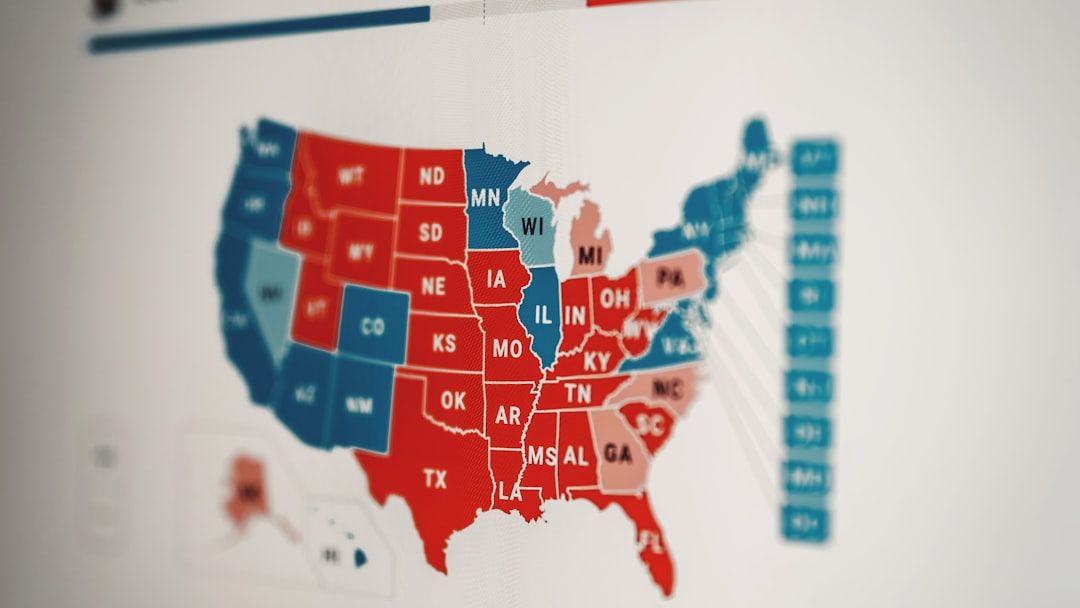
A Redistricting Scramble Begins – Image for illustrative purposes only (Image credits: Unsplash)
Tallahassee, Florida — Lawmakers pushed through a new congressional map in a special session last week, capping weeks of intense debate and marking the latest chapter in a nationwide mid-decade redistricting surge.[1][2] Sparked by Republican ambitions to safeguard their narrow House majority, the effort has drawn swift counter-moves from Democrats and triggered a cascade of court challenges. As the 2026 midterms approach, these boundary shifts threaten to upend races across multiple states, altering the political calculus for incumbents and challengers alike.
Trump’s Initiative Lights the Fuse
The scramble traced its roots to July 2025, when President Donald Trump pressed Texas Republicans to redraw their maps during a special legislative session.[2] Governor Greg Abbott called the session after a U.S. Department of Justice letter highlighted issues with racially discriminatory districts. Democrats staged a quorum-breaking walkout in the first attempt, but a second session produced a map that added five Republican-leaning seats, shifting the balance from 25R-12D.[3]
Momentum built quickly. Missouri Governor Mike Kehoe convened a special session in late August, signing a map in September that targeted Democratic Rep. Emanuel Cleaver by placing him in a Republican-leaning district, netting one GOP gain.[4] North Carolina followed in October with changes making Rep. Don Davis’s seat more competitive for Republicans. Ohio, compelled by its constitution due to prior maps lacking bipartisan support, approved a commission-drawn plan adding up to two Republican seats.[2]
Democrats Strike Back in Blue Strongholds
Republicans’ early gains prompted Democratic-led states to respond in kind. California voters approved Proposition 50 in November 2025, enacting a commission-drawn map that flipped five Republican-held or competitive districts toward Democrats.[4] The change offset much of the GOP’s Texas haul, though Republicans and the DOJ challenged it under the Voting Rights Act.
Virginia pursued a constitutional amendment to bypass its independent commission, securing voter approval on April 21, 2026, for a map potentially adding three or four Democratic seats.[3] In Utah, a state court struck down the legislature’s partisan map and adopted a plaintiff-submitted alternative, creating a safe Democratic district in Salt Lake County and costing Republicans ground.[2] These moves left the net partisan shift across enacted maps at just one seat toward Democrats as of late April.[4]
Florida’s High-Stakes Gamble and Court Catalysts
Florida’s April 29 approval of Governor Ron DeSantis’s proposed map exemplified the scramble’s intensity. The Republican-controlled legislature passed it swiftly — 83-28 in the House and 21-17 in the Senate — despite Democratic cries of a “power grab.”[1] The plan could deliver up to four additional GOP seats from the current 20-8 advantage, targeting areas like South Florida and splitting communities near Tampa and Orlando. “You are destroying democracy with this vote,” House Democratic Leader Fentrice Driskell declared during the debate.
A pivotal U.S. Supreme Court ruling in Louisiana v. Callais further fueled the fire. The decision curtailed Voting Rights Act challenges to gerrymandered maps, emboldening Southern states. Louisiana’s map faced invalidation as a racial gerrymander, prompting delayed primaries and new drawing efforts. Mississippi eyed a special session, while Florida cited the ruling to sidestep state anti-gerrymandering standards.[2] DeSantis’s team argued the changes were “race neutral,” though critics highlighted political data in the design.
Legal skirmishes defined the process. Federal courts initially barred Texas’s map as a racial gerrymander, but the Supreme Court stayed the ruling in a 6-3 decision, allowing its use for 2026.[3] California’s map withstood similar assaults, upheld by the high court in February 2026. Missouri’s faced a referendum threat, but the state Supreme Court affirmed it 4-3. Virginia’s amendment endured injunctions, though its final legality remains under review.
Seats in the Balance: A Tally of Potential Shifts
Seven states — California, Missouri, North Carolina, Ohio, Texas, Utah, and Virginia — have enacted new maps for the 2026 cycle.[4] Here’s a breakdown of projected changes:
- Texas: +5 Republican seats
- California: +5 Democratic seats
- Ohio: +2 Republican seats
- Virginia: +3-4 Democratic seats
- Missouri: +1 Republican seat
- North Carolina: +1 Republican seat
- Utah: +1 Democratic seat
With Republicans holding a 217-214 edge plus vacancies, Florida’s potential +3-4 Republican seats could prove decisive.[1] Ongoing fights in Georgia, Louisiana, and others add uncertainty, as Democrats vow countermeasures and lawsuits.
What Lies Ahead for the House Majority
As primaries unfold, incumbents scramble to adapt to unfamiliar terrain. Rep. Debbie Wasserman Schultz faces a reshaped South Florida district, while others eye retirements or relocations.[1] The Supreme Court’s role looms large, with appeals pending that could validate or void key maps.
This unusual mid-decade exercise, rare since the 1970s, underscores the razor-thin margins defining Congress. While Republicans seek to lock in advantages, Democrats highlight risks to fair representation. The final maps will not only influence November outcomes but also test the boundaries of partisan mapmaking in American democracy.