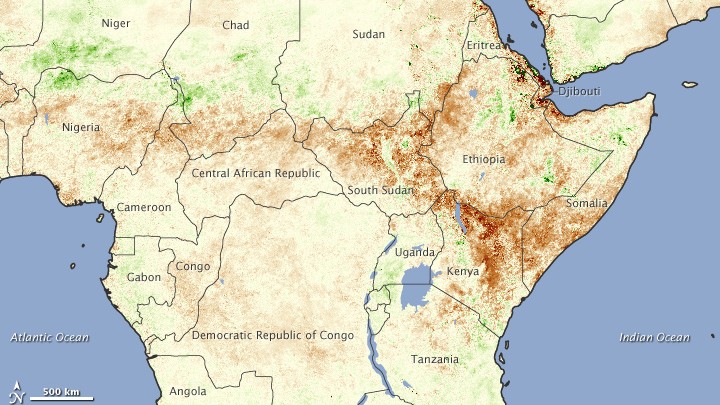
Somalia is in a deadly drought again. Most humanitarian aid isn’t there this time – Image for illustrative purposes only (Image credits: upload.wikimedia.org)
In Puntland, Somalia, herders like Abdi Ahmed Farah have watched their livestock herds shrink dramatically after three consecutive years without reliable rainfall. The 70-year-old now tends just 110 goats out of an original 680, many of them too weak to sell or trade for basic supplies. His family relies on a single daily meal of rice mixed with sugar and oil while his wife struggles to produce enough milk for their newborn. This scene repeats across the region as the current drought compounds long-standing vulnerabilities in one of the world’s most climate-exposed nations.
Unprecedented Dry Conditions Strain the Country
Experts describe 2026 as the worst year on record for drought in Somalia. The October-to-December rainy season produced the lowest maize and sorghum harvests ever documented, according to the United Nations Food and Agriculture Organization. Rivers have run dry in multiple areas, and crops have failed across wide stretches of farmland. The Somali government and United Nations now estimate that 6.5 million people face crisis levels of hunger, a third of the national population and a 25 percent increase since January.
Food security analysts project that nearly 500,000 children could develop severe acute malnutrition this year. That figure exceeds the numbers treated during the major droughts of 2011 and 2022. The World Food Programme director for Somalia, Hameed Nuru, stated that children have already begun dying from the combined effects of hunger and disease.
Families Confront Collapsing Livelihoods
Pastoralist communities have borne the heaviest losses. In Usgure village, residents report that shops have closed and local markets have vanished because thin livestock no longer fetch prices that cover basic needs. A brief shower recently left puddles of dirty rainwater that some families drank out of desperation, leading to widespread fevers. Private water trucks have raised prices fourfold, while the cost of a 50-kilogram bag of flour has risen by a third to $40.
Parents have sold their last animals to cover school fees, only to see teachers depart when payments stopped. One mother of 11 children described her final goat as sick and expressed fear not only for her household but for the entire village’s future. These daily pressures have left many families with no clear path to recover their previous way of life.
Aid Reductions and External Pressures Worsen the Crisis
Humanitarian funding to Somalia fell to $531 million in 2025, largely because of cuts by the United States, the country’s former top donor. In 2022, comparable funding reached $2.38 billion. The World Food Programme planned to assist 2 million people with food aid this year but has reached only 300,000 because of the shortfall. Somalia imports most of its fuel from the Middle East and 70 percent of its food, leaving it exposed to price spikes tied to regional conflicts.
Save the Children manager Mohamed Assair noted that the current drought represents repeated climate shocks occurring against a backdrop of shrinking external support. The International Committee of the Red Cross head in Somalia, Antoine Grand, warned that a drought of similar severity in 2022 received five times the response now available. Without a sudden increase in donor contributions, the outlook remains deeply concerning for millions already on the edge.
Displacement and Health Services Under Pressure
The drought has forced another 200,000 people from their homes this year, adding to millions already displaced by decades of conflict. Families walk for days across difficult terrain with minimal supplies, and some have reached displacement camps outside villages such as Shahda. In one such camp, a 20-year-old mother reported that her children developed diarrhea from contaminated water and that several neighbors had died.
At the hospital in Qardho, a malnutrition treatment center now sees around 15 children each month, with expectations of higher numbers as more displaced families arrive. Therapeutic milk supplies have become scarce, forcing nurses to use homemade cow’s milk alternatives. A four-year-old girl recently admitted weighed only 7.5 kilograms, her condition reflecting the broader strain on health services already stretched thin.
The Somali government and United Nations estimate that 6.5 million people face crisis levels of hunger, representing a third of the country’s population.
Recovery will require sustained international attention and resources that match the scale of the emergency. Without them, the cycle of repeated shocks and shrinking support risks pushing even more households beyond the point of return.