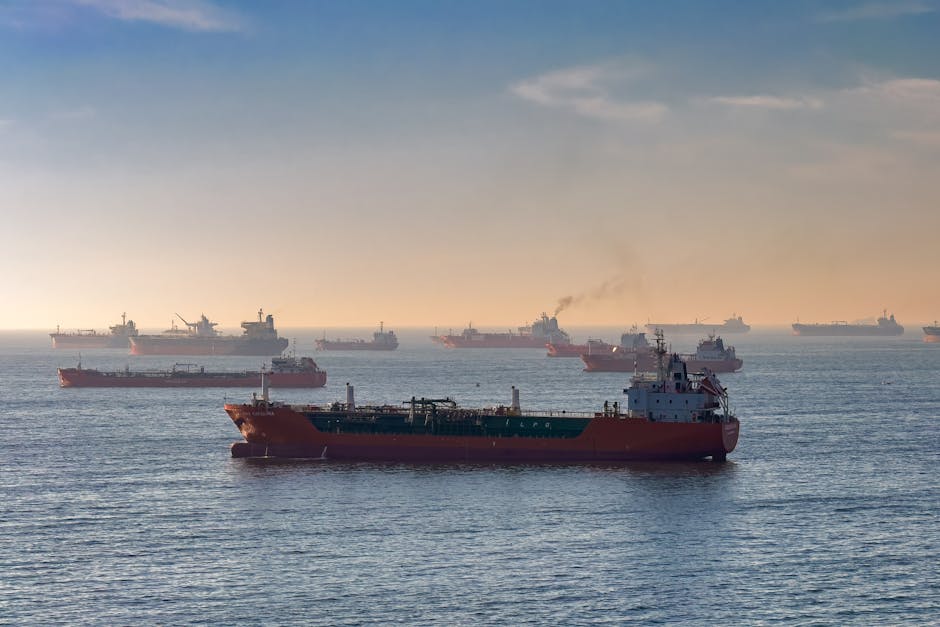
U.S. Destroyer Forces Ship to Halt (Image Credits: Pexels)
The Strait of Hormuz witnessed a tense confrontation on Sunday when U.S. forces attacked and seized an Iranian-flagged cargo vessel accused of evading a naval blockade. This marked the first such interception since the blockade took effect last week. Iran’s military leadership labeled the action as piracy and a breach of the ongoing ceasefire, which faces expiration by midweek. The incident has cast fresh doubt on planned diplomatic efforts between Washington and Tehran.
U.S. Destroyer Forces Ship to Halt
A U.S. Navy guided missile destroyer in the Gulf of Oman pursued the Iranian vessel, named Touska, after it ignored repeated warnings over six hours. President Donald Trump detailed the operation on social media, stating the destroyer “stopped them right in their tracks by blowing a hole in the engineroom.” U.S. Marines then boarded the sanctioned ship and took custody to inspect its cargo. The U.S. Central Command confirmed the sequence but provided no updates on injuries or cargo details.
Details on the vessel’s cargo remained unclear as of Monday. The boarding occurred amid heightened patrols enforcing the U.S. blockade of Iranian ports. Observers noted this as a bold escalation in the standoff, given the strait’s role in global trade.
Iran Rejects Talks Amid Rising Suspicions
Iranian state media reported skepticism about upcoming U.S.-Iran negotiations set for Pakistan. President Masoud Pezeshkian discussed U.S. “bullying and unreasonable behavior” in a call with Pakistan’s Prime Minister Shehbaz Sharif, warning it could lead to a betrayal of diplomacy. Foreign Minister Abbas Araghchi echoed this in talks with his Pakistani counterpart, citing U.S. actions as signs of “bad intentions and lack of seriousness in diplomacy.” Parliament speaker Mohammed Bagher Qalibaf affirmed Iran’s resolve, declaring “there will be no retreat in the field of diplomacy” despite a wide gap on key issues.
Pakistan had not confirmed the second round of talks, though security measures tightened in Islamabad. A regional official noted U.S. advance teams on the ground, speaking anonymously. The White House planned to send Vice President JD Vance, alongside envoys Steve Witkoff and Jared Kushner, following last weekend’s marathon session. Previous talks in June and earlier this year collapsed due to attacks by Israel and the U.S.
Oil Markets Reel from Strait Disruptions
The seizure fueled a spike in global oil prices, exacerbating one of the worst energy crises in decades. Roughly one-fifth of the world’s oil trade, plus vital fertilizers, natural gas, and humanitarian aid, typically flows through the strait. Hundreds of vessels queued at both ends, unable to transit amid conflicting controls. Iran fired on ships attempting passage on Saturday, after briefly reopening the route following a truce with Hezbollah.
Iran’s first vice president, Mohammad Reza Aref, posted on social media that security in the strait comes at a cost: “either a free oil market for all, or the risk of significant costs for everyone.” The Supreme National Security Council insisted on maintaining oversight – designated routes, fees, and certificates – until the war concludes. Trump countered that the U.S. blockade persists until a deal materializes. Each side accused the other of ceasefire violations.
Trump’s Threats Loom Over Negotiations
In announcing the talks, Trump reiterated warnings against Iranian infrastructure, stating that without agreement, “the United States is going to knock out every single Power Plant, and every single Bridge, in Iran.” These remarks drew criticism for potential war crimes. The core disputes – nuclear enrichment, regional proxies, and strait access – remained unresolved from prior rounds.
The conflict, now in its eighth week since U.S. and Israeli strikes began on February 28, has claimed thousands of lives. Casualties include at least 3,000 in Iran, over 2,290 in Lebanon, 23 in Israel, more than a dozen in Gulf states, 15 Israeli soldiers in Lebanon, and 13 U.S. service members regionally.
Key Takeaways
- U.S. seizure of the Touska represents the first blockade enforcement, risking broader escalation.
- Iranian leaders signal reluctance for talks, citing U.S. aggression as a trust barrier.
- Strait closures threaten global energy supplies, with oil prices surging amid uncertainty.
As the ceasefire nears its end, the Hormuz incident underscores the fragility of de-escalation efforts. Both nations wield the strait as leverage, but prolonged disruption harms the global economy. What steps could mediators take next to salvage diplomacy? Share your thoughts in the comments.