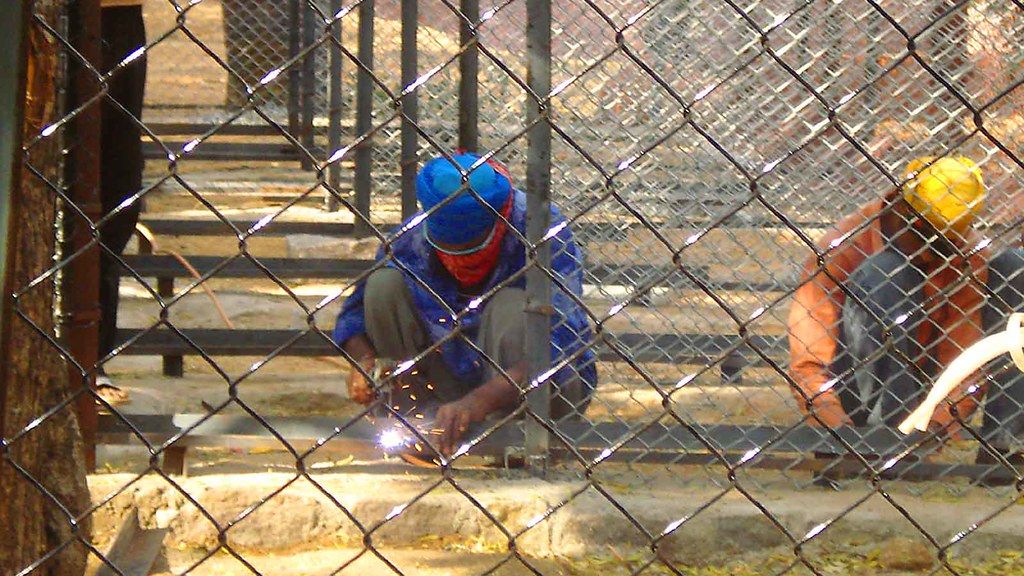
Welders Have a Brighter Future Than Grads – Image for illustrative purposes only (Image credits: Flickr)
High school graduates stepping into welding programs discovered ample job opportunities waiting, bolstered by persistent workforce shortages and steady demand across industries. Recent college graduates, however, navigated higher unemployment rates that outpaced the national average, reaching 5.6 percent for those aged 22 to 27.[1][2] This contrast underscored a pivotal shift in the labor market, where hands-on trades gained ground against knowledge-based professions vulnerable to technological disruption.
A Surge in Demand for Welding Expertise
The welding industry faced a critical talent gap, with projections estimating a need for 320,500 new professionals by 2029.[3] An average of 80,000 job openings appeared annually from 2025 onward, driven largely by retirements among an aging workforce where more than 157,000 welders neared that milestone.[3] The U.S. Bureau of Labor Statistics anticipated about 45,600 openings each year through 2034, despite overall employment growth of just 2 percent, slower than the national average.[4]
These figures reflected replacements for workers leaving the field, alongside needs in manufacturing, construction, and energy sectors. Regions like Texas and the industrial Midwest benefited most, as infrastructure projects and reshoring efforts amplified local demand. Young entrants required only short training periods, often six to 24 months, to qualify for roles that offered immediate stability.
College Graduates Confront Elevated Unemployment
Recent bachelor’s degree holders experienced unemployment at 5.6 percent by late 2025, surpassing the broader workforce rate of around 4.2 percent.[1] This marked a reversal from historical trends, where college credentials provided a clear edge; for the first time in decades, trade workers closed or exceeded that advantage in employment rates.[5] Fields like marketing, communications, and even software saw stagnant or declining opportunities amid AI advancements.
Tech layoffs totaled 52,000 in the first quarter of 2026 alone, a 40 percent increase from the prior year, hitting white-collar roles hardest.[6] Software employment reverted to 2017 levels, despite earlier booms in computer science enrollments. In contrast, manufacturing projected 600,000 new jobs this decade, favoring those with practical skills.
Competitive Pay and Long-Term Security
Welders earned a median annual wage of $51,000 in 2024, with averages climbing to $55,600 nationally and hourly rates around $26.76.[4][3] Experienced specialists in aerospace or underwater applications commanded higher premiums, often exceeding $58,000 annually.[7] Notably, 47 percent of skilled trades workers out-earned the median college graduate, reversing long-held assumptions about degree value.[7]
- Construction welders: $65,000 median, with certifications boosting pay.
- HVAC technicians and electricians: $55,000 to $70,000, recession-resistant due to essential infrastructure needs.
- Power plant operators: Up to $95,000, highlighting top trade potentials.
Trades avoided the debt burdens of four-year degrees, enabling faster wealth accumulation. Contractors reported 94 percent difficulty filling roles, sustaining wage growth amid a median workforce age of 41.
Generational Pivot to Practical Skills
Eighty-three percent of Gen Z workers, including 90 percent of degree holders, viewed trades as superior for economic security.[6] Trade school enrollment increased 10 percent since 2020, while four-year college applications fell. This reflected disillusionment with “learn to code” narratives, as AI tools displaced even programmers.
Employers like automakers struggled to staff high-paying mechanic positions at $150,000, signaling unmet demand. The shift aligned with broader economic realignments toward energy, defense, and manufacturing – sectors less susceptible to automation than office-based analysis.
As industries prioritized tangible production, workers embracing welding and similar trades positioned themselves for enduring prosperity. This realignment challenged outdated career advice, urging the next generation to weigh hands-on paths against uncertain academic routes. The question lingered: in an era of rapid change, would more follow the welders’ lead?