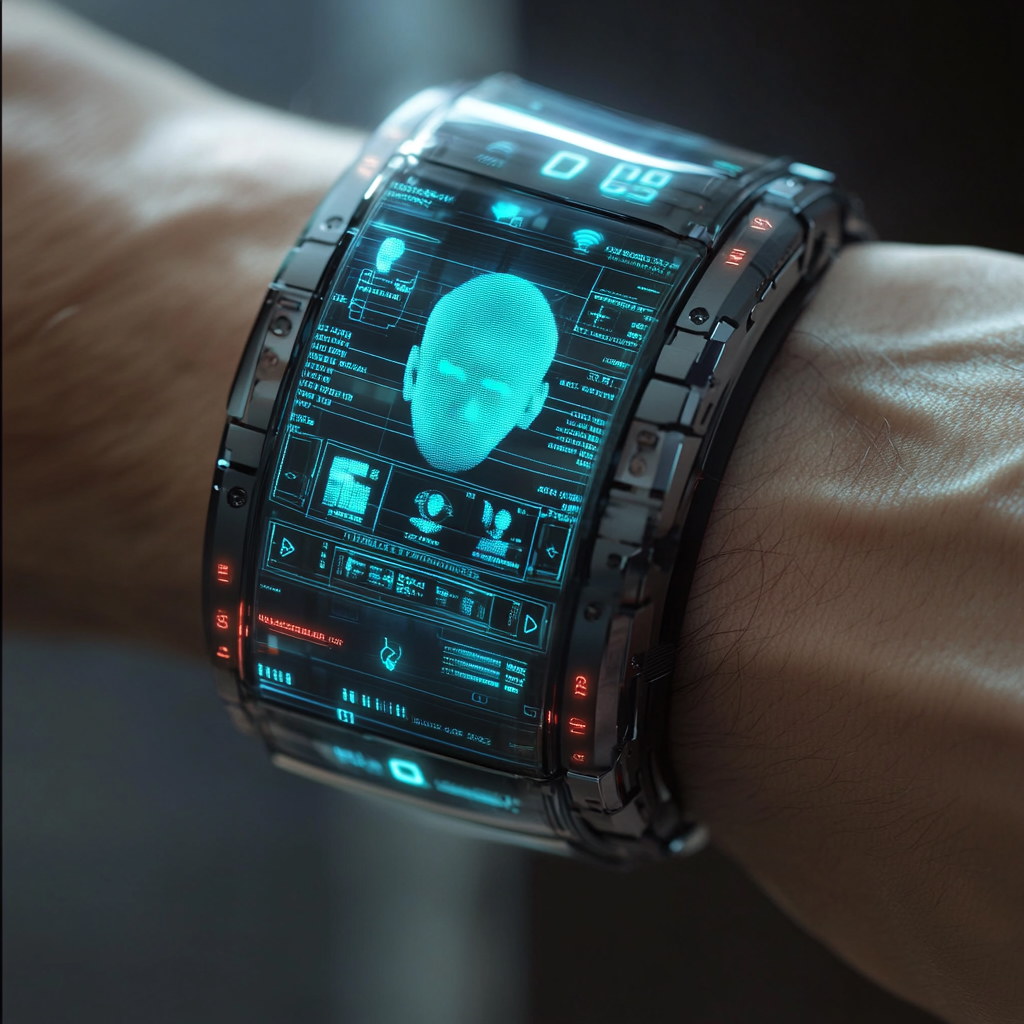


The Dawn of AI Holograms in Everyday Life (Image Credits: Flickr)
In an era where technology blurs the line between the digital and the mystical, artificial intelligence now projects itself into three-dimensional forms, offering personalized astrological insights like never before.
The Dawn of AI Holograms in Everyday Life
Developers unveiled the first consumer-grade AI holograms just months ago, marking a pivotal shift in how people interact with intelligent systems. These projections, often resembling lifelike avatars, respond to voice commands and gestures in real time. Early adopters have integrated them into homes and offices, where they serve as virtual assistants with enhanced presence.
Unlike flat screens, holograms create an illusion of physicality, drawing on augmented reality to make interactions feel more intimate. Companies like Razer have experimented with compact devices that display these companions in jars or on tabletops, sparking conversations about the future of human-AI bonds. This technology builds on years of advancements in optics and machine learning, finally making holographic interfaces accessible beyond science fiction.
Experts note that the appeal lies in biology’s preference for face-to-face communication, which holograms mimic effectively. As adoption grows, users report feeling less isolated, with the projections adapting to emotional cues through sophisticated algorithms.
AI’s Foray into Astrological Guidance
Astrology, long rooted in ancient traditions, has embraced AI tools that analyze birth charts with remarkable speed and precision. Platforms now use algorithms to compute planetary positions and generate horoscopes tailored to individual profiles. For instance, applications like Co-Star employ AI to blend astrological data with user inputs, delivering daily readings that feel profoundly personal.
This integration gained traction as AI models improved in interpreting symbolic languages, such as zodiac influences and transits. Astrologers have turned to these systems for complex delineations, freeing them to focus on interpretive depth. However, debates persist over whether machines can capture the intuitive essence of celestial wisdom.
Recent experiments show AI generating horoscopes via chat interfaces, often surprising skeptics with their nuance. One user described the output as “grounding,” highlighting how these tools provide comfort without requiring belief in the stars.
Companions in the Cosmos: Holograms Meet Horoscopes
Combining holograms with astrology creates immersive experiences where AI companions project as ethereal guides, discussing transits under a virtual night sky. Imagine a holographic astrologer appearing in your living room, charting your 2026 path based on Pluto’s shift into Aquarius and its implications for personal transformation.
These companions analyze not just charts but moods, offering advice synced to current events – like Uranus’s innovative sparks for earth signs. Developers emphasize ethical design, ensuring projections respect privacy while providing value. Early feedback suggests they enhance self-reflection, much like traditional consultations but available around the clock.
- Instant birth chart readings projected in 3D for visual clarity.
- Interactive sessions that adjust to user questions on love, career, or health.
- Integration with AR glasses for on-the-go astrological nudges.
- Customized visualizations of planetary alignments to demystify complex aspects.
- Community features where users share hologram-generated insights anonymously.
Challenges and Ethical Considerations
While promising, this fusion raises questions about authenticity in spiritual practices. Critics argue that AI might oversimplify astrology’s nuances, reducing it to data points rather than holistic insight. Regulators are monitoring how these companions handle sensitive personal data, especially in predictive readings.
Still, proponents see empowerment in democratizing access – anyone can now consult a “stellar advisor” without booking fees. As 2026 unfolds, with Pluto amplifying themes of technology in wellness, these tools could influence broader sectors like mental health support. Developers commit to transparency, revealing when outputs stem from computation versus human-curated knowledge.
| Aspect | Traditional Astrology | AI Hologram Companion |
|---|---|---|
| Accessibility | Requires expert consultation | 24/7 availability via device |
| Personalization | Based on practitioner intuition | Algorithm-driven, data-rich analysis |
| Interactivity | One-way readings often | Conversational, adaptive responses |
Key Takeaways:
- AI holograms enhance astrology’s reach, making cosmic guidance more tangible.
- They excel in computation but may lack the soul of human interpretation.
- Ethical use ensures privacy and accuracy in an evolving tech landscape.
As AI holograms illuminate the stars for a new generation, they invite us to ponder the balance between innovation and tradition in seeking life’s direction. What role do you see these companions playing in your own journey? Share your thoughts in the comments.