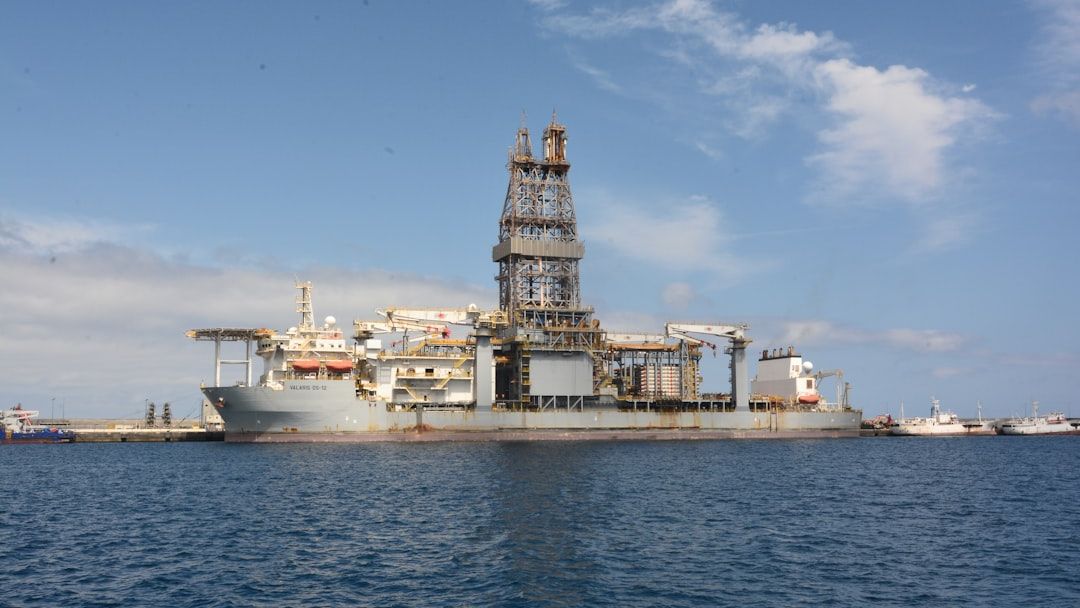
Strait of Hormuz Becomes Central Battleground (Image Credits: Unsplash)
Brent crude futures climbed 0.55% to $105.65 a barrel on Friday, propelled by persistent tensions in the Strait of Hormuz and stalled negotiations between the United States and Iran.[1][2] Global equities displayed unease, with U.S. stocks ending lower the prior day amid dimming prospects for a quick end to the conflict that began in late February.[3] The fragile ceasefire, extended indefinitely by President Donald Trump, failed to ease fears of supply disruptions through the vital shipping chokepoint, which once handled 20% of the world’s daily oil supply.[2]
Strait of Hormuz Becomes Central Battleground
Iran asserted tighter control over the Strait of Hormuz, releasing footage of commandos seizing a cargo ship and seizing two vessels attempting transit.[1][2] U.S. forces maintained a naval blockade on Iranian ports, intercepting Iranian-flagged tankers in Asian waters and receiving orders from Trump to neutralize threats from Iranian boats laying mines.[1] These actions heightened risks of prolonged shipping disruptions, driving oil prices higher despite the nominal ceasefire.
Reports of air attacks in Iran and activated air defenses added to the instability, with small drones spotted at multiple locations.[3] Iran’s Parliament Speaker Mohammad Bagher Ghalibaf resigned from the negotiating team, signaling internal discord in Tehran.[3] Peace talks hosted in Pakistan collapsed without agreement, leaving investors wrong-footed after recent optimism.[4]
U.S. Stocks Slide on War Worries and Earnings
Wall Street retreated Thursday, with the Dow Jones Industrial Average dropping 179.71 points, or 0.36%, to close at 49,310.32.[3] The S&P 500 shed 0.41% to 7,108.40, while the Nasdaq Composite fell sharper at 0.89% to 24,438.50.[3] Declining issues outnumbered advancers, reflecting caution after a prior market run-up.
| Index | Close | Change |
|---|---|---|
| Dow Jones | 49,310.32 | -0.36% |
| S&P 500 | 7,108.40 | -0.41% |
| Nasdaq Composite | 24,438.50 | -0.89% |
Mixed corporate earnings compounded the pressure. Tesla shares declined 3.56% after announcing higher spending plans, IBM fell 8.25% on slowing software revenue, and ServiceNow plunged 17.75% due to delayed Middle East deals.[3] Energy shares provided some offset, buoyed by rising crude prices.
Asia-Pacific Markets Deliver Mixed Verdict
Asian shares struggled Friday, pulling back from recent highs. MSCI’s broadest Asia-Pacific index outside Japan rose 0.46%, positioning for a weekly gain of about 1%.[1] Japan’s Nikkei advanced 0.85%, but South Korea’s index declined alongside China’s CSI300, with Hong Kong’s Hang Seng little changed.
European futures signaled weakness, with EUROSTOXX 50 contracts down 0.7%, FTSE futures off 0.76%, and DAX easing 0.25%.[1] Nasdaq futures edged up 0.4%, while S&P 500 futures held flat. Investors oscillated between optimism for de-escalation and fears of extended conflict.
Oil’s Rally Reflects Supply Fears
U.S. West Texas Intermediate crude gained 0.25% to $96.09 a barrel, while Brent extended its surge past $100, reaching $103.25 earlier in the session before settling higher.[1][2] The rally followed a 7.7% jump in Brent to $102 and 8.1% in WTI to $104 after the Pakistan talks failed.[4]
Analysts anticipated more upside. Warren Patterson, head of commodities strategy at ING Economics, observed that the market must reprice expectations as supply disruption realities emerge, dismissing headline noise absent progress.[2] U.S. oil exports hit record highs at 12.88 million barrels per day, cushioning domestic impacts but straining global supplies.[2]
“A ceasefire is a funny term to use in conjunction with a blockade and rolling tensions,” said Vishnu Varathan, head of macro strategy for APAC at Mizuho. De-escalation would prove nonlinear for oil prices and volatility.[1]
Jay Hatfield, CEO of Infrastructure Capital Advisors, attributed stock pullbacks to profit-taking amid war headlines.[3]
With U.S.-Iran talks at an impasse and Hormuz risks mounting, markets face ongoing turbulence. Energy firms like BP and Shell offered some support in London, but broader sectors braced for inflation pressures and potential demand erosion from high prices. The path forward hinges on whether diplomatic breakthroughs can outpace military posturing.