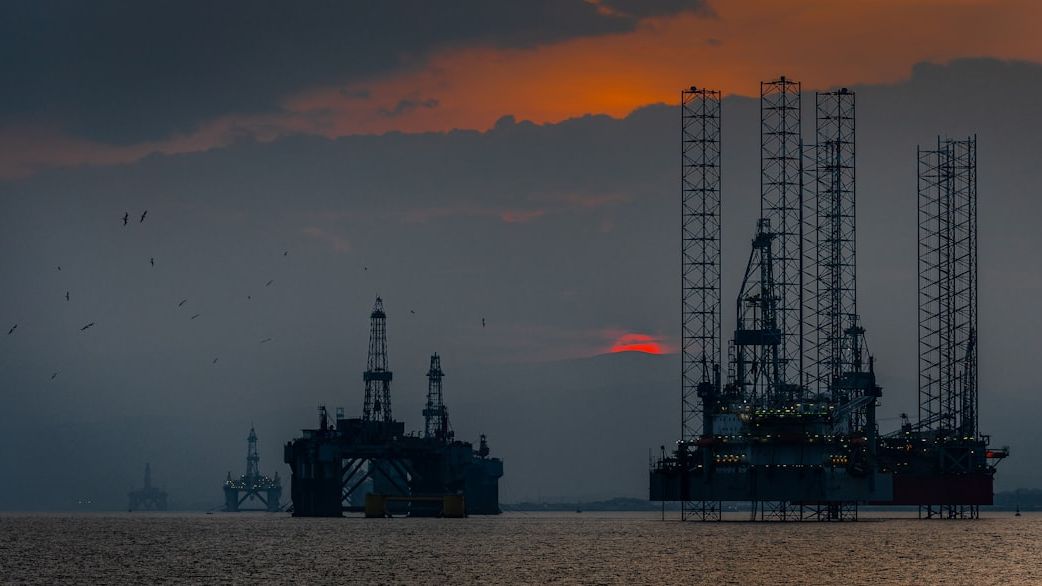
Survey Captures Industry Optimism on Output Growth (Image Credits: Unsplash)
Dallas – Nearly half of U.S. oil executives surveyed last week anticipate a rise in domestic crude output this year, attributing the potential gain to supply disruptions from the ongoing war in Iran. Elevated crude prices have prompted discussions of accelerated drilling among smaller operators and independents. The Dallas Federal Reserve’s latest poll captures this shift in sentiment amid a conflict that has upended global energy flows.[1]
Survey Captures Industry Optimism on Output Growth
The Dallas Fed Energy Survey, conducted from April 15 to 20, gathered responses from 120 oil and gas firms, including 78 exploration and production companies and 42 oilfield services providers. A total of 43 percent of respondents projected U.S. crude production would increase by up to 250,000 barrels per day in 2026 as a direct result of the Iran war.[1] This view marked a departure from earlier caution in the sector.
Smaller operators appeared particularly eager to respond to recent price strength. Executives noted growing conversations about adding rigs, while larger independents advanced their drilling plans. The survey’s timing aligned with roughly 45 days of West Texas Intermediate crude trading above $75 per barrel.[1]
Geopolitical Tensions Fuel Supply Concerns
The war in Iran has tightened global oil markets by disrupting exports and threatening key chokepoints. Two-thirds of survey participants expressed confidence that at least 90 percent of shut-in production in the Gulf of Mexico would eventually resume. However, recovery timelines for the Strait of Hormuz varied widely among respondents.[1]
Twenty percent foresaw normal traffic resuming next month, while 39 percent pointed to August. The remainder anticipated delays into November or beyond. Such uncertainties have driven fuel and crude prices higher, creating tailwinds for U.S. producers.
Industry Voices Weigh In on Price Trajectory
Executives offered measured perspectives on how long current dynamics might persist. One exploration and production leader remarked, “The price of oil will fall back to the $65 a barrel level very quickly once this conflict settles down.”[1] This view reflected expectations of a post-war normalization.
An oilfield services executive highlighted early responses to sustained high prices: “In response to the roughly 45 days of West Texas Intermediate over $75 per barrel, we are hearing increased talk of smaller operators adding rigs. We are also seeing larger independent operators move up drilling schedules.”[1] These comments underscored a pragmatic approach to capitalizing on volatility.
Forecasts Diverge from Government Projections
The executives’ outlook contrasted sharply with the U.S. Energy Information Administration’s predictions. The EIA forecasted average U.S. crude output at 13.51 million barrels per day for 2026, a decline from 13.58 million barrels per day in 2025. Industry leaders, buoyed by war-related price support, envisioned a more robust response.[1]
Post-conflict adjustments loomed large in respondents’ thinking. A majority anticipated higher shipping costs from the Gulf region, with more than one-third projecting an increase of $2 to $4 per barrel. These factors could influence long-term supply chains and pricing.
Key Survey Insights:
- 43% expect 2026 U.S. crude rise of up to 250,000 bpd.
- Two-thirds confident in Gulf production recovery.
- 59% see Hormuz normalization by August or sooner.
- Most predict elevated Gulf shipping costs afterward.
Implications for Energy Markets and Beyond
U.S. shale’s potential to ramp up output positions the country as a counterbalance to Middle East instability. Higher domestic production could ease some pressure on consumers if global supplies stabilize. Yet prolonged disruptions risk broader economic ripple effects, from inflation to trade flows.
Executives tempered their enthusiasm with realism about the conflict’s unpredictability. As the Iran war enters its next phase, the survey signals readiness in America’s oil patch. Whether this translates into sustained growth depends on how markets evolve in the coming months.