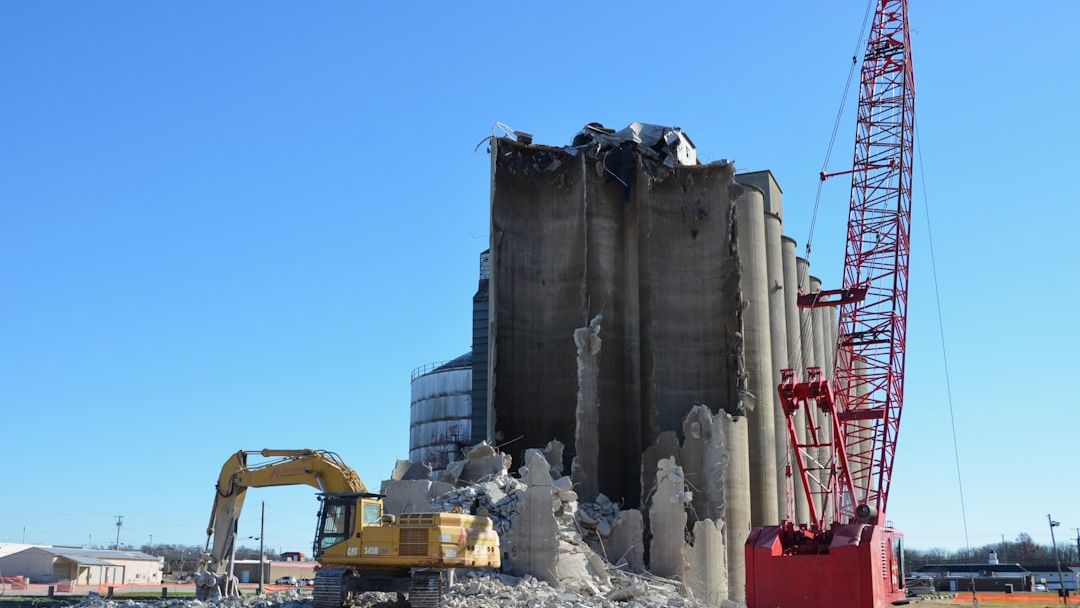
Persistent Market Weakness Hits Volumes (Image Credits: Unsplash)
Sheffield-based building materials distributor SIG plc navigated a challenging landscape in 2025, posting flat like-for-like sales amid subdued demand across Europe. The company reported revenue of £2.59 billion for the year ended December 31, 2025, a 1% decrease from the previous year.[1][2] High interest rates, delayed building permits, and soft new-build activity weighed on the sector, yet SIG gained market share in several regions. Underlying operating profit rose 28% to £32.1 million, showcasing the impact of aggressive cost controls.[1]
Persistent Market Weakness Hits Volumes
European construction remained stuck at a cyclical low throughout 2025, with demand well below historical norms. Like-for-like sales held steady at 0% overall, reflecting a first-half gain of 1% offset by a 2% drop in the second half.[1] Pricing pressures contributed around 1% deflation, even as input costs ticked up modestly. Businesses in the UK, Germany, and Ireland saw further softening late in the year.
France recorded a 5% like-for-like sales decline, driven by weaker new-build demand, particularly in non-residential projects.[2] Germany followed with a 3% drop, while Ireland mirrored that trend. Poland bucked the pattern, posting 5% growth. SIG outperformed broader markets in most areas, capturing 1-2% share in declining segments like French roofing.[3]
Regional Performances Vary Amid Shared Challenges
The UK, accounting for over 40% of revenue, delivered 2% like-for-like growth. Interiors revenue reached £673 million, up 3%, with insulation and drylining segments advancing 5% after restructuring. Roofing added 2% to £453 million.[2] These gains stemmed from commercial initiatives and market leadership.
Continental Europe faced steeper headwinds. France’s total revenue fell to £578 million, with interiors down 6% and roofing 5%. Cost savings and property sales from branch closures helped stabilize profits there at £14.5 million. Germany managed a slight operating profit of £1.3 million despite softer volumes, thanks to efficiency measures. Poland and Benelux showed resilience, with the latter swinging to modest profitability post-closures.[1]
Cost Discipline Fuels Bottom-Line Gains
SIG extracted £39 million in operating cost savings, countering £14 million in inflation and enabling the profit jump. Restructuring accounted for £18 million, including branch optimizations and headcount adjustments, while another £21 million came from fleet upgrades, property disposals, and overhead cuts.[2] Gross margins dipped slightly to 24.2% under pricing strain but held firm.
Free cash outflow narrowed to £12 million from £39 million, with operating cash inflow at £43 million. Net debt stood at £518 million, maintaining leverage at 4.7 times underlying EBITDA. CEO Pim Vervaat noted, “In 2025 the Group delivered a robust trading performance in continued difficult market conditions, and good progress on improving the underlying performance and profitability of our businesses.”[1]
- £39m cost reductions, including restructuring and efficiencies.
- Branch network refined: UK down to 415 from 426.
- Working capital improved to 12.9% of sales from 13.9%.
- AI and digital tools rolled out in France and beyond.
2026 Outlook Tempered by Weather and Uncertainty
Trading in early 2026 disappointed, with like-for-like sales weaker than anticipated due to poor weather across Europe.[4] Conditions should ease later in the year, though no swift recovery appears imminent. SIG plans further self-help, targeting £15 million in cost offsets for inflation and procurement gains from 2027.
Vision 2030 emphasizes portfolio streamlining, digital upgrades like ERP systems in Ireland and France, and focus on high-growth areas such as renovation and energy efficiency. Long-term tailwinds include housing shortages, net-zero regulations, and aging building stock – 70% of EU homes pre-1980. As Vervaat added, “The operating leverage benefits when markets return to growth will be significant.”[3] The company eyes a medium-term operating margin of 3-5%.
SIG’s resilience underscores disciplined execution in adversity, positioning it to capitalize on Europe’s inevitable construction rebound. Investors will watch how Vision 2030 unfolds against persistent macroeconomic drags.