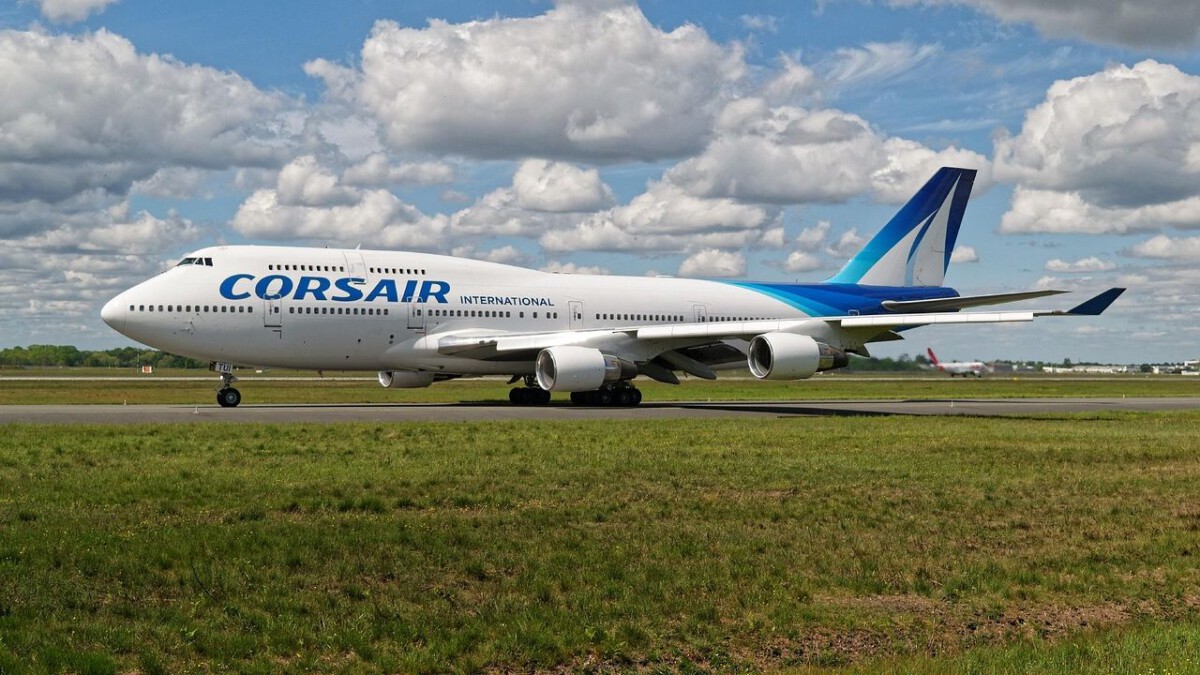
AvGeek alert: There’s a 747-fuselage suspended between 2 Seattle high rises – Image for illustrative purposes only (Image credits: Pixabay)
Seattle – High above a bustling construction site near downtown, sections of a retired Boeing 747-400 airplane now span the gap between two soaring 48-story residential towers. This striking feature anchors the Aero1200 project at 1200 Stewart Street, a mixed-use development promising rooftop pools, a vast Live Nation event venue and a Trader Joe’s store. Local aviation enthusiasts and passersby alike pause to gaze at the fuselage, a tribute to the city’s aerospace heritage in the self-proclaimed Jet City.
A Nod to Boeing’s Enduring Legacy
The Aero1200 development draws inspiration from Seattle’s deep ties to Boeing, where the 747 earned its nickname as the Queen of the Skies. Originally designed by Henriquez Partners Architects with Vancouver-based Westbank, the project broke ground in 2018. Delays from the pandemic, labor strikes and financial hurdles slowed progress until Toronto’s OP Trust took over.
Matthew Burchette, senior curator at the Museum of Flight, captured the sentiment surrounding the fuselage. “We are Jet City, so why not add the aircraft that revolutionized modern air travel?” he said. “Plus, it’s just cool.” The Museum of Flight itself houses the first 747 ever built, underscoring the plane’s historical significance in the region.
From California Boneyard to Urban Skyline
Acquiring and transporting the decommissioned 747, registered as N178UA, proved far more challenging than sketching it into the blueprints. Workers sourced the fuselage from a boneyard in Victorville, California. Initial plans called for moving the aircraft intact, but practicality demanded otherwise.
The plane underwent disassembly into 39 separate pieces for road transport on flatbed trucks. Aaron O’Kelly, senior project engineer at general contractor JTM Construction, explained the logistics. “There are oversized loads and then there are super loads, which are over 16 feet wide,” he said. “The first 16 of the 39 pieces were considered super loads, and to haul those, we had to have a police escort from California all the way to Washington.” Special permits, nighttime street closures and escorts guided the components from Toledo, Washington, through congested downtown routes to the site.
Precision Reassembly High Above the City
Construction crews began splicing the fuselage back together in November 2025, transforming fragmented parts into a unified structure. They removed the original floor and installed a new steel platform that links the two towers. Over 60,000 rivets and bolts secure the pieces in place, ensuring stability at 250 feet long and 65 feet tall.
The cockpit arrived intact recently, marking a key milestone. Upcoming steps include attaching the vertical stabilizer, tail and nose. O’Kelly noted the symbolic weight of the final installation. “The nose will be the last official piece,” he said. “We’re thinking that when we put the nose on as our last piece, that will be the ceremonial thing,” akin to a traditional topping-out event for buildings.
JTM Construction oversees the intricate work, blending aviation engineering with architectural demands. This longer phase highlights the project’s ambition, as teams navigate heights and tolerances once reserved for aircraft assembly lines.
Endless Possibilities for the Fuselage’s Future
No firm tenants or purposes have been announced for the suspended fuselage yet. Speculation abounds among visitors and experts, reflecting Seattle’s innovative spirit. Mike Kloppenberg, an aircraft maintenance assistant at the Museum of Flight, toured the site and shared creative visions after his visit.
“Maybe they could put a cafe in there. Or a dance floor. Or just imagine a bowling alley inside of a 747,” Kloppenberg said. “Whatever they do, it’s just great that this fuselage is being put to good use.” Early statements from Westbank emphasized honoring Boeing’s past while eyeing Seattle’s future. The feature not only captivates now but promises to redefine the skyline for years ahead.
As Aero1200 nears completion, the 747 stands as a bridge – literal and figurative – between Seattle’s storied aviation roots and its evolving urban landscape. This fusion of history and modernity ensures the Queen of the Skies soars on, drawing eyes upward in Jet City.