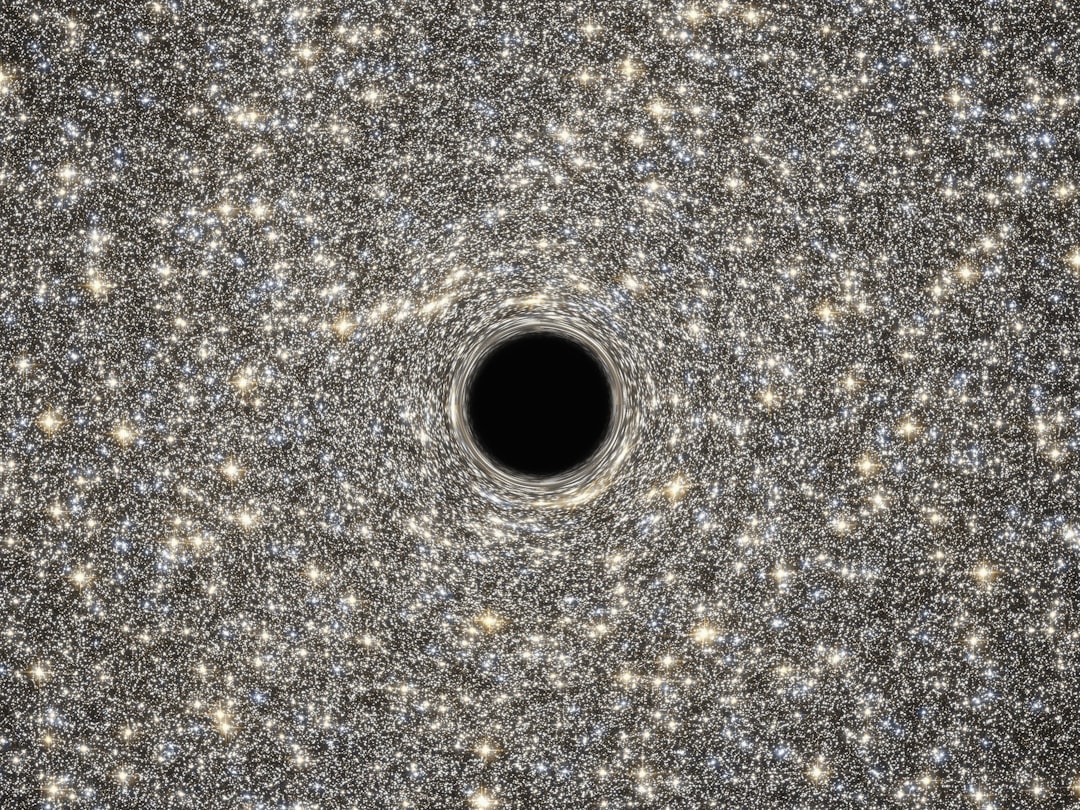
Unveiling Jets of Cosmic Scale (Image Credits: Unsplash)
Astronomers achieved a major breakthrough in understanding black hole jets, one of the cosmos’s most energetic displays. They targeted Cygnus X-1, among the earliest identified black holes, and quantified the jets’ immense power through innovative observations. These findings, derived from the jets’ interaction with surrounding stellar forces, mark the first precise calculation of their true energy output.
Unveiling Jets of Cosmic Scale
Researchers revealed that the jets from Cygnus X-1 unleash energy comparable to 10,000 Suns. These streams propel material at nearly half the speed of light, carving through space with relentless force. The measurement relied on observing how the jets distorted under external pressures, providing a direct gauge of their potency.
Such power underscores the extreme physics near black holes. The jets originate from the accretion disk, where matter spirals inward before being ejected in powerful outflows. This discovery opens new windows into how black holes influence their galactic neighborhoods.
Cygnus X-1: A Stellar Powerhouse Duo
Cygnus X-1 consists of a black hole orbiting a massive supergiant star. Discovered decades ago, it stands as a cornerstone in black hole studies due to its accessibility for observation. The supergiant’s fierce stellar winds play a crucial role, pushing against the jets and causing visible bending.
This interaction proved pivotal. As the winds deflected the jets, scientists could infer the outflows’ momentum and energy. The system’s proximity and brightness made it an ideal laboratory for these detailed probes.
Planet-Sized Telescope Array in Action
A global network of radio telescopes, effectively the size of Earth, enabled the unprecedented resolution. By linking observatories worldwide, researchers achieved sharp images of the jets’ behavior. This technique synchronized data from distant sites to simulate a single massive dish.
The observations captured dynamic changes in the jets’ path. Subtle shifts, invisible to standalone telescopes, became clear through this coordinated effort. Such precision transformed theoretical models into empirical evidence.
Decoding Power Through Deflection
The jets’ deflection by the supergiant’s winds served as a natural probe. Stronger winds bent the jets more dramatically, revealing their internal strength. Scientists modeled these interactions to extract quantitative values for speed and energy.
Key measurements include:
- Jets traveling at half the speed of light.
- Energy output matching 10,000 Suns.
- Bending patterns tied to stellar wind density.
- First-time direct power assessment.
- Confirmation of jet origins near the black hole’s event horizon.
Implications for Astrophysics
This work refines theories on how black holes launch jets. Understanding their power helps explain galaxy formation and evolution. Future studies may apply these methods to distant quasars, broadening cosmic insights.
Experts anticipate expanded surveys using similar arrays. Enhanced models could predict jet impacts on star formation. The findings also bolster confidence in black hole feedback mechanisms within galaxies.
Key Takeaways
- Cygnus X-1 jets pack the punch of 10,000 Suns at half light speed.
- Planet-wide radio telescopes enabled the first true power measurement.
- Stellar winds from a supergiant companion revealed the jets’ strength.
These observations redefine our grasp of black hole dynamics, highlighting their role as galactic architects. As technology advances, more secrets of these jets will emerge. What do you think this means for future space exploration? Tell us in the comments.